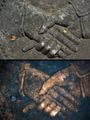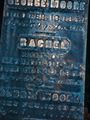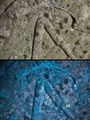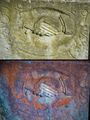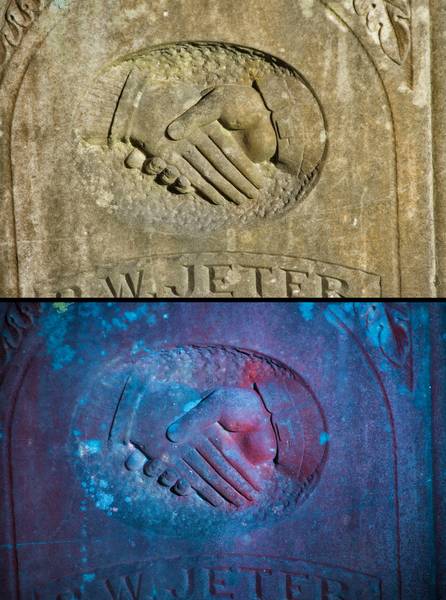

Handshake symbol on a marble tomb of W. Jeter both in natural light and under 365 nm ultraviolet (UV-A) blacklight in Odd Fellow Cemetery. Anderson, Texas


Album 3640: Anderson, Texas, November 9, 2024
The image presents two photographs of a marble tombstone featuring an intricately carved handshake symbol, situated within a circular frame. The top photograph is taken under natural light conditions, while the bottom image is captured using a 365 nm ultraviolet (UV-A) blacklight.
In the top photograph, the handshake symbol appears as a detailed and well-defined carving, with the hands clasped together in a firm handshake. The circular frame surrounding the symbol features intricate carvings of leaves or other foliage at its four corners. Below the circular frame lies the name "W. Jeter," likely referring to the individual buried beneath the tombstone.
Upon switching to UV-A blacklight illumination, as seen in the bottom photograph, a striking phenomenon occurs. The natural appearance of the handshake symbol and surrounding carvings becomes obscured by an intense blue glow that permeates the entire image. This effect is attributed to the presence of fluorescent pigments used in the creation of the tombstone's carving, which are capable of absorbing UV-A radiation from the blacklight source.
The use of UV-A blacklight illumination in this context highlights the significance of these fluorescent pigments in preserving and enhancing the visual appeal of the tombstone. By showcasing the intricate details of the handshake symbol under both natural light and UV-A blacklight conditions, the image effectively demonstrates the importance of considering multiple lighting sources when interpreting historical artifacts.
In conclusion, the two photographs presented in this image provide a fascinating comparison between the natural appearance and UV-A-illuminated appearance of a marble tombstone featuring a carved handshake symbol. The use of UV-A blacklight illumination reveals the presence of fluorescent pigments that contribute to the preservation and visual enhancement of the carving, underscoring the importance of considering multiple lighting sources when interpreting historical artifacts.
Answer: The image presents two photographs of a marble tombstone featuring an intricately carved handshake symbol, situated within a circular frame. The top photograph is taken under natural light conditions, while the bottom image is captured using a 365 nm ultraviolet (UV-A) blacklight. Under UV-A illumination, the handshake symbol and surrounding carvings become obscured by an intense blue glow due to the presence of fluorescent pigments used in the creation of the tombstone's carving. – AI vision
🇪🇸 Descripción en español / Spanish Description
El símbolo de apretón de manos en una tumba de mármol de W. Jeter tanto en luz natural como bajo iluminación ultravioleta (UV-A) negra en el cementerio Odd Fellow. Anderson, Texas, 9 de noviembre de 2024. La imagen presenta dos fotografías de una lápida de mármol que destaca un símbolo de apretón de manos tallado de forma intrincada, situada dentro de un marco circular. La parte superior de la fotografía se toma en condiciones de luz natural, mientras que la imagen inferior se captura usando una iluminación ultravioleta negra de 365 nm (UV-A). En la parte superior de la fotografía, el símbolo del apretón de manos aparece como un grabado detallado y bien definido, con las manos juntas en un firme apretón de manos. El marco circular que rodea el símbolo presenta tallados intrincados de hojas u otros elementos vegetales en sus cuatro esquinas. Por debajo del marco circular se encuentra el nombre "W. Jeter", probablemente referido al individuo enterrado bajo la lápida. Al cambiar a la iluminación UV-A, como se ve en la parte inferior de la fotografía, se produce un fenómeno sorprendente. El aspecto natural del símbolo del apretón de manos y los grabados circundantes queda oculto por un intenso brillo azul que permea toda la imagen. Este efecto se atribuye a la presencia de pigmentos fluorescentes usados en la creación del grabado de la lápida, capaces de absorber la radiación UV-A de la fuente de iluminación negra. El uso de la iluminación negra UV-A en este contexto resalta la importancia de estos pigmentos fluorescentes en preservar y mejorar el atractivo visual de la lápida. Al mostrar los detalles intrincados del símbolo del apretón de manos bajo condiciones de iluminación natural y UV-A, la imagen demuestra efectivamente la importancia de considerar múltiples fuentes de iluminación al interpretar artefactos históricos. En conclusión, las dos fotografías presentadas en esta imagen proporcionan una fascinante comparación entre el aspecto natural y el iluminado con UV-A de una tumba de mármol que destaca un símbolo de apretón de manos tallado intrincadamente, situado dentro de un marco circular. El uso de la iluminación negra UV-A revela la presencia de pigmentos fluorescentes que contribuyen a preservar y mejorar el grabado, resaltando la importancia de considerar múltiples fuentes de iluminación al interpretar artefactos históricos. – Spanish translation