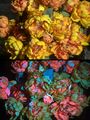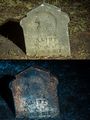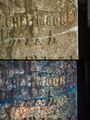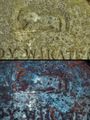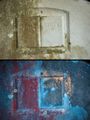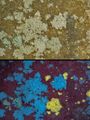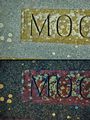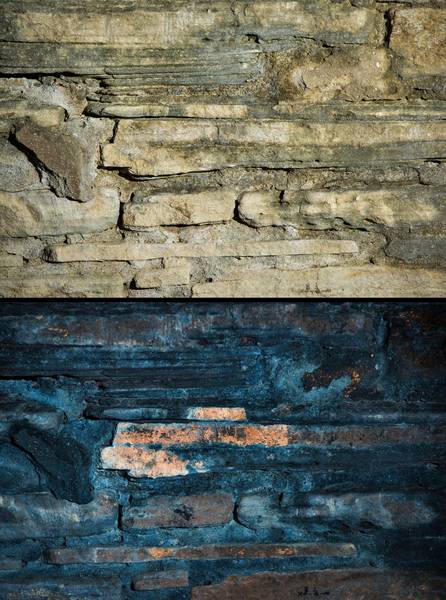

Masonry of a crypt when exposed to regular daylight as well as when illuminated by a 365 nm ultraviolet (UV-A) blacklight in Odd Fellow Cemetery. Anderson, Texas


Album 3640: Anderson, Texas, November 9, 2024
The image presents a comparative analysis of the effects of UV light on masonry in an old crypt. The upper half of the picture showcases the exposed surface under regular daylight conditions, while the lower half reveals the same area illuminated by a 365 nm ultraviolet (UV-A) blacklight.
**Masonry and Crypt Structure**
The masonry appears to be composed of limestone or sandstone, with varying shades of beige and brown hues. The crypt's walls display some level of weathering and erosion, indicating prolonged exposure to environmental elements such as rainwater and temperature fluctuations.
The lower half of the image reveals how these stones react to UV-A light. The stones appear brighter in color due to the increased reflectivity caused by the absorption of radiation at a wavelength of 365 nm. This phenomenon is known as fluorescence. Additionally, the blacklight causes an increase in luminescence, resulting in the enhanced visibility of the masonry's internal structure and any hidden details.
**Comparison and Conclusion**
The image illustrates how UV-A light enhances the appearance of the masonry by making it more vibrant and detailed. The use of a 365 nm UV-A blacklight to illuminate the crypt reveals previously unseen features on the surface, such as cracks and crevices filled with dirt or debris. This method could be used in forensic analysis to gather information about the history of the crypt, including the materials that were used to construct it and any potential modifications made over time.
Overall, this image demonstrates the value of using UV-A light in archaeological investigations to gain a deeper understanding of historical structures like crypts. – AI vision
🇪🇸 Descripción en español / Spanish Description
La cantería de una cripta cuando se expone a la luz del día habitual y también cuando se ilumina con una luz negra ultravioleta (UV-A) de 365 nm en el Cementerio Odd Fellow. Anderson, Texas, el 9 de noviembre de 2024. La imagen presenta un análisis comparativo de los efectos de la luz UV sobre la cantería en una antigua cripta. La mitad superior de la imagen muestra la superficie expuesta bajo condiciones de luz del día habituales, mientras que la mitad inferior muestra la misma área iluminada con una luz negra ultravioleta (UV-A) de 365 nm. **Cantería y Estructura de Criptas** La cantería parece estar compuesta de piedra caliza o arenisca, con tonalidades variadas de beige y marrones. Las paredes de la cripta muestran un nivel de alteración y erosión, lo que indica una exposición prolongada a elementos ambientales como el agua de lluvia y las fluctuaciones de temperatura. La mitad inferior de la imagen revela cómo reaccionan estas piedras a la luz UV-A. Las piedras parecen más brillantes en color debido al aumento de reflectividad causado por la absorción de radiación a una longitud de onda de 365 nm. Este fenómeno se conoce como fluorescencia. Además, la luz negra hace que aumente la luminescencia, lo que resulta en una mayor visibilidad de la estructura interna de la cantería y cualquier detalle oculto. **Comparación y Conclusión** La imagen ilustra cómo la luz UV-A mejora la apariencia de la cantería, haciéndola más vibrante y detallada. El uso de una luz negra de 365 nm para iluminar la cripta revela características previamente no vistas en la superficie, como grietas y hendiduras rellenas con polvo u otros residuos. Este método podría usarse en análisis forenses para reunir información sobre el historial de la cripta, incluyendo los materiales que se utilizaron para construirla y cualquier posible modificación a lo largo del tiempo. En general, esta imagen demuestra el valor de utilizar luz UV-A en investigaciones arqueológicas para obtener una comprensión más profunda de estructuras históricas como criptas. – Spanish translation