 |
| |||||||||||||||

| ||||||||||||||||


| Similar |   |
  |
  |
  |
  |
| |||||||||||||||||||||||||||
| |||||||||||||||||||||||||||
| 1996 1997 1998 1999 2000 2001 2002 2003 2004 2005 2006 2007 2008 2009 2010 2011 2012 2013 2014 2015 2016 2017 2018 2019 2020 2021 2022 2023 2024 2025 2026 | |||||||||||||||||||||||||||
| New version Slide Show Most Popular Full List Statistics Technical Details Home Page | |||||||||||||||||||||||||||
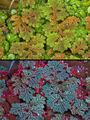
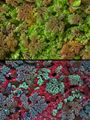
The image is a close-up photograph of water fern and duckweed plants, captured under two different lighting conditions: natural daylight and ultraviolet (UV-A) blacklight illumination at 365 nm wavelength. **Photograph Details** * The photograph consists of two identical sections side by side. **Context and Significance** The image captures the unique properties of water ferns and duckweed in responding to different light sources. The use of a specialized UV-A blacklight highlights the plants' ability to fluoresce, which could be an adaptation for attracting pollinators or defending against pathogens. This phenomenon is likely related to the plants' biology and ecological roles within their aquatic environment. **Conclusion** The image showcases the fascinating interaction between water ferns and duckweed with light sources, revealing their inherent fluorescent properties when exposed to UV-A radiation. – AI vision |
Un primer plano de helechos de agua (Azolla) y lentejas de agua cuando se exponen a la luz del día regular, así como también cuando se iluminan con una luz negra ultravioleta (UV-A) de 365 nm en el Bee Creek Park. College Station, Texas, 11 de noviembre de 2024. La imagen es un primer plano fotográfico de helechos de agua y plantas de lentejas de agua, capturadas bajo dos condiciones diferentes de iluminación: luz del día natural e iluminación con luz negra ultravioleta (UV-A) a una longitud de onda de 365 nm. **Detalles de la fotografía** *La fotografía consiste en dos secciones idénticas una al lado de la otra.*Cada sección muestra las mismas especies de plantas acuáticas, pero con efectos visuales distintivos resultantes de las diferentes fuentes de luz:+ **Sección de luz del día:**Los helechos de agua y lentejas de agua aparecen de color pardusco-verdoso, lo que indica una apariencia natural bajo condiciones de luz del día regulares.+ **Sección de luz negra UV-A:**Las plantas muestran una fluorescencia roja y azul impresionante cuando se iluminan con la luz negra UV-A. Esto sugiere que estas especies de plantas contienen pigmentos o compuestos fluorescentes que absorben la luz ultravioleta y emiten radiación de longitud de onda más larga. **Contexto y Significado** La imagen captura las propiedades únicas de los helechos de agua y las lentejas de agua al responder a diferentes fuentes de luz. El uso de una luz negra UV-A especializada destaca la capacidad de las plantas para fluorescer, lo que podría ser una adaptación para atraer polinizadores o defenderse contra patógenos. Este fenómeno probablemente esté relacionado con la biología y los roles ecológicos de las plantas dentro de su medio ambiente acuático. **Conclusión** La imagen muestra la fascinante interacción entre los helechos de agua y las lentejas de agua con fuentes de luz, revelando sus propiedades fluorescentes inherentes cuando se exponen a radiación UV-A. – Spanish translation |
Keyword variants
high resolution online digital collection
Berlin on the Brazos
Bee Creek Park picture
Lone Star State
United States
picture gallery
photo album
documentary photographs
daily pics
conservative town
Brazos County
TX
travelogue
snapshots
sightseeing
photowalks
photoblog
graphic
fotografias
foto
Bryan
America
Aggieland