 |
| |||||||||||||||||

| ||||||||||||||||||


| Similar | 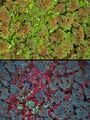  |
  |
  |
  |
  |
| |||||||||||||||||||||||||||||
| |||||||||||||||||||||||||||||
| 1996 1997 1998 1999 2000 2001 2002 2003 2004 2005 2006 2007 2008 2009 2010 2011 2012 2013 2014 2015 2016 2017 2018 2019 2020 2021 2022 2023 2024 2025 2026 | |||||||||||||||||||||||||||||
| New version Slide Show Most Popular Full List Statistics Technical Details Home Page | |||||||||||||||||||||||||||||
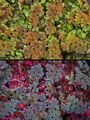
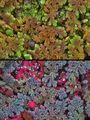
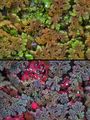
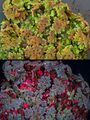
The image presents a comparative visual analysis of water ferns and duckweed under natural daylight conditions versus UV-A illumination. The top half of the image showcases the plant life exposed to regular sunlight, while the bottom half displays the same plants illuminated by a 365 nm ultraviolet (UV-A) blacklight. **Visual Observations:** * **Natural Daylight:** The water ferns and duckweed appear vibrant green with brown undertones, suggesting healthy growth under normal daylight conditions. **Interpretation:** The observed changes in coloration when exposed to UV-A light suggest that certain plants may respond to ultraviolet radiation by producing more anthocyanins. This phenomenon could serve as a protective mechanism against excessive sunlight or an attractant for pollinators. The image provides valuable insights into the dynamic interactions between plant life and environmental factors, highlighting the importance of considering these influences in understanding ecosystem dynamics. **Conclusion:** The comparison between natural daylight and UV-A illumination reveals that water ferns and duckweed exhibit distinct responses to different light conditions. While they thrive under normal sunlight, their appearance changes significantly when exposed to UV-A radiation, showcasing a unique aspect of plant biology that warrants further exploration. – AI vision |
La estera de helecho de agua (Azolla) y la lenteja de agua, cuando se exponen a la luz del día habitual y también cuando se iluminan con una luz negra ultravioleta de 365 nm desde un estanque en Bee Creek Park. College Station, Texas, 12 de noviembre de 2024. La imagen presenta un análisis visual comparativo del helecho de agua y la lenteja de agua bajo condiciones de luz natural frente a la iluminación UV-A. La mitad superior de la imagen muestra la vida vegetal expuesta a la luz solar regular, mientras que la mitad inferior muestra las mismas plantas iluminadas con una luz negra ultravioleta de 365 nm. **Observaciones visuales:** * **Luz natural:** Las hojas de helecho de agua y lenteja de agua aparecen verde brillante con tonos marrones, lo que sugiere un crecimiento saludable en condiciones de luz natural habitual. * **Iluminación UV-A:** En contraste, la iluminación UV-A revela una transformación sorprendente. Las plantas exhiben matices rojos o rosados intensos en toda su superficie, lo que indica una presencia aumentada de antocianinas, que son pigmentos responsables de estos colores en algunas especies de plantas. **Interpretación:** Los cambios observados en la coloración cuando se exponen a la luz UV-A sugieren que ciertas plantas pueden responder a la radiación ultravioleta produciendo más antocianinas. Este fenómeno podría servir como un mecanismo de protección contra la luz solar excesiva o un atrayente para polinizadores. La imagen proporciona insights valiosos en las interacciones dinámicas entre la vida vegetal y los factores ambientales, destacando la importancia de considerar estas influencias en el entendimiento de las dinámicas ecosistémicas. **Conclusión:** La comparación entre luz natural y iluminación UV-A revela que el helecho de agua y la lenteja de agua exhiben respuestas distintas a diferentes condiciones de luz. Mientras que prosperan bajo luz solar habitual, su apariencia cambia significativamente cuando se exponen a radiación UV-A, lo que muestra un aspecto único de la biología vegetal que merece una exploración más profunda. – Spanish translation |
Keyword variants
high resolution online digital collection
Bee Creek Park photo album
Berlin on the Brazos
Lone Star State
United States
picture gallery
documentary photographs
daily pics
conservative town
Brazos County
TX
travelogue
snapshots
sightseeing
photowalks
photoblog
graphic
fotografias
foto
Bryan
America
Aggieland