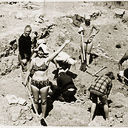
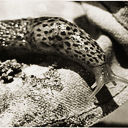
The image shows a close-up view of plants growing at the edge of an excavation site. The plants appear to be small and succulent-like, with thick, fleshy leaves. They are emerging from what looks like dry, arid soil, which is consistent with the Heron's Kish site being in a semi-arid environment.
The plants are clustered together, their stems and leaves intertwined in a compact formation. This growth pattern is typical of plants adapted to survive in harsh, dry conditions where resources may be limited.
The excavation area around the plants seems to be creating a microenvironment that's different from the surrounding landscape. The soil around the plants appears darker and more moist, likely due to the plant's root system drawing water from the nearby excavation area.
This scene captures an interesting juxtaposition between the natural growth of these hardy plants and the human-made intervention of the excavation process. It's a testament to the resilience of plant life and their ability to thrive even in seemingly inhospitable conditions. – AI vision