 |
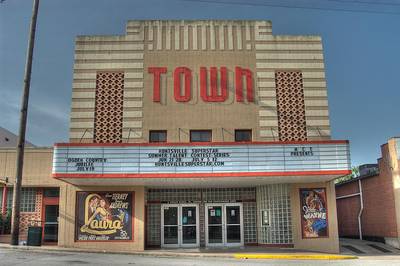
654-14. Town Theater at 1023 12th Street. Huntsville, Texas, June 29, 2008Similar picturesLarge thumbnails | Use small thumbnails | View as slideshow |
|
654-14. Town Theater at 1023 12th Street. Huntsville, Texas, June 29, 2008Similar picturesLarge thumbnails | Use small thumbnails | View as slideshow |
 West-Lucas House on Sealey Street near 12th Street in East End Historic District. Galveston, Texas, November 15, 2008  Palace Theater on Main Street in downtown Bryan. Texas, November 18, 2008  Queen movie theater on Main Street in downtown Bryan. Texas, November 18, 2008  Queen movie theater on Main Street in downtown. Bryan, Texas, October 9, 2008  Entrance of Queen movie theater on Main Street in downtown Bryan. Texas, November 18, 2008  Town Lake from First Street Bridge at morning. Austin, Texas, December 24, 2008  Town Lake underneath First Street Bridge. Austin, Texas, February 2, 2008  View along Mu"ndi Street (Mu"ndi ta"nav), looking towards the Tallinn Town Hall and its iconic spire. This short, cobbled street connects Pikk Street to the Town Hall Square (Raekoja plats). Historically known as "Mu"ndrikute ta"nav" (Street of the Porters), it was a key route for goods moving from the harbor to the market. The large pink building on the right (corner of Mu"ndi and Kinga streets) is a prominent residential and commercial block. Its ground floor houses souvenir shops like Lina, selling traditional linen goods, and the Japarto Crepes & Waffles cafe (visible signage "TURU" further down). The building s mansard roof and regular fenestration are typical of the 19th and early 20th-century renovations in the Old Town. At the end of the street, the Tallinn Town Hall (Tallinna raekoda) rises majestically. It is the oldest surviving Gothic town hall in Northern Europe, completed in 1404. Tallinn, Estonia, October 16, 2025  A view of Kullassepa Street (Kullassepa ta"nav), a short but lively street that connects Niguliste Street to the Town Hall Square (Raekoja plats). The prominent building on the right (Kullassepa 4) houses Mikkeller Tallinn Old Town. This is a bar and restaurant operated by the famous Danish craft brewery Mikkeller in partnership with a local distributor. It offers 16 taps of craft beer and serves food in collaboration with VLND Burger. The building itself is a historic structure situated just steps away from the Town Hall. Kullassepa translates to "Goldsmith s," hinting at the street s medieval history as a center for jewelry makers and artisans. The street is a bustling pedestrian zone lined with shops, cafes, and restaurants. In the background, you can see the open expanse of the Town Hall Square, making this a prime location for tourists moving between the major sights of the Old Town. Tallinn, Estonia, October 16, 2025  Town Lake and Congress Avenue Bridge from First Street Bridge. Austin, Texas, February 2, 2008  Vene Street (Vene ta"nav), one of the most historic and culturally significant streets in Tallinn s Old Town. The creamy yellow building on the right (Vene 17) is the main branch of the Tallinn City Museum (Tallinna Linnamuuseum). It is housed in a medieval merchant s home that dates back to the 14th century, offering visitors a deep dive into the city s history from prehistory to the 20th century. The name Vene means "Russian" in Estonian. The street was historically the center of the Russian merchant community and housed the trade yards and churches of Russian traders, dating back to the 12th century. The streetscape here is an example of Tallinn s Hanseatic architecture. The museum building itself was formed by combining a Gothic merchant house with two granaries, creating the structure seen today. One can also see the distinctive "hoist beam" and cargo hatch on the facade, used for lifting goods into storage. Tallinn, Estonia, October 16, 2025  Prakriti, Indian Youth Dance Group at Citibank World Stage (Palace Theater) at Brazos Valley Worldfest at downtown Bryan. Texas, November 22, 2008  Main street in old fishing village (ghost town) of Al Khuwair (Al Qubaisi Tribe) west from Lekhwair on northern coast. Qatar, June 6, 2015  Intersection of Pikk Street and Pikk jalg (Long Leg) Street, one of the most historically significant spots in Tallinn, marking the boundary between the Lower Town and the Upper Town (Toompea). The massive white tower on the right is the Long Leg Gate Tower, built in the 14th century (c. 1380). It served as the primary fortified gateway connecting the merchant Lower Town to the aristocratic Upper Town. Historically, this gate was locked at night to separate the two distinct social classes. The street rising steeply through the gate arch is Pikk jalg. Its name distinguishes it from the parallel "Short Leg" (Lu"hike jalg), which is a pedestrian-only staircase.:200b The clock attached to the wall on the far right (though partially cut off) is not the famous Holy Spirit Church clock but a decorative element often associated with the Krause Pharmacy building or nearby shops in this tourist-heavy zone. The pink building on the left corner (housing "Krause" and "Eesti Ka"sito"o"" shops) is a classic example of Old Town architecture, with its chamfered corner entrance and large shop windows. Tallinn, Estonia, October 16, 2025  This view is taken from Vanaturu kael ("Old Market Neck"), a short historic street that connects the Old Market (Vana Turg) with the Town Hall Square (Raekoja Plats) in Tallinn s Old Town. The dominant structure in the center is the eastern gable of the Tallinn Town Hall (Tallinna raekoda), the oldest surviving Gothic town hall in Northern Europe and the Baltic region. The building s iconic 64-meter tower rises prominently, topped by the Old Thomas (Vana Toomas) weather vane (visible at the very tip), which has been a symbol of the city since 1530. The limestone facade features a distinct Gothic archway at street level and a small, high window on the gable. To the right, the cream-colored building with the "Hopner House" sign (partially visible) is historically significant, often associated with merchant history. Estonia, October 16, 2025  Queen movie theater on Main Street in downtown. Bryan, Texas, March 16, 2009  Movie theater and a model of a train on Main Street. Bryan, Texas, November 19, 2011  Queen movie theater on Main Street in downtown Bryan. Texas, December 18, 2009  A "shrine" decorated by teddy bears and stuffed animals on steps of burned Coliseum Theater at 1233 Coliseum Street, a corner of Thalia Street in Lower Garden District. New Orleans, Louisiana, September 23, 2006  A memorial decorated by soft toys and stuffed animals on steps of burned Coliseum Theater at 1233 Coliseum Street, a corner of Thalia Street in Lower Garden District. New Orleans, Louisiana, September 23, 2006  Entrance of Queen movie theater on Main Street in downtown Bryan. Texas, November 2, 2009  Buck Foster Cemetery at Road 30 west from Huntsville. Texas, June 29, 2008  Tomb of one of descendants(?) of Sam Houston in Oakwood Cemetery. Huntsville, Texas, June 29, 2008  A soft toy on steps of Coliseum Theater (1915 - 2006) at 1233 Coliseum Street, a corner of Thalia Street in Lower Garden District. New Orleans, Louisiana, August 5, 2006  Model of a train in front of Palace Theater on Main Street in downtown. Bryan, Texas, March 16, 2009  Queen movie theater on Main Street in downtown, view from its entrance. Bryan, Texas, March 16, 2009  Stuffed animals on a site of Coliseum Theater (1915 - 2006) at 1233 Coliseum Street, a corner of Thalia Street in Lower Garden District. New Orleans, Louisiana, July 20, 2006  Tombs of Buck Foster Cemetery at Road 30 west from Huntsville. Texas, June 29, 2008  Walls Unit of prison system, main entrance. Huntsville, Texas, June 29, 2008  Intersection on Pikk Street (at Pikk 17), looking towards the Town Hall Square area. The view is dominated by two historically significant buildings and a lively restaurant scene. The large, gabled building on the right (Pikk 17) is the Great Guild Hall, built in 1417. For centuries, this was the meeting place for the city s most powerful merchants (the Great Guild), who controlled the town council. The building is a masterpiece of medieval limestone architecture, featuring a prominent Gothic portal and a high saddle roof. Today, it houses the Estonian History Museum. The smaller archway next to it (right foreground) is a historic passage, the "Bo"rsi ka"ik" (Exchange Passage), leading towards the Holy Spirit Church. Though partially obscured, the building further down the street with the stepped gable is connected to the complex of the Church of the Holy Spirit. This church is famous for its 17th-century painted clock, the oldest in Tallinn, which faces Pikk Street (though not clearly visible from this specific angle). This section of Pikk Street is a major pedestrian artery, connecting the northern part of the Old Town (where St. Olaf s is) to the central Town Hall Square. Tallinn, Estonia, October 16, 2025  Interior of National Theater of Opera and Ballet. Odessa, Ukraine, June 30, 2009  Hall of National Theater of Opera and Ballet. Odessa, Ukraine, June 30, 2009  Intersection of Pikk Street (Pikk ta"nav) and Pikk jalg ("Long Leg" street) in Tallinn s Old Town. The corner building with the distinctive red mansard roof and "VeTa" sign is Pikk 1. This historic structure currently houses a flagship store for VeTa, an Estonian fashion brand known for its knitwear and linen clothing. The shop s entrance is directly on the corner, inviting visitors coming down from Toompea Hill or entering the Lower Town. To the left of the VeTa building is the start of Pikk jalg (Long Leg), a historic cobblestone ramp that historically served as the main carriage road connecting the Lower Town (residence of merchants) to Toompea (seat of nobility and power). Just out of frame to the left would be the Pikk jalg Gate Tower (Pika jala va"ravatorn), a 14th-century defensive structure that controlled traffic between the two distinct parts of the medieval city. This spot marks the transition between the bustling commercial streets of the Lower Town and the fortified administrative center on the hill. It s a popular starting point for exploring the Old Town s main artery, Pikk Street, which runs all the way to the Great Coastal Gate. Tallinn, Estonia, October 16, 2025  Aurora Movie Theater on Nevsky Prospect. Saint Petersburg, Russia, June 11, 2014  Upper stairs of National Theater of Opera and Ballet. Odessa, Ukraine, June 30, 2009  Grand stairs of National Theater of Opera and Ballet. Odessa, Ukraine, June 30, 2009  Old Town at the foot of Toompea Hill, specifically near Nunne Street 5. The illuminated stone staircase on the left is the start of the Patkuli Stairs. Built in 1903, these 157 steps connect the Lower Town (from Nunne Street) to the Patkuli viewing platform on the upper limestone plateau of Toompea. The striking street art on the wall to the right is titled "Okay, Queen...". Created by the artist Marie Soosaar in 2022, this stencil graffiti depicts a queen-like figure holding a lamb, flanked by a knight and a castle tower. It adds a modern, whimsical touch to the medieval surroundings and has quickly become a popular photo spot. The massive limestone wall in the background supports the Toompea hill. The buildings visible at the top (with the pink facade) are part of the complex of government and noble residences that historically occupied the Upper Town. The large trees on the left are part of the green belt (Snelli Park area) that surrounds the Old Town fortifications, providing a lush contrast to the stone architecture. Tallinn, Estonia, October 16, 2025  Vaults of grand stairs of National Theater of Opera and Ballet. Odessa, Ukraine, June 30, 2009  Sculpture of upper stairs of National Theater of Opera and Ballet. Odessa, Ukraine, June 30, 2009  Dancer Soraya from Gypsy Dance Theater and Colombian Folkloric Ballet of Houston handling her pet snake (balled python) Avanti on Agora Stage at Texas Renaissance Festival. Plantersville, Texas, November 23, 2008  Gate of Mustang Cemetery at Road 227 near Road 30 west from Huntsville. Texas, June 29, 2008  Brahma cows at Loma Road near Road 30 west from Huntsville. Texas, June 29, 2008  Snake dance by Soraya from Gypsy Dance Theater with a ball python (Python regius) having name Avanti on Agora Stage at Texas Renaissance Festival. Plantersville, Texas, November 23, 2008  Town Lake, Shoal Beach and downtown from a path east from Congress Avenue Bridge. Austin, Texas, February 2, 2008  The lower end of Pikk Street, looking back up towards the Town Hall spire. It captures a charming intersection where the street forks. Corner Building (Pikk 12 / Kinga 10): The centerpiece of the image is the distinctive corner building with a mansard roof and red tiles. It houses another branch of the Veta linen and knitwear shop. The building s shape is triangular, adapting to the acute angle where Pikk and Kinga streets meet. Its architecture is a mix of styles, with a portal that hints at older origins but a roofline that suggests 19th or early 20th-century modification. In the distance to the left, you can clearly see the illuminated spire of the Tallinn Town Hall rising above the rooftops, serving as a navigation point for anyone walking up Pikk Street. Tallinn, Estonia, October 16, 2025  A view of Suur-Karja Street (Suur-Karja ta"nav), one of the main arteries in Tallinn s Old Town. This street is famously (or infamously) known as the "Bermuda Triangle" of Tallinn s nightlife. The intersection of Suur-Karja and Va"ike-Karja streets is packed with bars, pubs, and clubs, making it the busiest party spot in the city on weekends. The street is lined with historic buildings that date back centuries. For instance, the building at Suur-Karja 12 (partially visible on the left) is a late-Gothic merchant house with roots in the 15th century. It has recently undergone extensive renovation to modernize its interiors while preserving its medieval stone fac,ade and window details. The street name "Suur-Karja" translates to "Great Cattle Street," referencing its medieval function as the route used to drive cattle from the city center out to pastures through the Karja Gate. Today, it connects the heart of the Old Town with Pa"rnu Road and the modern city center. Tallinn, Estonia, October 16, 2025  St. Nicholas Church (Niguliste kirik), located at Niguliste 3 in Tallinn s Old Town. Although originally built as a fortress church in the 13th century dedicated to Saint Nicholas (patron of sailors and merchants), it is no longer a functioning place of worship. Today, it houses the Niguliste Museum, a branch of the Art Museum of Estonia, dedicated to medieval ecclesiastical art. The church was founded by Westphalian merchants in the 1230s and was one of the wealthiest in the city. It was heavily damaged during the Soviet bombing of Tallinn in March 1944, losing its roof and most of its interior, but was meticulously restored in the following decades. The tower, rebuilt with a Baroque spire, now features a glass elevator and a viewing platform offering panoramic views of the city. The church sits on a rise just south of the Town Hall Square, surrounded by a green area that was once a cemetery. The street in the foreground is Niguliste Street, leading up from the lower town. Tallinn, Estonia, October 16, 2025  Saiakangi Cafe situated in a medieval lane that leads to the Town Hall Square at Saiakang 3 in Tallinn old town. Estonia, August 14, 2024  Narrow, cobblestone street is Sauna Street (Sauna ta"nav), located in a lively section of the Old Town known for its nightlife and history. As the name implies, this street was historically the location of public bathhouses (saunas) dating back to the medieval period. The "Sauna Tower" of the city wall is also nearby, named for a women s sauna that once stood there. Today, Sauna Street and its immediate surroundings (connecting to Viru Street) are a popular destination for nightlife. The street is lined with well-known bars and clubs like Club Baila and Frank. The image shows the street in a relatively quiet moment, emphasizing the contrast between the historic architecture and the gritty urban texture. Tallinn, Estonia, October 16, 2025  "Merry Christmas to All" decoration on the 32 feet tall brick security wall surrounding "The Walls" prison (Huntsville TDCJ Unit), with a memorial historical plaque in foreground. Huntsville, Texas, December 18, 2008  This perspective of Pikk Street captures one of Tallinn s most historically significant thoroughfares, looking roughly south towards the foot of Toompea Hill. On the left, the large storefront windows belong to Pikk 12 (leftmost edge) and Pikk 10, home to the Oh la la gift and souvenir shop (visible by its red sign). These buildings are part of the continuous row of merchant houses that define the street s character, originally housing the wealthy guilds and traders of the Hanseatic League. While the street is famous for medieval architecture, many facades, including those visible here, show later modifications or complete rebuilds from the 19th and early 20th centuries, blending historicism with Art Nouveau elements. Further up the street, where the road curves uphill past the Swedish flag, the route leads toward the Pikk Jalg (Long Leg) gate tower. This was historically the primary carriage road connecting the Lower Town of merchants to the Upper Town (Toompea) of the nobility. Estonia, October 16, 2025  A section of Uus Street (New Street), a quieter and historically significant lane on the eastern edge of Tallinn s Old Town. The sign on the right marks the entrance to the Haus Gallery (Uus 17). Founded in 1997, it is one of the oldest and most respected private art galleries in Estonia, known for exhibiting both classic and contemporary Estonian art. The gallery is located in a historic building with a large courtyard often used for events. Just beyond the gallery, the flag hanging from the building (Uus 15) is the tricolor of Lithuania, identifying the Embassy of the Republic of Lithuania. This establishes the street as a diplomatic quarter as well. The image starkly contrasts the well-maintained facades of the embassy and gallery on the right with the heavily graffitied and peeling wall of the yellow building on the left (likely the rear or side of a building facing the parallel Sulevima"gi street). This juxtaposition highlights the ongoing struggle with tagging in less-monitored corners of the Old Town. Uus Street runs parallel to the old city wall (parts of which are visible nearby). Historically, it was developed later than the central merchant streets (hence "New Street"), originally serving as a defensive zone before being built up with residential houses for craftsmen and lesser merchants. Tallinn, Estonia, October 16, 2025  Huntsville Unit of Texas State Penitentiary "The Walls" (established 1849) at morning. A clock above the main entrance to the prison is a symbol of time which serves as a reminder to those inside. Huntsville, Texas, December 18, 2008  12th Man Statue in snow on campus of Texas A and M University. College Station, Texas, January 10, 2021  12th Man statue in fog near Kyle Field on campus of Texas A&M University. College Station, Texas, December 17, 2017  12th Man statue near Kyle Field on campus of Texas A&M University. College Station, Texas, October 15, 2017  12th Man statue near Kyle Field on campus of Texas A&M University. College Station, Texas, December 17, 2017  12th Man Statue near Kyle Field at evening in snow on campus of Texas A and M University. College Station, Texas, January 10, 2021  Saiakang passage where it meets the Town Hall Square (Raekoja plats) in the heart of Old Tallinn. III Draakon: The medieval-style tavern located directly in the town hall building (the large white structure on the left) is III Draakon ("The Third Dragon"). Famous for its elk soup, pies, and theatrical service where the landlady "scolds" customers, it offers an immersive medieval dining experience. The dragon waterspouts on the town hall facade give the tavern its name. The large merchant house with the stepped gable in the background (Raekoja plats 18) is known as Hopner House (Hopneri Maja). It is a prime example of a wealthy merchant s dwelling from the Hanseatic era, now used as a cultural venue. The street leading into the square is Saiakang ("White Bread Passage"). Its name dates back to the 13th century when it was lined with bakeries selling white bread, a luxury item at the time. It is one of the shortest and oldest streets in the city, connecting the square to Pikk Street. Tallinn, Estonia, October 16, 2025  Memorial plaque of Texas Historical Commission in front of 32 feet high and 2-3 feet thick brick security wall (1942) surrounding Walls Unit of TDCJ prison system. Huntsville, Texas, June 29, 2008  The view from Ru"u"tli Street (Knight Street) offers a quintessential glimpse into Tallinn s medieval past, framed by the looming presence of St. Nicholas Church (Niguliste kirik). Ru"u"tli Street itself is steeped in darker history. In the medieval period, it was home to the town s prison and the executioner s house, leading to it being avoided by respectable citizens. The executioner, a figure of fear and superstition, lived here because his profession made him a social pariah, and the street was even fenced off at night to prevent vandalism and "fouling" by locals who despised him. Estonia, October 16, 2025  Ruins at Old Town on front beach, near Main Street. Bay Saint Louis, Mississippi, February 4, 2006  A weathered, wooden gate at Tolli Street 8 (Tolli tn 8) in the Old Town of Tallinn. This short, historic street runs north from Pikk Street towards the harbor area. Its name (meaning "Customs") reflects its historical connection to trade and taxation near the old port. The gate likely leads to a private courtyard or garden behind one of the historic residential properties. The wooden gate is visibly aged, with uneven planks and temporary reinforcements, suggesting it is awaiting restoration or is part of a less polished corner of the Old Town. This "shabby chic" aesthetic contrasts with the meticulously renovated facades on nearby Pikk Street. The flanking limestone walls are covered in peeling plaster and graffiti, revealing the raw stone construction typical of Tallinn s medieval infrastructure. The presence of graffiti and the unkempt nature of the gate offer a glimpse into the "lived-in" reality of the city, distinct from the purely tourist-focused attractions. The autumn leaves visible above the gate add a touch of seasonal color to the otherwise gritty scene. Tallinn, Estonia, October 16, 2025  Decoration with voting(?) saints on ivory plaque (book cover, Italy, early 12th century) in Hermitage Museum. Saint Petersburg, Russia, July 1, 2010  City Library (old Town Hall, 1885) at 18 Lenin Street. Sortavala (Karelia), Russia, September 19, 2015  This view from the St. Nicholas Church tower focuses on the southwestern edge of the Old Town, dominated by medieval fortifications and the lush greenery of Toompea s slopes. The massive round tower on the right is Kiek in de Ko"k ("Peep into the Kitchen"), a 15th-century artillery tower. Its formidable stone walls, over 4 meters thick, were designed to withstand cannon fire, making it the most powerful defensive tower in the Baltic region during its time. Today, it houses a fortification museum. Below the tower, the cobblestone street running vertically is Ru"u"tli Street, historically home to the city s executioner and later a quiet residential area. To the left of Ru"u"tli Street, the large building with the expansive red-tiled roof is the Swedish St. Michael s Church (Rootsi-Mihkli kirik). Originally a medieval hospital and poorhouse, it was converted into a church for the Swedish garrison and community. Its simple, robust architecture contrasts with the more ornate merchant houses found elsewhere in the Old Town. Estonia, October 16, 2025  This perspective on Harju Street captures a striking mix of Soviet-era modernism and medieval heritage in the heart of Tallinn s Old Town. The prominent grey building on the right is the Writers House (Kirjanike Maja), located at Harju 1. Designed by architects August Volberg and Heili Volberg and completed in 1963, it is a prime example of post-war modernist architecture in Estonia. The foreground reveals traces of the area s turbulent history. The open green space on the left (Harju Street Park) occupies the site of buildings destroyed during the March 1944 Soviet bombing. For decades, these ruins were a painful scar, but the area has since been redeveloped into a recreational space that memorializes the lost urban fabric while providing a breathing room in the dense Old Town. The blue truck cabin visible in the foreground of the Harju Street photo is a GAZ-51, a legendary Soviet-era truck that was a common sight in Estonia for decades. Estonia, October 16, 2025  - Manhattan: Little Italy, So Ho, China Town, near Brooklyn Bridge (New York, June 22 - 23, 1997)  - Manhattan: Little Italy, So Ho, China Town, near Brooklyn Bridge (New York, June 22 - 23, 1997)  - Manhattan: Little Italy, So Ho, China Town, near Brooklyn Bridge (New York, June 22 - 23, 1997)  - Manhattan: Little Italy, So Ho, China Town, near Brooklyn Bridge (New York, June 22 - 23, 1997)  - Manhattan: Little Italy, So Ho, China Town, near Brooklyn Bridge (New York, June 22 - 23, 1997)  - Manhattan: Little Italy, So Ho, China Town, near Brooklyn Bridge (New York, June 22 - 23, 1997)  A wider view of Pikk Street (Pikk ta"nav) in Tallinn s Old Town, focusing on the Russian Embassy at Pikk 19. The elegant pink building on the right with the balcony and the Russian Federation flag is the Russian Embassy. It is a historic structure dating back to the late 19th century, originally built as a private residence before becoming a diplomatic mission. A marked Estonian police van is parked further down the street on the left. Since the start of the full-scale invasion of Ukraine in 2022, there has been a constant police presence here to monitor the protests and ensure security around the embassy. The metal barriers covered in protest art, flags, and posters run along the entire length of the sidewalk in front of the embassy. This installation has become a defining feature of the street, transforming a diplomatic zone into a site of permanent public demonstration. The view looks down Pikk Street towards the north, showing the narrow, cobblestone character of the Old Town. On the left, you can see other historic buildings, including shops and restaurants like the Cantina Texas (just visible in the distance). The contrast between the beautiful medieval architecture and the tense political atmosphere is striking. Tallinn, Estonia, October 16, 2025  Va"ike-Karja Street (Va"ike-Karja ta"nav), likely taken near its intersection with Suur-Karja Street. The building on the right with the large grey stone archway and iron gates corresponds to Va"ike-Karja 1 (also known as the Saarinen House), a prominent Art Nouveau building designed by Finnish architect Eliel Saarinen. The street features a mix of architectural styles. The grey stone building on the right is a notable example of early 20th-century national romanticism. Further down the street, you can see pastel-colored facades typical of Tallinn s Old Town. Tallinn, Estonia, October 16, 2025  A view of Pikk Street (Pikk ta"nav) in Tallinn s Old Town, specifically looking towards the iconic House of the Brotherhood of Blackheads. The yellow building on the right foreground is Pikk 33. It is a historic property, formerly a merchant s house, that has been renovated into apartments and commercial space. In your photo, the ground floor features a shop with a green, white, and red flag display, likely an Italian restaurant or boutique. Further down the street on the right (at Pikk 26, though partially obscured in this angle) is the famous House of the Brotherhood of Blackheads (Mustpeade maja). This building is renowned for its Renaissance fac,ade, the only one of its kind preserved in Tallinn. It historically served as the headquarters for the guild of unmarried merchants and shipowners. Pikk means "Long," and this street is one of the oldest and most significant in the city. In medieval times, it was the main artery connecting the harbor to the Upper Town (Toompea), lined with the homes of wealthy merchants and powerful guild halls. The street showcases a rich mix of architectural styles, including the Gothic gabled houses seen on the left and the later Renaissance and Baroque facades. The building on the left with the stepped gable is a classic example of Hanseatic merchant architecture. Tallinn, Estonia, October 16, 2025  Bronze statue of robed Jesus Christ ("Blessing Christ", also known as "Comforting Christ" and "The Christus", a copy of Bertel Thorvaldsen s Resurrected Christ, made for Vor Frue Kirke, Copenhagen Cathedral) in Rawler Rather Powell Memorial Park on north border of Oakwood Cemetery. Huntsville, Texas, June 29, 2008  Bolsover Street near Kent Street in Art District. Houston, Texas, March 9, 2008  Bolsover Street near Hazard Street in Art District. Houston, Texas, March 9, 2008  Main Street north from Mitchell Street. Calvert, Texas, December 27, 2008  Fountain on Smith Street, near Robin Street. Houston, Texas, January 21, 2008  Statue on Main Street, near Clay Street. Houston, Texas, January 27, 2008  Main Street near crossing with Preston Street. Houston, Texas, January 21, 2008  Backyards of Main Street, view from Railroad Street. Calvert, Texas, December 27, 2008  1400 Smith Street Tower from Bell Street in fog. Houston, Texas, January 27, 2008  White barn at Clarinn Street, near Kati Street. East from Brenham, Texas, April 6, 2008  Cuzzeri Building at 619 Main Street, a corner of Hanna Street. Calvert, Texas, December 27, 2008  Sealey Street near 18th Street in East End Historic District. Galveston, Texas, November 15, 2008  Old house on Apalonia Street, a corner of Fanthorp Street in downtown. Anderson, Texas, January 26, 2008  This quiet cobblestone street is Mu"ndi ("Mint Street"), a short but historically rich passageway in Tallinn s Old Town. Despite being only about 45 meters long, Mu"ndi is one of the oldest streets in the city, with origins dating back to the 13th century when it was a pathway known as "the short one, close to the market". The narrow, curving layout framed by tall pastel-colored buildings creates a classic "canyon" effect typical of medieval urban design. The view looks towards Pikk Street, with the high gable of a merchant house visible in the background. Estonia, October 16, 2025  A view of Pikk Street (Pikk ta"nav) in Tallinn s Old Town, capturing a section lined with colorful and historically significant buildings. The yellow building on the left with the Estonian flag is Pikk 29. It houses the Meriton Old Town Garden Hotel, which occupies a historic merchant house first mentioned in 1355. The hotel connects through a courtyard to Lai Street, preserving much of its medieval structure and atmosphere. The grand pink building on the right (partially obscured) is Pikk 28, also known as the von Rosen Palace (von Roseni palee). Built in the 1670s, it is considered the finest example of Baroque architecture in Tallinn. It has served as the Embassy of Sweden since the 1990s and is notable for its intricate stucco decorations and portal. The yellow building next to the Swedish Embassy (on the immediate right foreground) is Pikk 27, home to another branch of the Estonian Handicraft House (Eesti Ka"sito"o"). This shop showcases high-quality traditional crafts, knitwear, and folk art, supporting local artisans. This section of Pikk Street is a prime example of the "long street s" historical role as a wealthy merchant avenue, featuring a mix of Gothic, Renaissance, and Baroque facades that now house embassies, hotels, and boutiques. Tallinn, Estonia, October 16, 2025  Isaac Heffron house (1899), now "Victorian Inn" at 511 17th Street, near Postoffice Street. Galveston, Texas, November 15, 2008  A house at 1718 Sealy Street, near 17th Street in East End Historic District. Galveston, Texas, March 2, 2008  Brown barn and bluebonnet at Clarinn Street, near West Hilltop Street. East from Brenham, Texas, April 6, 2008  Cemetery in old fishing village (ghost town) of Al Ghariyah on north-eastern coast, Ash Shamal area. Qatar, June 17, 2016  A school in old fishing village (ghost town) of Al Ghariyah on north-eastern coast, Ash Shamal area. Qatar, June 17, 2016  Masonry in old fishing village (ghost town) of Al Ghariyah on north-eastern coast, Ash Shamal area. Qatar, June 17, 2016 |

