
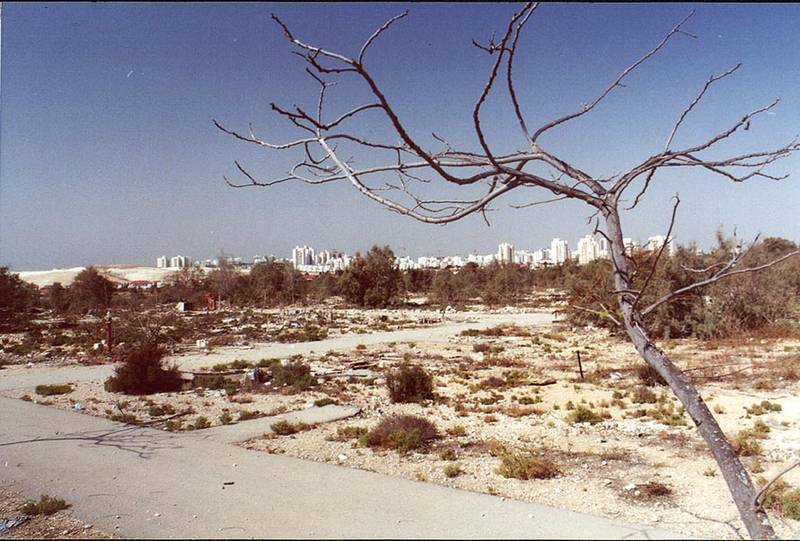

Remains of Atar Nahal Beqa caravan camps (1991-1996) built during a period of mass immigration of Russians and Ethiopians thanks to a former housing minister Ariel Sharon (well known for expansion drive of Jewish settlements). Southern Beer-Sheva, the Middle East


Album 158: Beer-Sheva, October 28 - November 11, 2000
The image presents two photographs of a desolate landscape, with the top picture featuring a barren tree branch and the bottom image showcasing a bare tree trunk. The landscape is dotted with scattered green shrubs, while the background reveals a sprawling cityscape.
The photograph's focus on an abandoned area suggests that it was once a caravan camp built during the mass immigration of Russians and Ethiopians under Ariel Sharon's tenure as housing minister. Despite being situated in Southern Beer-Sheva, the Middle East, the image captures the starkness and emptiness of the landscape. The desolation of the area is juxtaposed with the vibrant cityscape visible in the background, adding a layer of complexity to the narrative.
The image invites viewers to ponder the story behind this once-thriving caravan camp, now abandoned and left to decay. The contrast between the barren landscape and the bustling cityscape serves as a poignant reminder of the transience of human endeavors and the impact of migration on urban development. – AI vision


