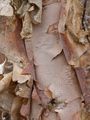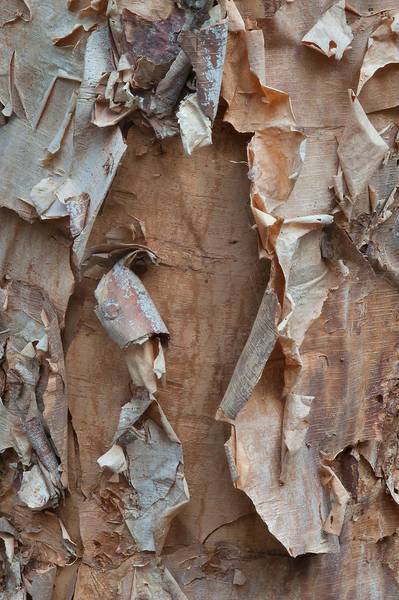

Exfoliating bark of river birch (Betula nigra) in Lick Creek ParkLick Creek: Background Notes. College Station, Texas

Album 901: Calvert - College Station, Texas, December 22 - 26, 2010
The image depicts the exfoliating bark of a river birch tree, showcasing its unique and fascinating characteristic. The bark is characterized by large sheets that peel off from the trunk, revealing new layers underneath. This process occurs due to environmental factors such as temperature fluctuations or moisture changes.
**Key Features:**
* **Trunk:** The trunk of the tree appears strong and sturdy, with a smooth surface visible through the gaps between the peeling bark.
* **Bark Layers:** Multiple layers of bark can be seen in different states of peeling. Some areas have lost all their bark, while others still retain some, creating an interesting contrast between the exposed wood and the remaining bark.
* **Texture:** The texture of the bark is rough and fibrous, with visible ridges or grooves on its surface. This texture adds to the overall rugged appearance of the tree's bark.
**Coloration:**
The coloration of the bark varies across different areas, ranging from light grayish-brown to darker brown tones. Some sections appear almost white due to the peeling process, while others retain more vibrant colors.
**Overall Appearance:**
The image presents a captivating view of the river birch's unique bark characteristic. The combination of the smooth trunk, peeling bark layers, and varied texture creates an intriguing visual display that highlights the natural beauty of this tree species. – AI vision
🇪🇸 Descripción en español / Spanish Description
Corteza exfoliante del abedul rojo (Betula nigra) en Lick Creek Park. College Station, Texas, 24 de diciembre de 2010. La imagen representa la corteza exfoliante de un árbol de abedul rojo, destacando su característica única y fascinante. La corteza se caracteriza por grandes láminas que se pelan del tronco, revelando nuevas capas debajo. Este proceso ocurre debido a factores ambientales como fluctuaciones de temperatura o cambios de humedad. **Características clave:** * **Tronco:** El tronco del árbol parece fuerte y robusto, con una superficie lisa visible a través de los huecos entre la corteza que se desprende. * **Capas de Corteza:** Se pueden ver múltiples capas de corteza en diferentes estados de pelado. Algunas áreas han perdido toda su corteza, mientras que otras aún retienen algo, creando un interesante contraste entre la madera expuesta y la corteza restante. * **Textura:** La textura de la corteza es áspera y fibrosa, con surcos o ranuras visibles en su superficie. Esta textura agrega a la apariencia general rugosa de la corteza del árbol. **Coloración:** La coloración de la corteza varía según las áreas, variando desde tonos marrones grisáceos claros hasta tonos más oscuros. Algunas secciones parecen casi blancas debido al proceso de pelado, mientras que otras retienen colores más vibrantes. **Apariencia general:** La imagen presenta una vista cautivadora de la característica única de corteza del abedul rojo. La combinación del tronco liso, las capas de corteza pelada y la variedad de textura crean un atractivo visual intrigante que destaca la belleza natural de esta especie arbórea. – Spanish translation