
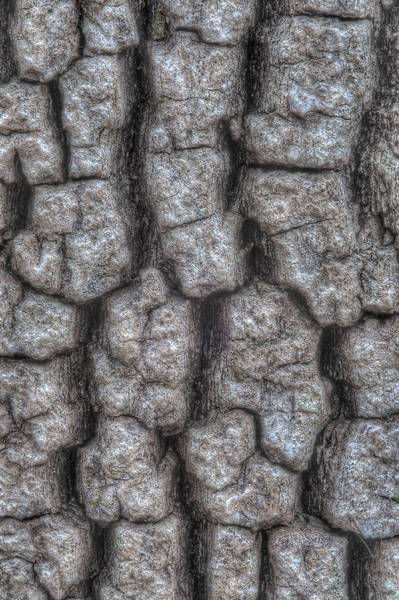

Corky bark of hackberry tree near Racoon Run Trail in Lick Creek ParkLick Creek: Background Notes. College Station, Texas


Album 905: Galveston - College Station, Texas, January 1 - 4, 2011
The image depicts a close-up view of the corky bark on a hackberry tree located near Racoon Run Trail in Lick Creek Park, College Station, Texas. The bark exhibits a distinctive texture and pattern typical of corky bark, featuring numerous small cracks and fissures that give it a rough, rugged appearance.
The bark is predominantly grayish-brown with dark brown edges, providing contrast to the lighter-colored interior of the tree. This coloration allows the bark to blend in with its surroundings while still being visible from a distance. The overall structure of the bark suggests that it has weathered various environmental conditions over time, including exposure to sunlight, wind, and precipitation.
The presence of small cracks and fissures on the surface of the bark indicates that the tree is mature or old-growth, as these features tend to develop with age. This could imply that the hackberry tree has been growing in Lick Creek Park for many years, allowing it to adapt to its environment and develop a unique texture.
Overall, the image provides a detailed view of the corky bark on a hackberry tree, highlighting its distinctive appearance and potential significance as an indicator of the tree's age and environmental resilience. – AI vision
🇪🇸 Descripción en español / Spanish Description
Corteza agrietada de un roble cerca del Racoon Run Trail en Lick Creek Park. College Station, Texas, 4 de enero de 2011. La imagen muestra una vista cercana de la corteza agrietada en un roble ubicado cerca del Racoon Run Trail en Lick Creek Park, College Station, Texas. La corteza presenta una textura y un patrón distintivos típicos de la corteza agrietada, que muestra numerosas grietas pequeñas y fisuras que le dan un aspecto áspero y robusto. La corteza es predominantemente grisácea-parduzca con bordes marrones oscuros, proporcionando contraste al interior de la copa, de color más claro. Esta coloración permite que la corteza se mezcle con su entorno a pesar de ser visible desde lejos. La estructura general de la corteza sugiere que ha resistido varias condiciones ambientales a lo largo del tiempo, incluyendo la exposición al sol, el viento y las precipitaciones. La presencia de pequeñas grietas y fisuras en la superficie de la corteza indica que el árbol es maduro o está en un estado silvestre avanzado, ya que estos rasgos tienden a desarrollarse con la edad. Esto podría sugerir que el roble ha crecido en Lick Creek Park durante muchos años, lo que le permite adaptarse al entorno y desarrollar una textura única. En general, la imagen proporciona una vista detallada de la corteza agrietada en un roble, resaltando su apariencia distintiva y potencial significado como indicador de la edad del árbol y su resistencia ambiental. – Spanish translation


