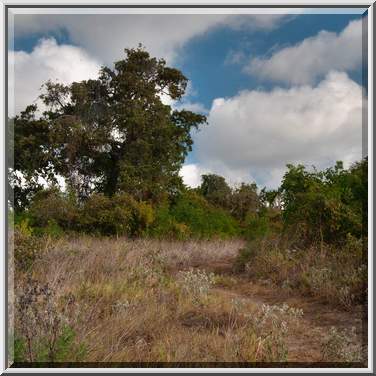
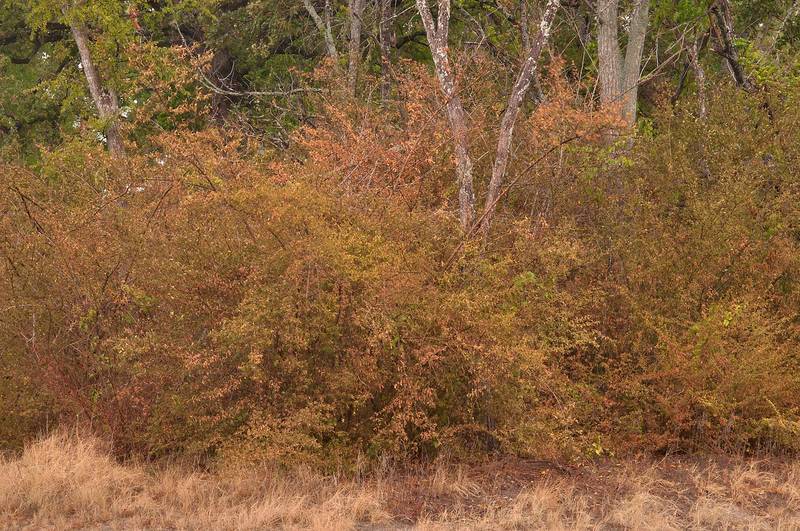
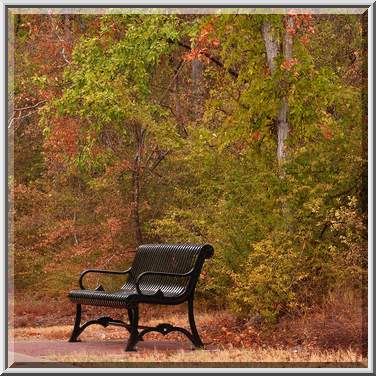
Dying vegetation in Wolf Pen Creek Park. College Station, Texas


Album 979: Lake Somerville - College Station, Texas, August 21 - September 7, 2011
The provided image appears to be a photograph taken during the fall season in Wolf Pen Creek Park, College Station, Texas. The scene features dying vegetation with varying shades of yellow and brown hues, indicative of autumn's transition into winter. The colors are likely attributed to the changing seasons.
In the foreground, there is a grassy area that has turned dry and brown, suggesting an end-of-season decline in moisture levels due to the lack of rainfall or other environmental factors. This phenomenon is not uncommon during late summer or early fall when plants begin to prepare for dormancy by slowing down their growth processes.
Beyond the grassy area lies a dense thicket of vegetation comprising trees and shrubs that have also started to turn yellow or brown, further emphasizing the seasonal shift from summer to winter. The foliage may be exhibiting signs of stress due to various environmental factors such as drought, disease, or pests, which can contribute to premature color changes in plants.
The overall atmosphere conveyed by the image is one of transition and decay, reflecting the natural cycle of growth and renewal that occurs throughout the year. As leaves fall off trees and grasses turn brown, they provide nutrients back to the soil for next season's growth, illustrating an essential part of nature's ecological balance. – AI vision
🇪🇸 Descripción en español / Spanish Description
Vegetación en vías de extinción en Wolf Pen Creek Park. College Station, Texas, 25 de agosto de 2011. La imagen proporcionada parece ser una fotografía tomada durante la temporada otoñal en el parque Wolf Pen Creek, College Station, Texas. La escena presenta vegetación en vías de extinción con diferentes tonos amarillos y marrones, lo que indica la transición del otoño al invierno. Es probable que los colores se atribuyan a las estaciones cambiantes. En primer plano, hay una zona herbosa que ha quedado seca y marrón, sugiriendo un declive de fin de temporada en los niveles de humedad debido a la falta de lluvias u otros factores ambientales. Este fenómeno no es infrecuente durante el final del verano o principios del otoño cuando las plantas comienzan a prepararse para la inactividad al ralentizar sus procesos de crecimiento. Más allá de la zona herbosa se encuentra un denso matorral de vegetación que comprende árboles y arbustos que también han empezado a volverse amarillos o marrones, lo que enfatiza aún más el cambio estacional del verano al invierno. El follaje puede mostrar signos de estrés debido a diferentes factores ambientales como sequía, enfermedades u organismos nocivos, lo que puede contribuir a cambios prematuros de color en las plantas. La atmósfera general transmitida por la imagen es de transición y decadencia, reflejando el ciclo natural de crecimiento y renovación que ocurre a lo largo del año. Mientras caen las hojas de los árboles y hierbas se vuelven marrones, proporcionan nutrientes al suelo para el crecimiento de la próxima temporada, ilustrando una parte esencial del equilibrio ecológico de la naturaleza. – Spanish translation