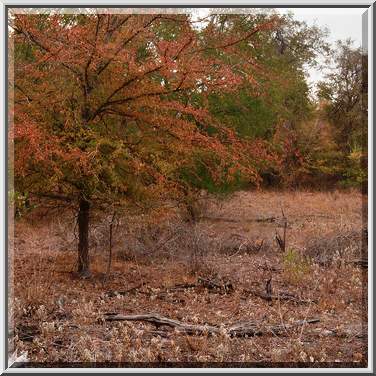
Dying trees in Bee Creek Park. College Station, Texas


Album 980: College Station, Texas, September 8 - 15, 2011
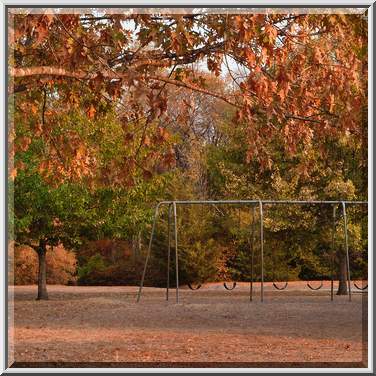
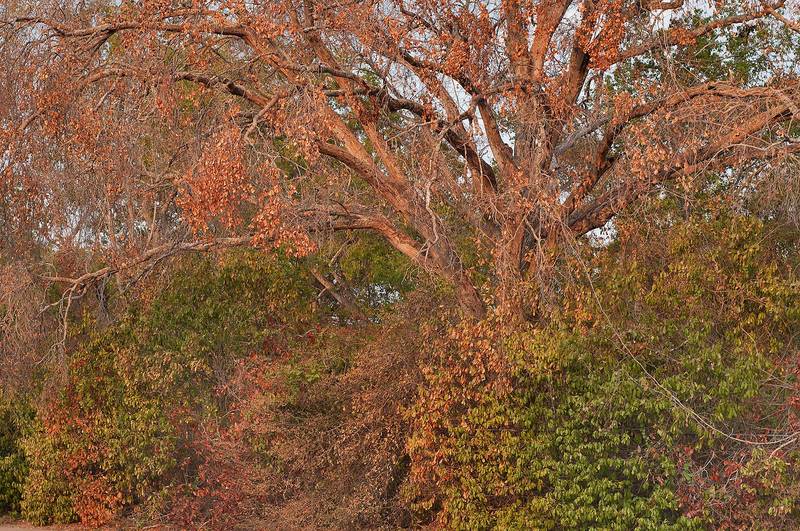
The image captures a serene yet concerning scene within Bee Creek Park in College Station, Texas, on September 15, 2011. The central focus is on several trees, predominantly deciduous species, that have begun to die due to an unknown cause.
**Key Features:**
* **Trees:** Multiple deciduous trees are visible in the image.
* Their branches appear bare and brittle.
* Leaves are absent or withered, indicating severe stress or disease.
* **Leaf Coloration:** The remaining leaves display a dull brown to red hue.
* This color change is characteristic of certain tree species under stress but can also indicate advanced decay in some cases.
* **Park Setting:** The image suggests it was taken within a well-maintained park environment, possibly near walking paths or benches where visitors could appreciate the natural beauty of the area.
**Overall Impression:**
The image conveys a sense of concern and curiosity about the health of these trees. Their condition raises questions about environmental factors, potential diseases, or pests affecting them. The timing (early fall) might imply seasonal changes are not the primary cause for their decline. This scene serves as a visual reminder of the importance of environmental monitoring and conservation efforts to protect local ecosystems. – AI vision
🇪🇸 Descripción en español / Spanish Description
Árboles muriéndose en Bee Creek Park. College Station, Texas, septiembre de 2011. La imagen captura una escena serena pero preocupante dentro del parque Bee Creek en College Station, Texas, el 15 de septiembre de 2011. El centro de atención se encuentra en varios árboles, principalmente especies de hoja caduca, que han comenzado a morirse debido a una causa desconocida. **Características clave:** * **Árboles:** Son visibles múltiples árboles de hoja caduca en la imagen. * Sus ramas aparecen desnudas y quebradizas. * Las hojas están ausentes o marchitas, lo que indica un estrés severo o una enfermedad. * **Coloración de las hojas:** Las hojas restantes muestran un tono marrón oscuro a rojo. * Este cambio de color es característico de ciertas especies de árboles bajo estrés, pero también puede indicar una descomposición avanzada en algunos casos. * **Entorno del parque:** La imagen sugiere que se tomó dentro de un entorno bien mantenido, posiblemente cerca de senderos peatonales o bancos donde los visitantes podían apreciar la belleza natural del área. **Impresión general:** La imagen transmite una sensación de preocupación y curiosidad acerca de la salud de estos árboles. Su condición suscita preguntas sobre factores ambientales, posibles enfermedades o plagas que los afectan. El momento (principios del otoño) podría sugerir que los cambios estacionales no son la causa principal de su declive. Esta escena sirve como un recordatorio visual de la importancia de monitorear el medio ambiente y los esfuerzos de conservación para proteger los ecosistemas locales. – Spanish translation