
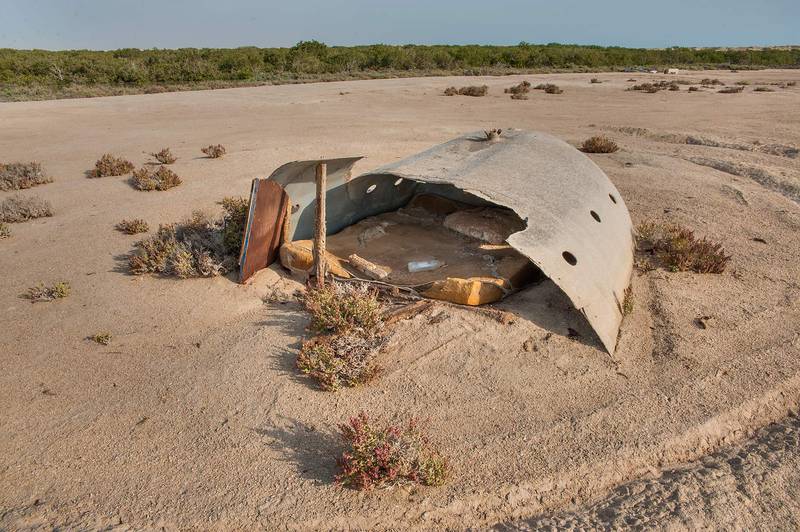

Camping tent(?) in salt marsh near Purple Island (Jazirat Bin Ghanim). Al Khor, Qatar


Album 1505: Al Khor Island - Zubara, Qatar, November 28, 2014
The image shows a collapsed and damaged shelter made from what appears to be a car bonnet or similar material. The shelter has been constructed on top of sand dunes, with its entrance facing north towards Purple Island (Jazirat Bin Ghanim).
It is likely that the shelter was used by travelers or fishermen as a temporary resting place while passing through the area. However, due to its exposed location and lack of protection from wind and rain, it has been damaged over time.
The presence of the shelter in this remote location suggests that there may have been human activity in the area at some point, possibly for fishing or trading purposes. The image provides a glimpse into the lives of people who lived and worked in this harsh environment, and highlights the importance of preserving cultural heritage sites like this one.
Overall, the image is a poignant reminder of the transience of human presence in the natural world and the need to protect and conserve our cultural heritage for future generations. – AI vision


