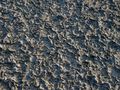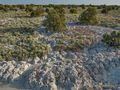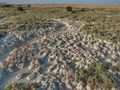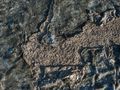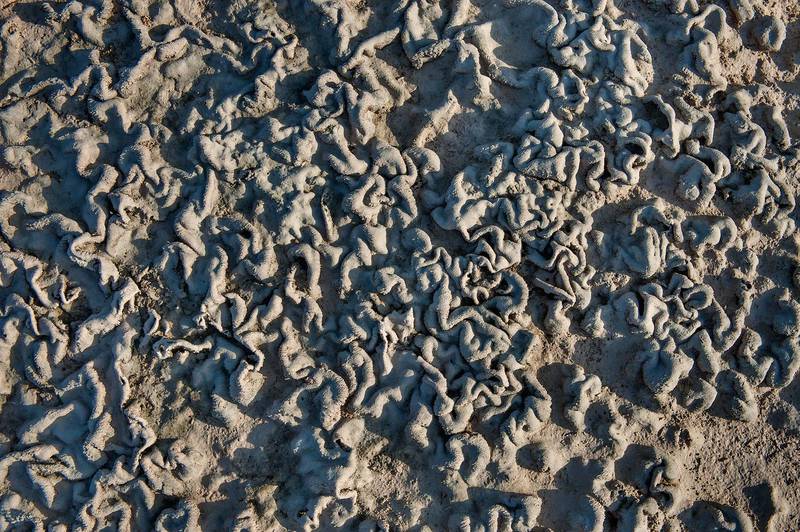
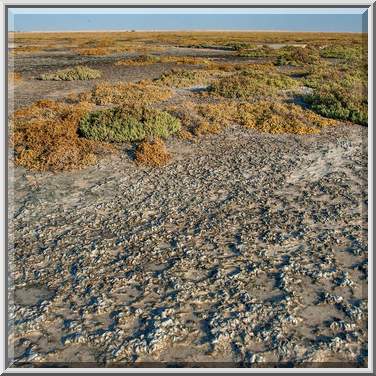
Microbial mats in salt marsh near Al Thakira. Qatar


Album 1508: Al Thakira salt marsh, Qatar, December 5, 2014
The image depicts a close-up view of microbial mats that have formed on the surface of what appears to be sand or mud within a salt marsh near Al Thakira, Qatar. The image is a vertical rectangle and is cropped at both top and bottom.
These mats are composed of microorganisms such as bacteria, algae, and cyanobacteria, which thrive in this environment due to its high salinity and lack of oxygen. They play a crucial role in the ecosystem by stabilizing the soil, fixing nitrogen, and producing organic matter that supports other organisms.
The microbial mats have formed distinct patterns on the surface, with some areas resembling waves or ripples while others appear more irregularly shaped. These textures are likely caused by the movement of water or wind over time, which has molded the mat's structure.
In the background, the surrounding environment is visible through gaps between the mats, revealing a mixture of sand and mud that provides an ideal habitat for these microorganisms to thrive. Overall, this image showcases the unique features of microbial mats in a salt marsh ecosystem, highlighting their importance as both ecological engineers and indicators of environmental conditions. – AI vision