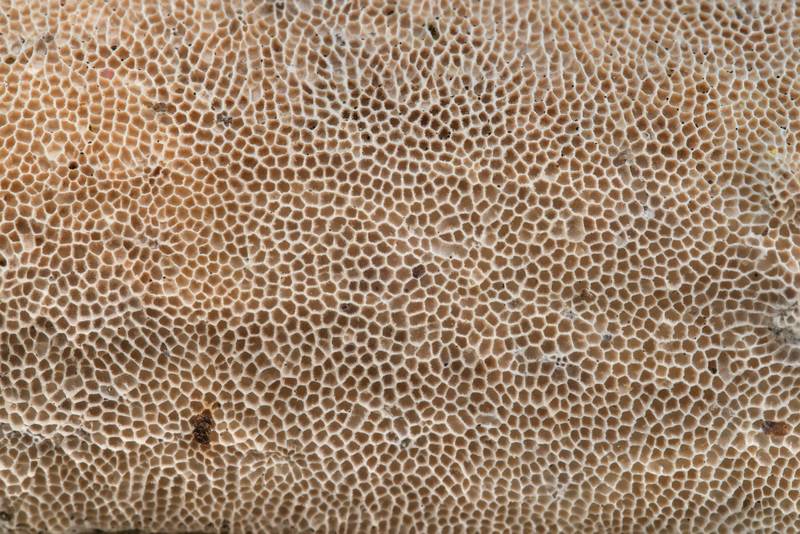

Texture of a resupinate polypore mushroom Megasporoporia setulosa (Dichomitus setulosus) or may be Datronia mollis on a fallen branch on Lone Star Hiking Trail in Sam Houston National Forest, near Huntsville. Texas


Album 2234: Bryan - Sam Houston Forest, Texas, March 8 - 10, 2018
The image presents a close-up view of the surface of a resupinate polypore mushroom, specifically Megasporoporia setulosa (Dichomitus setulosus) or possibly Datronia mollis. The texture of the mushroom is characterized by its irregularly shaped pores, which are densely packed and arranged in a seemingly random pattern.
The pores themselves appear to be small, rounded, and slightly raised above the surrounding surface. They are also somewhat translucent, allowing the viewer to glimpse the underlying tissue of the mushroom. The overall effect is one of intricate detail and texture, with the pores creating a sense of depth and visual interest on the surface of the mushroom.
The background of the image is not visible, as the focus is solely on the texture of the mushroom's surface. However, it can be inferred that the mushroom was found growing on a fallen branch in a forest environment, given the context provided by the caption. The lighting appears to be soft and diffused, which helps to accentuate the texture and detail of the mushroom's pores.
Overall, the image provides a fascinating glimpse into the microscopic world of fungi, highlighting the unique characteristics and features that set this particular species apart from others. – AI vision
🇪🇸 Descripción en español / Spanish Description
Textura de un hongo poliporo resupinado Megasporoporia setulosa (Dichomitus setulosus) o puede ser Datronia mollis en una rama caída en el Lone Star Hiking Trail en el Bosque Nacional Sam Houston, cerca de Huntsville. Texas, 10 de marzo de 2018. La imagen presenta una vista detallada de la superficie de un hongo poliporo resupinado, específicamente Megasporoporia setulosa (Dichomitus setulosus) o posiblemente Datronia mollis. La textura del hongo se caracteriza por sus poros con forma irregular, que están densamente empaquetados y dispuestos en un patrón aparentemente aleatorio. Los propios poros aparecen pequeños, redondeados y ligeramente elevados por encima de la superficie circundante. También son algo translúcidos, lo que permite al observador entrever el tejido subyacente del hongo. El efecto general es uno de detalle e intrincada textura, con los poros creando una sensación de profundidad e interés visual en la superficie del hongo. La parte posterior de la imagen no se puede ver, ya que el enfoque está únicamente en la textura de la superficie del hongo. Sin embargo, se puede inferir que el hongo fue encontrado creciendo en una rama caída en un entorno forestal, dado el contexto proporcionado por el pie de foto. La iluminación parece ser suave y difusa, lo que ayuda a acentuar la textura y los detalles de los poros del hongo. En general, la imagen ofrece una visión fascinante del mundo microscópico de los hongos, destacando las características únicas e individuales que distinguen esta especie en particular de otras. – Spanish translation


