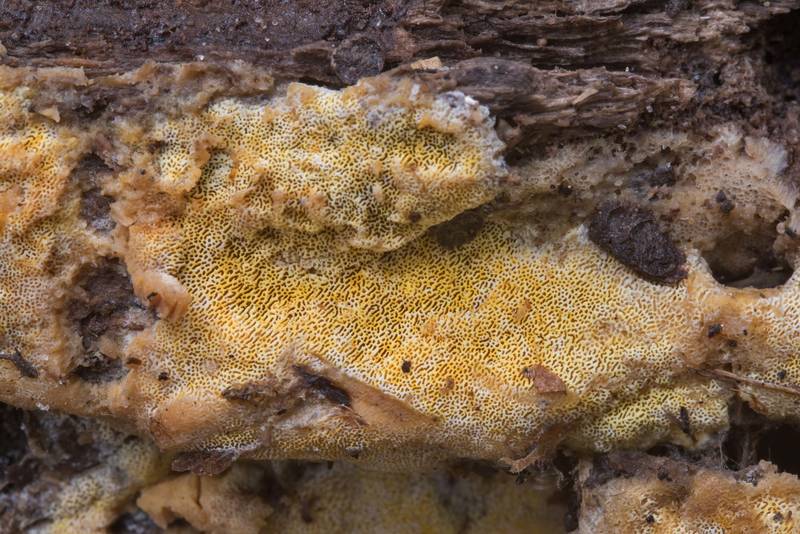
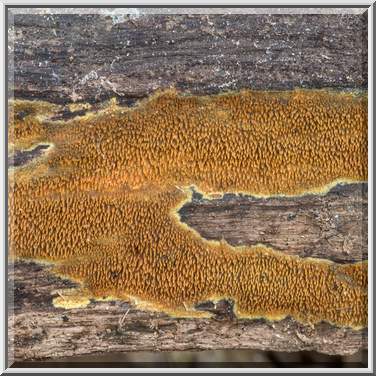
Close up of yellow resupinate poria fungus on rotting oak on Kiwanis Nature Trail. College Station, Texas


Album 2408: College Station - Bryan, Texas, November 28 - 30, 2018
The image presents a detailed close-up view of a yellow resupinate poria fungus growing on a decaying oak log situated on the Kiwanis Nature Trail in College Station, Texas. The photograph was taken by an amateur mycologist and naturalist named Robert F. Hiegel on November 29th, 2018.
**Composition and Layout**
The image is divided into two distinct layers: the upper layer consists of the decaying oak log, while the lower layer features a vibrant yellow resupinate poria fungus covering the entire surface of the rotting wood. The fungus exhibits a unique growth pattern characterized by small, tightly packed spores that resemble tiny teeth.
**Color Palette**
The color palette in this image is predominantly yellow, with subtle brown and gray undertones present throughout. This warm and inviting color scheme contributes to the overall aesthetic appeal of the photograph, making it an attractive representation of nature's beauty.
**Lighting and Shadows**
The lighting in the image appears to be natural, with the sun casting a gentle glow over the entire scene. The shadows cast by the fungus add depth and dimensionality to the composition, creating a visually appealing contrast between light and dark areas.
**Background and Context**
In the background of the photograph, several other decaying logs can be seen, providing context for the growth pattern of the yellow resupinate poria fungus. This suggests that the fungus is thriving in its natural environment, where it plays an important role in breaking down organic matter and recycling nutrients within the ecosystem.
**Mycological Significance**
From a mycological perspective, this image offers valuable insights into the biology and ecology of the yellow resupinate poria fungus. By examining the intricate details of its growth pattern and habitat, researchers can gain a better understanding of how these organisms interact with their environment and contribute to nutrient cycling processes.
**Conclusion**
In conclusion, the provided image is a captivating representation of nature's beauty and complexity. The close-up view of the yellow resupinate poria fungus growing on a decaying oak log showcases the intricate details of this organism's growth pattern and habitat. This photograph not only highlights the importance of preserving and protecting our natural environments but also serves as a valuable resource for mycologists seeking to understand more about these fascinating organisms. – AI vision
🇪🇸 Descripción en español / Spanish Description
La imagen presenta una vista detallada y en primer plano de un hongo amarillo resupinado creciendo sobre una raíz de roble podrido, ubicado en el sendero Kiwanis Nature Trail en College Station, Texas. La fotografía fue tomada por un micólogo aficionado y naturalista llamado Robert F. Hiegel el 29 de noviembre de 2018. **Composición y diseño**
La imagen está dividida en dos capas distintas: la capa superior consiste en la raíz de roble podrido, mientras que la capa inferior presenta un hongo amarillo resupinado vibrante cubriendo toda la superficie del madera pudriéndose. El hongo muestra un patrón único de crecimiento caracterizado por pequeñas esporas estrechamente empaquetadas que se asemejan a dientes minúsculos. **Paleta de colores**
La paleta de colores en esta imagen es predominantemente amarilla, con matices marrones y grises sutiles presentes en todo. Este esquema de color cálido e invitante contribuye a la apariencia estética general de la fotografía, haciéndola una representación atractiva de la belleza natural. **Iluminación y sombras**
La iluminación en la imagen parece ser natural, con el sol proyectando un suave resplandor sobre toda la escena. Las sombras proyectadas por el hongo agregan profundidad y dimensionalidad a la composición, creando un contraste visualmente atractivo entre áreas claras y oscuras. **Fondo y contexto**
En el fondo de la fotografía, se pueden ver varios otros troncos podridos, proporcionando contexto para el patrón de crecimiento del hongo amarillo resupinado. Esto sugiere que el hongo está prosperando en su entorno natural, donde desempeña un papel importante en la descomposición de la materia orgánica y el reciclaje de nutrientes dentro del ecosistema. **Importancia micológica**
Desde una perspectiva micológica, esta imagen ofrece información valiosa sobre la biología y ecología del hongo amarillo resupinado. Al examinar los detalles intrincados de su patrón de crecimiento y hábitat, los investigadores pueden obtener una mejor comprensión de cómo estos organismos interactúan con su entorno y contribuyen a los procesos de reciclaje de nutrientes. **Conclusión**
En conclusión, la imagen proporcionada es una representación cautivadora de la belleza y complejidad de la naturaleza. La vista detallada y en primer plano del hongo amarillo resupinado creciendo sobre un tronco de roble podrido muestra los detalles intrincados de este patrón de crecimiento y hábitat del organismo. Esta fotografía no solo destaca la importancia de preservar y proteger nuestros entornos naturales, sino que también sirve como recurso valioso para micólogos que buscan comprender más sobre estos fascinantes organismos. – Spanish translation