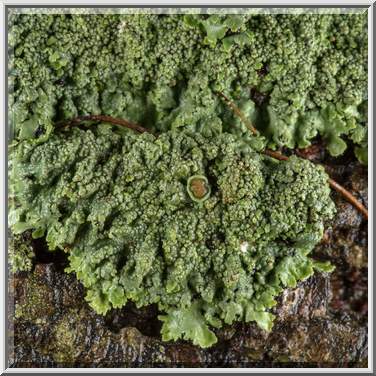


Green patch of Phaeophyscia lichen on an almost dry bush of huisache in Washington-on-the-Brazos State Historic Site. Washington, Texas


Album 2454: Washington-on-the-Brazos, Texas, February 27, 2019
The image depicts a green patch of **Phaeophyscia lichen** growing on the trunk of a dried **huisache bush** at the **Washington-on-the-Brazos State Historic Site** in **Texas**. The **lichen**, which is composed of algae and fungi, appears to be thriving despite the dry environment. Its vibrant green color adds a pop of life to the otherwise barren landscape.
The huisache tree, also known as **Acacia farnesiana**, is a deciduous shrub or small tree native to the Americas. It is commonly found in open areas, including grasslands and savannas, where it can tolerate poor soil conditions and drought. The tree's ability to survive in dry environments makes it an ideal host for various types of lichens.
The Washington-on-the-Brazos State Historic Site is located near **Washington, Texas**, and features several historic buildings that date back to the early 19th century. The site was once home to a small town called **Washington-on-the-Brazos**, which served as the capital of the Republic of Texas from 1836 to 1845. Today, the site is operated by the **Texas Parks and Wildlife Department** and offers guided tours of its historic buildings, as well as exhibits on the history of the region.
Overall, the image provides a glimpse into the unique ecosystem found at the Washington-on-the-Brazos State Historic Site, where lichens can thrive in unexpected environments. – AI vision
🇪🇸 Descripción en español / Spanish Description
Un parche verde de **Phaeophyscia lichen** en un arbusto casi seco de huisache en el Washington-on-the-Brazos State Historic Site. Washington, Texas, 27 de febrero de 2019. La imagen muestra un parche verde del **lichen Phaeophyscia** que crece en el tronco de un arbusto seco de huisache secado en el **Washington-on-the-Brazos State Historic Site** en Texas. El **lichen**, que está compuesto por algas y hongos, parece estar prosperando a pesar del entorno seco. Su vibrante color verde agrega un toque de vida al paisaje árido. El árbol de huisache, también conocido como **Acacia farnesiana**, es un arbusto o pequeño árbol deciduo nativo de las Américas. Se encuentra comúnmente en áreas abiertas, incluidos praderas y sabanas, donde puede tolerar malas condiciones del suelo y sequía. La capacidad del árbol para sobrevivir en entornos secos lo convierte en un anfitrión ideal para varios tipos de líquenes. El Washington-on-the-Brazos State Historic Site está ubicado cerca de **Washington, Texas**, y cuenta con varias edificaciones históricas que datan del inicio del siglo XIX. El sitio fue hogar de una pequeña ciudad llamada **Washington-on-the-Brazos**, que sirvió como capital de la República de Texas de 1836 a 1845. Hoy, el sitio está operado por el **Departamento de Parques y Vida Silvestre de Texas** y ofrece tours guiados de sus edificaciones históricas, así como exhibiciones sobre la historia de la región. En general, la imagen proporciona un vistazo al ecosistema único encontrado en el Washington-on-the-Brazos State Historic Site, donde los líquenes pueden prosperar en entornos inesperados. – Spanish translation


