
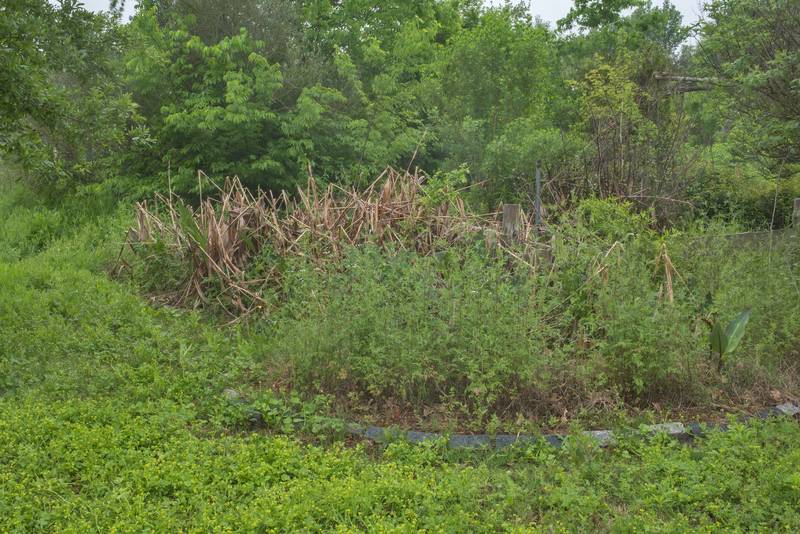

Creeping buttercup Ranunculus repens(?) on a lawn and Japanese hedge-parsley (Torilis japonica) among remains of Canna in Lou Cashion Memorial Garden in TAMU Horticultural Gardens in Texas A&M University. College Station, Texas


Album 2481: Sam Houston Forest - College Station, Texas, April 12 - 13, 2019
The image showcases a lush lawn and garden area within the TAMU Horticultural Gardens at Texas A&M University in College Station, Texas.
In the foreground, the lawn is overgrown with creeping buttercup (Ranunculus repens), characterized by its bright yellow flowers and slender leaves. The presence of this plant suggests that the lawn may require maintenance to prevent its spread.
Beyond the lawn, a mix of remaining Canna plants and Japanese hedge-parsley (Torilis japonica) are visible. The Canna plants, known for their large, showy flowers, appear to be in decline, possibly due to environmental factors or lack of care. In contrast, the Japanese hedge-parsley is thriving, with its fern-like leaves and delicate white flowers adding a touch of elegance to the area.
The overall appearance of the garden suggests that it may require attention to manage the growth of invasive plants like creeping buttercup and ensure the health and well-being of other vegetation.
This image highlights the importance of regular maintenance and care in maintaining the beauty and integrity of gardens, as well as the potential risks associated with introducing non-native plant species. – AI vision
🇪🇸 Descripción en español / Spanish Description
La flor de San Juan Ranunculus repens(?) en un césped y el perejil japonés (Torilis japonica) entre los restos de Canna en el Jardín Memorial Lou Cashion de los Jardines Hortícolas TAMU en la Universidad Texas A&M. College Station, Texas, 13 de abril de 2019. La imagen muestra una zona verde y un jardín hermoso dentro de los Jardines Hortícolas TAMU de la Universidad Texas A&M en College Station, Texas. En primer plano, el césped está infestado con flor de San Juan (Ranunculus repens), caracterizada por sus flores amarillas brillantes y hojas delgadas. La presencia de esta planta sugiere que el césped puede requerir mantenimiento para evitar que se extienda. Más allá del césped, son visibles unas pocas plantas de Canna restantes y perejil japonés (Torilis japonica). Las plantas de Canna, conocidas por sus flores grandes y vistosas, parecen estar en declive, posiblemente debido a factores ambientales o falta de cuidado. En contraste, el perejil japonés está prosperando, con sus hojas similares a las de un helecho y sus delicadas flores blancas añadiendo un toque de elegancia al área. El aspecto general del jardín sugiere que puede requerir atención para controlar el crecimiento de plantas invasoras como la flor de San Juan y garantizar la salud y bienestar de otra vegetación. Esta imagen destaca la importancia del mantenimiento y cuidado regulares para conservar la belleza e integridad de los jardines, así como los riesgos potenciales asociados con la introducción de especies de plantas no nativas. – Spanish translation


