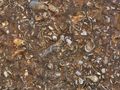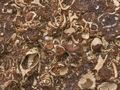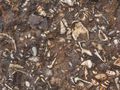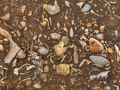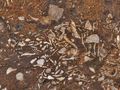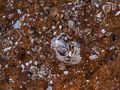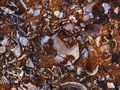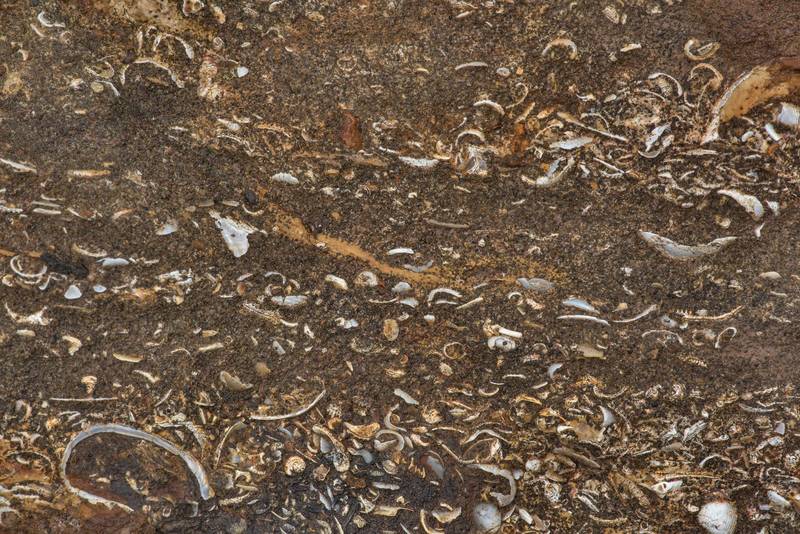
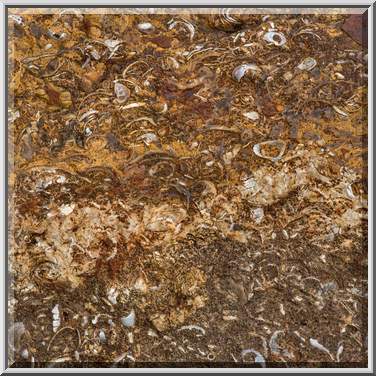
Limestone with fossils near Whiskey Bridge of Brazos River, on Highway 21 west from Bryan. Texas


Album 2605: Fossil site near Bryan, Texas, November 29, 2019
The image depicts a section of limestone embedded with various fossilized organisms.
This rock is likely a part of the geological formation known as the Edwards Group, which dates back to the Cretaceous period, around 100 million years ago. The limestone appears dark brown in color and has a rough texture due to its composition of calcium carbonate (CaCO3) derived from the accumulation of skeletal fragments and shells of marine organisms such as corals, mollusks, or algae.
The fossils present in this section are primarily of invertebrates, including brachiopods, bivalves, gastropods, echinoderms (sea lilies), and crustaceans. These fossils provide evidence of the diversity of life during this period and can be used to study ancient ecosystems.
In addition to its scientific significance, this limestone is also notable for its potential use as a building material. Limestone has been extensively quarried throughout history due to its durability and versatility in construction projects.
Overall, this image offers a unique glimpse into the geological past of Texas and highlights the importance of preserving our natural heritage for future generations.
It should be noted that this rock is not from Whiskey Bridge on Brazos River but rather near it. The actual location might be slightly different. – AI vision
🇪🇸 Descripción en español / Spanish Description
La piedra caliza con fósiles cerca del Puente Whiskey del río Brazos, en la carretera 21 hacia el oeste desde Bryan. Texas, el 29 de noviembre de 2019. La imagen muestra una sección de piedra caliza incrustada con diversos organismos fósiles. Es probable que esta roca sea parte de la formación geológica conocida como Grupo Edwards, que data del período Cretácico, hace aproximadamente 100 millones de años. La piedra caliza tiene un color marrón oscuro y una textura áspera debido a su composición de carbonato de calcio (CaCO3) derivado de la acumulación de fragmentos esqueletales y conchas de organismos marinos como corales, moluscos o algas. Los fósiles presentes en esta sección son principalmente de invertebrados, incluyendo braquiopodos, bivalvos, gastropodos, equinodermos (hipópodos) y crustáceos. Estos fósiles proporcionan evidencia de la diversidad de vida durante este período y pueden ser utilizados para estudiar ecosistemas antiguos. Además de su importancia científica, esta piedra caliza también es notable por su potencial uso como material de construcción. La piedra caliza ha sido extensamente extraída a lo largo de la historia debido a su durabilidad y versatilidad en proyectos de construcción. En general, esta imagen ofrece una visión única del pasado geológico de Texas y resalta la importancia de preservar nuestro patrimonio natural para las generaciones futuras. Cabe señalar que esta roca no es del Puente Whiskey en el río Brazos, sino más bien cerca de él. La ubicación real podría ser ligeramente diferente. – Spanish translation