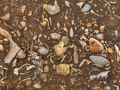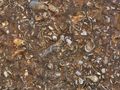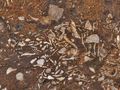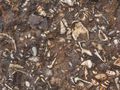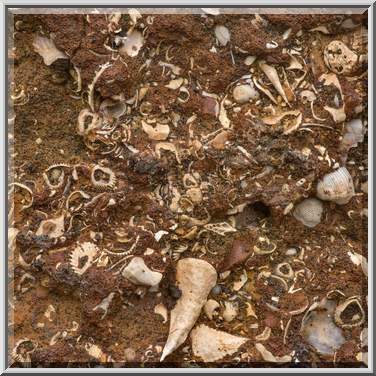
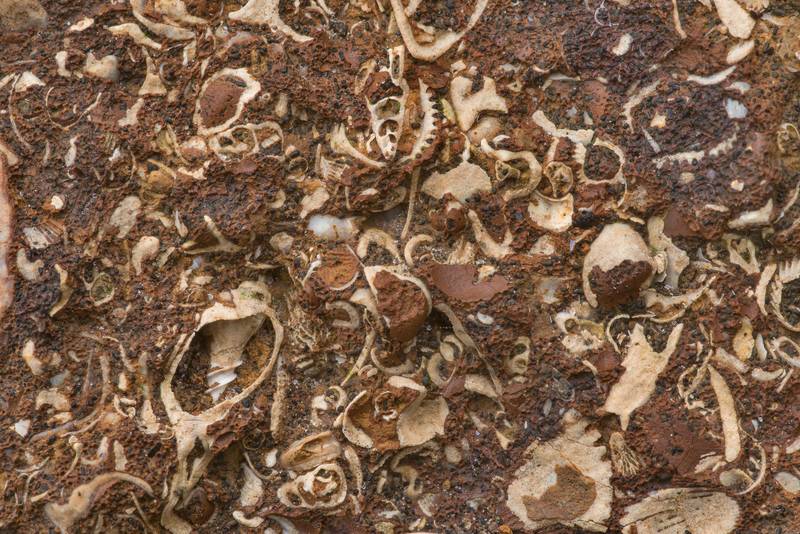
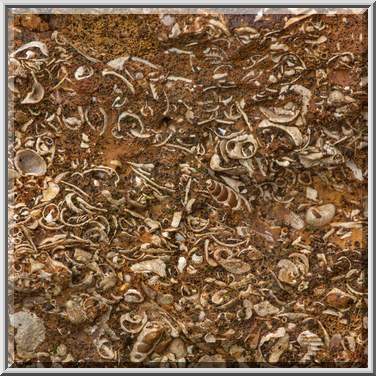
Orange sandstone with sea fossils near Whiskey Bridge of Brazos River, on Highway 21 west from Bryan. Texas


Album 2605: Fossil site near Bryan, Texas, November 29, 2019
The image presents a close-up view of orange-colored sandstone, featuring an abundance of sea fossils embedded within it. The sandstone's surface exhibits a warm, golden hue with subtle variations in tone, giving rise to its distinctive appearance. Amidst the sandstone's texture, numerous fossils are scattered throughout, showcasing a diverse range of shapes and sizes.
Upon closer inspection, some fossilized seashells can be discerned, while others appear to have been broken into fragments or crushed beyond recognition. The overall effect is reminiscent of an archaeological site, where remnants of ancient marine life have been preserved in the sandstone.
In addition to its visual interest, this image also holds significance from a geological perspective. The presence of sea fossils embedded within the sandstone suggests that it was formed during a time when these areas were submerged underwater. This information provides valuable insights into the region's history and evolution over millions of years.
Furthermore, the image highlights the importance of preserving such sites for future generations to study and learn from. By protecting these natural wonders, we can gain a deeper understanding of our planet's past and appreciate its beauty in all forms. – AI vision
🇪🇸 Descripción en español / Spanish Description
Piedra arenisca naranja con fósiles marinos cerca del Puente Whiskey del río Brazos, en la carretera 21 hacia el oeste desde Bryan. Texas, noviembre de 29 de 2019. La imagen presenta una vista detallada de la piedra arenisca de color naranja, caracterizada por una abundancia de fósiles marinos incrustados en ella. La superficie de la piedra arenisca exhibe un tono cálido dorado con sutiles variaciones de tono, lo que da lugar a su apariencia distintiva. Entre la textura de la piedra arenisca se encuentran dispersos numerosos fósiles, mostrando una diversidad de formas y tamaños. Al inspeccionarla más detenidamente, pueden distinguirse algunas conchas fosilizadas, mientras que otras parecen haberse roto en fragmentos o aplastado hasta el punto de no ser reconocibles. El efecto general recuerda a un sitio arqueológico, donde restos de vida marina antigua se han preservado en la piedra arenisca. Además de su interés visual, esta imagen también tiene importancia desde una perspectiva geológica. La presencia de fósiles marinos incrustados en la piedra arenisca sugiere que ésta fue formada en un momento en el que estas áreas estaban sumergidas bajo el agua. Esta información proporciona valiosos datos sobre la historia y evolución de la región a lo largo de millones de años. Además, la imagen destaca la importancia de preservar estos sitios para las generaciones futuras que los estudien y aprendan de ellos. Al proteger estas maravillas naturales, podemos adquirir un conocimiento más profundo del pasado de nuestro planeta y apreciar su belleza en todas sus formas. – Spanish translation