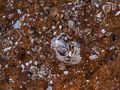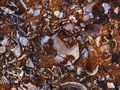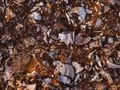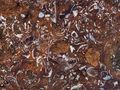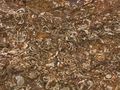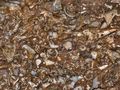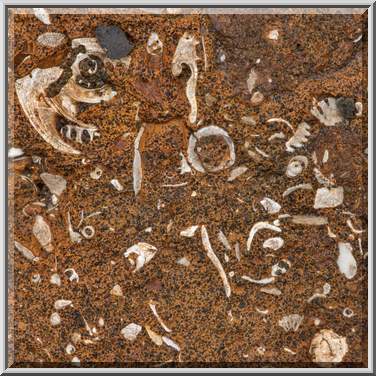
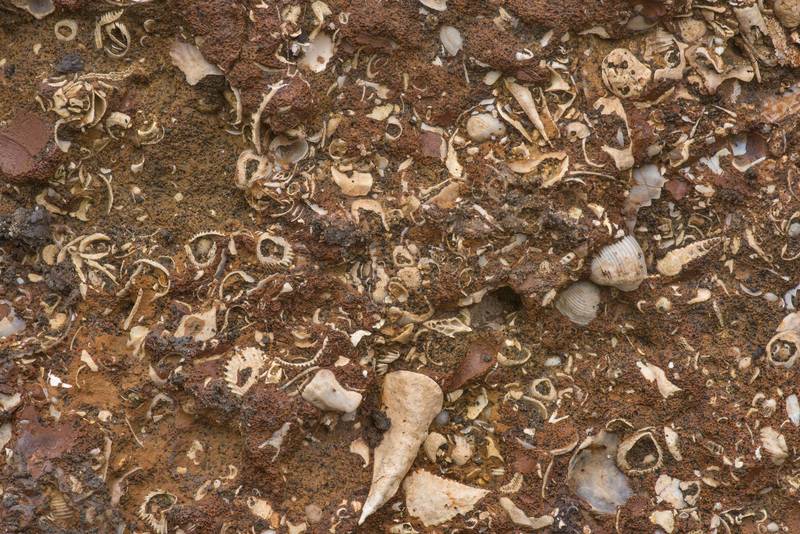
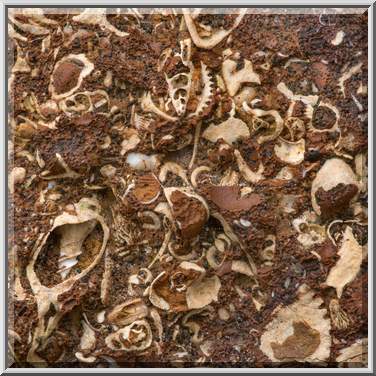
Orange sandstone with fossilized shells near Whiskey Bridge of Brazos River, on Highway 21 west from Bryan. Texas


Album 2605: Fossil site near Bryan, Texas, November 29, 2019
The image presents a close-up view of a section of orange-colored sandstone, which is likely composed of sedimentary rock containing fossilized shells. The sandstone's surface appears rough and uneven, with visible layers or strata that suggest it has been formed through the accumulation of sediments over time.
Upon closer inspection, one can observe various shapes and sizes of fossilized shell fragments scattered throughout the sandstone. These fossils are primarily composed of calcium carbonate, a substance commonly found in shells, and have been preserved within the rock due to their organic origin. Some of these shells seem to be more intact than others, while some appear fragmented or broken.
The surrounding environment appears dry and arid, with no visible signs of vegetation or water nearby. This suggests that the sandstone was likely formed in a coastal or marine environment where the shells were washed up onto land by waves or tides before being buried under layers of sediment.
Overall, the image provides a fascinating glimpse into the geological history of the area, highlighting the processes that have shaped our planet over millions of years. – AI vision
🇪🇸 Descripción en español / Spanish Description
Pizarra arenisca naranja con conchas fosilizadas cerca de Whiskey Bridge of Brazos River, en la carretera 21 hacia el oeste desde Bryan, Texas. El 29 de noviembre de 2019. La imagen presenta una vista detallada de una sección de pizarra arenisca de color naranja, que probablemente está compuesta por rocas sedimentarias que contienen conchas fosilizadas. La superficie de la pizarra arenisca parece rugosa e irregular, con capas o estratos visibles que sugieren que se ha formado a través de la acumulación de sedimentos con el tiempo. Al observarla más de cerca, puede observarse varias formas y tamaños de fragmentos de conchas fosilizadas dispersados por toda la pizarra arenisca. Estos fósiles están compuestos principalmente de carbonato de calcio, una sustancia comúnmente encontrada en conchas, y se han conservado dentro de la roca debido a su origen orgánico. Algunas de estas conchas parecen estar más intactas que otras, mientras que algunas aparecen fragmentadas o rotas. El entorno circundante parece seco y árido, sin signos visibles de vegetación o agua cerca. Esto sugiere que la pizarra arenisca probablemente se formó en un entorno costero o marino donde las conchas fueron arrastradas a tierra por olas o mareas antes de ser enterradas bajo capas de sedimentos. En general, la imagen proporciona una mirada fascinante a la historia geológica del área, destacando los procesos que han dado forma a nuestro planeta durante millones de años. – Spanish translation