 |
| |||||||||||||||

| ||||||||||||||||


| Similar | 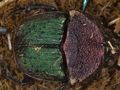  |
  |
  |
  |
  |
| |||||||||||||||||||||||||||
| |||||||||||||||||||||||||||
| 1996 1997 1998 1999 2000 2001 2002 2003 2004 2005 2006 2007 2008 2009 2010 2011 2012 2013 2014 2015 2016 2017 2018 2019 2020 2021 2022 2023 2024 2025 2026 | |||||||||||||||||||||||||||
| New version Slide Show Most Popular Full List Statistics Technical Details Home Page | |||||||||||||||||||||||||||
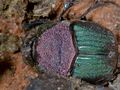
A vibrant rainbow-colored scarab beetle, Phanaeus vindex, with distinctive horns, was discovered in horse dung near the Birch Creek Unit of Somerville Lake State Park in Texas on November 6th, 2020. Its iridescent colors shimmer in the light, creating a stunning visual effect. – generated by AI |
The image presents a close-up view of a beetle, specifically the Rainbow Scarab Beetle (Phanaeus vindex), showcasing its vibrant colors and distinctive features. **Key Features:** * **Body Color:** The beetle's body exhibits a striking iridescent green color with red highlights on the elytra (wing covers) and a metallic bronze sheen. **Eyes and Mandibles:** * **Eyes:** The beetle's eyes are black and appear to have a distinctive shape, possibly indicative of its species. **Legs:** * **Leg Color:** Similar to the body, the legs display an iridescent green color with red highlights. **Background:** * **Color:** The background is dark gray or black, providing a neutral contrast to the beetle's vibrant colors. **Context:** * **Location:** The image was taken at Lake Somerville Trailway near Birch Creek Unit of Somerville Lake State Park in Texas on November 6, 2020. |
Escarabajo arcoíris (Phanaeus vindex, macho, cornudo) extraído de estiércol de caballo en Lake Somerville Trailway cerca de Birch Creek Unit of Somerville Lake State Park. Texas, 6 de noviembre de 2020. La imagen presenta una vista detallada de un escarabajo, específicamente el Escarabajo Arcoíris (Phanaeus vindex), mostrando sus colores vibrantes y características distintivas. **Características clave:** * **Color del cuerpo:** El cuerpo del escarabajo exhibe un color verde iridiscente brillante con resaltos rojos en las élitras (alas) y un brillo de bronces metálico. * **Tamaño:** Aunque no se indica explícitamente, el escarabajo parece ser relativamente grande, dado su tamaño en comparación con el fondo circundante. **Ojos y mandíbulas:** * **Ojos:** Los ojos del escarabajo son negros y parecen tener una forma distintiva, posiblemente indicativa de su especie. * **Mandíbulas:** Las mandíbulas (mandíbulas) son marrón oscuro u oscuras y presentan proyecciones largas y curvadas en sus puntas, lo que sugiere que el escarabajo tiene cuernos. **Piernas:** * **Color de las patas:** Similar al cuerpo, las piernas muestran un color verde iridiscente con resaltos rojos. * **Estructura de las patas:** Cada pata presenta una estructura distintiva, compuesta por cinco segmentos (coxa, trocánter, fémur, tibia y tarso), lo que es típico para los escarabajos. **Antecedentes:** * **Color:** El fondo es de color gris oscuro o negro, proporcionando un contraste neutro con respecto a los colores vibrantes del escarabajo. * **Textura:** La textura parece suave, sin patrones ni marcas visibles que distraigan las características del escarabajo. **Contexto:** * **Ubicación:** La imagen se tomó en Lake Somerville Trailway cerca de Birch Creek Unit of Somerville Lake State Park en Texas el 6 de noviembre de 2020. * **Capturado por:** El escarabajo fue capturado a partir de estiércol de caballo, lo que sugiere una conexión con su hábitat natural y comportamiento alimentario. – Spanish translation |
| [+] | scarab beetle | |
| [+] | texas beetles | |
| [+] | horse |
Keyword variants
high resolution online digital collection
Lake State Park pictures
Lake Somerville Trailway picture
Somerville Lake SP
Somerville Lake photographs
Lone Star State
birch tree photos
United States
picture gallery
photo album
documentary photographs
daily pics
TX
travelogue
snapshots
sightseeing
photowalks
photoblog
graphic
fotografias
foto
brzoza
breza
birken
birke
birk
birchen
birche
birce
betula
beriozka
berioza
bereza
beorc
America