 |
| |||||||||||||||||

| ||||||||||||||||||


| Similar |   |
  |
  |
  |
  |
| |||||||||||||||||||||||||||||
| |||||||||||||||||||||||||||||
| 1996 1997 1998 1999 2000 2001 2002 2003 2004 2005 2006 2007 2008 2009 2010 2011 2012 2013 2014 2015 2016 2017 2018 2019 2020 2021 2022 2023 2024 2025 2026 | |||||||||||||||||||||||||||||
| New version Slide Show Most Popular Full List Statistics Technical Details Home Page | |||||||||||||||||||||||||||||
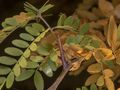
The vibrant hues of autumn adorn the Virginia creeper that blankets the landscape in Lick Creek Park, College Station, Texas. On November 10, 2020, the camera captured the stunning beauty of the fall colors, showcasing a kaleidoscope of warm tones that dance across the foliage. The vivid reds, oranges, and yellows create a breathtaking spectacle, as if nature's canvas had been set ablaze with fiery hues. The photograph captures the essence of the season, inviting the viewer to pause and marvel at the fleeting beauty of fall. – generated by AI |
The image features a close-up view of two leaves from a Virginia creeper plant (Parthenocissus quinquefolia). The top leaf is positioned vertically with its stem at the center and five lobes extending outwards, while the bottom leaf lies horizontally, partially overlapping the top one. Each leaf exhibits a range of colors characteristic of autumn foliage. The veins on both leaves are prominently visible against the green background and display shades of red and yellow. Notably, the tips of each lobe appear to be tinged with black spots or holes, possibly caused by natural decay. These features collectively contribute to the vibrant fall coloration, suggesting that the plant is in the process of shedding its leaves for winter. The Virginia creeper's foliage takes on a reddish hue as it transitions into autumn, ultimately turning brown and falling off the branches. This seasonal transformation is a common phenomenon observed in many deciduous plants during the changing seasons. – AI vision |
Los colores otoñales de la vid arbolada en el Lick Creek Park. College Station, Texas, 10 de noviembre de 2020. La imagen muestra una vista detallada de dos hojas de una planta trepadora (Parthenocissus quinquefolia). La hoja superior está posicionada verticalmente con su tallo en el centro y cinco lóbulos que se extienden hacia fuera, mientras que la hoja inferior está horizontal, solapando parcialmente a la superior. Cada hoja exhibe una gama de colores característicos del follaje otoñal. Las venas en ambas hojas son prominentemente visibles contra el fondo verde y presentan tonos rojos y amarillos. Es importante destacar que las puntas de cada lóbulo parecen tener manchas negras u orificios, posiblemente causados por descomposición natural. Estos rasgos contribuyen colectivamente a la vibrante coloración otoñal, lo que sugiere que la planta está en el proceso de perder sus hojas para el invierno. El follaje de la vid arbolada adquiere un tono rojizo a medida que se transita hacia el otoño, tornándose finalmente marrón y cayendo de los ramales. Esta transformación estacional es un fenómeno común observado en muchas plantas deciduas durante la cambiante temporada de estaciones. – Spanish translation |
| [+] | fall colors | |
| [+] | texas fall pictures | |
| [+] | fall november |
Keyword variants
high resolution online digital collection
Lick Creek Park images
Berlin on the Brazos
Rock Prairie Rd
Lone Star State
Greens Prairie Road
United States
picture gallery
photo album
nature trails
Nature Park
documentary photographs
daily pics
conservative town
Brazos County
wildlife
TX
travelogue
snapshots
sightseeing
photowalks
photoblog
graphic
fotografias
foto
Bryan
America
Aggieland