
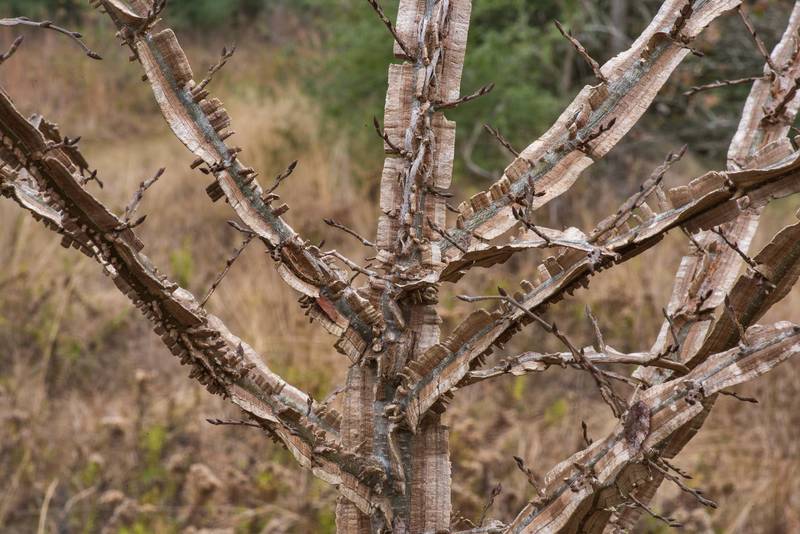

Winged elm (Ulmus alata) in prairie on Post Oak Trail in Lick Creek ParkLick Creek: Background Notes. College Station, Texas


Album 2822: College Station - Sam Houston Forest, Texas, November 27 - 29, 2020
The image features a barren winged elm tree set against a backdrop of dry grasses and shrubs. The tree's trunk is long and slender, with numerous branches that stretch out from it like arms. Its bark has been stripped away, leaving behind a smooth, grayish-brown surface.
In the background, a variety of plants are visible, including tall grasses, shrubs, and small trees. Some of these plants appear to be dead or dying, while others seem to still be alive but struggling due to the harsh conditions. The overall atmosphere of the image is one of desolation and decay, with the bare tree standing out starkly against the dull, muted colors of its surroundings.
The presence of leaves on some of the surrounding plants suggests that this area may have been affected by a recent storm or natural disaster, leaving behind a trail of destruction in its wake. Despite this, there is a sense of resilience and determination emanating from the image, as if the plants are trying to hold on despite the odds against them.
Overall, the image presents a poignant reminder of the fragility and beauty of nature, highlighting both the devastating impact of environmental disasters and the incredible ability of living things to adapt and survive in even the most challenging conditions. – AI vision
🇪🇸 Descripción en español / Spanish Description
El olmo dentado (Ulmus alata) en pradera en el Post Oak Trail en Lick Creek Park. College Station, Texas, 27 de noviembre de 2020. La imagen muestra un árbol de olmo dentado desnudo frente a un paisaje de hierbas y arbustos secos. El tronco del árbol es largo y delgado, con numerosas ramas que se extienden como brazos desde él. Su corteza ha sido arrancada, dejando una superficie lisa parduzca. En el fondo, es visible una variedad de plantas, incluyendo altas hierbas, arbustos y pequeños árboles. Algunas de estas plantas parecen estar muertas o muriendo, mientras que otras parecen aún vivas pero luchando debido a las duras condiciones. La atmósfera general de la imagen es una de desolación y decadencia, con el árbol desnudo destacando fuertemente contra los colores apagados y amortiguados de su entorno. La presencia de hojas en algunas de las plantas circundantes sugiere que esta área puede haber sido afectada por una reciente tormenta o desastre natural, dejando un reguero de destrucción a su paso. A pesar de esto, se percibe una sensación de resiliencia y determinación en la imagen, como si las plantas estuvieran intentando agarrarse a pesar de las probabilidades en su contra. En general, la imagen presenta un recordatorio conmovedor de la fragilidad y belleza de la naturaleza, destacando tanto el impacto devastador de los desastres ambientales como la increíble habilidad de los seres vivos para adaptarse y sobrevivir en las condiciones más difíciles. – Spanish translation


