 |
| |||||||||||||||||

| ||||||||||||||||||


| Similar | 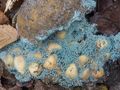  |
  |
  |
  |
  |
| |||||||||||||||||||||||||||||
| |||||||||||||||||||||||||||||
| 1996 1997 1998 1999 2000 2001 2002 2003 2004 2005 2006 2007 2008 2009 2010 2011 2012 2013 2014 2015 2016 2017 2018 2019 2020 2021 2022 2023 2024 2025 2026 | |||||||||||||||||||||||||||||
| New version Slide Show Most Popular Full List Statistics Technical Details Home Page | |||||||||||||||||||||||||||||
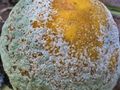
A fallen trifoliate orange fruit on Caney Creek Trail in Sam Houston National Forest, Texas, was found to have green mould growth caused by the fungus Penicillium digitatum(?) on November 7, 2021. The mould was likely the result of the fruit's exposure to moisture and warm temperatures, which created an ideal environment for the fungus to grow. The presence of this mould highlights the importance of understanding the factors that contribute to the growth and spread of fungi in different ecosystems. – generated by AI |
The image depicts a fallen fruit of a trifoliate orange on the forest floor, with a significant portion of it covered in blue mold caused by the fungus Penicillium italicum(?) The fruit has been split open, revealing its yellowish-orange interior and multiple seeds. **Key Features:** * **Fruit:** The fruit is oval-shaped and approximately 2-3 inches in length. Its surface is rough and slightly wrinkled. **Background:** * The fruit is lying on a bed of dry leaves and twigs, suggesting that it has fallen from a nearby tree. Overall, the image provides a detailed view of the effects of mold growth on a fallen fruit, highlighting the importance of proper storage and handling techniques to prevent such occurrences. – AI vision |
Mold azul causado por el hongo Penicillium italicum(?) en un fruto caído de naranjo trifoliado en Caney Creek Trail (Little Lake Creek Loop Trail) en Sam Houston National Forest al norte de Montgomery, Texas, 7 de noviembre de 2021. La imagen muestra un fruto caído de un naranjo trifoliado en el suelo del bosque, con una parte significativa cubierta de moho azul causado por el hongo Penicillium italicum(?). El fruto ha sido abierto, revelando su interior amarillento-naranja y múltiples semillas. **Características clave:** * **Fruta:** La fruta tiene forma ovalada y aproximadamente 2-3 pulgadas de largo. Su superficie es áspera y ligeramente arrugada. * **Moho:** Una capa gruesa de moho azul cubre la mayor parte de la superficie del fruto. El moho parece estar creciendo rápidamente, con visibles tentáculos que se extienden por el fruto. * **Interior:** Al abrirse el fruto, su interior amarillento-naranja se vuelve visible. Varios granos están dispersos por toda la pulpa. **Antecedentes:** * El fruto está tendido sobre una cama de hojas secas y ramitas, lo que sugiere que ha caído de un árbol cercano. * El entorno circundante parece ser un suelo forestal o área boscosa, con otros materiales vegetales y restos esparcidos alrededor. En general, la imagen proporciona una vista detallada de los efectos del crecimiento del moho en un fruto caído, lo que destaca la importancia de las técnicas adecuadas de almacenamiento y manipulación para prevenir tales casos. – Spanish translation |
Keyword variants
Houston National Forest visual image
high resolution online digital collection
Creek Loop Trail online image
Lake Creek Loop images
Caney Creek Trail pix
Lone Star State
Little Lake shot
United States
picture gallery
photo album
documentary photographs
daily pics
TX
travelogue
snapshots
sightseeing
photowalks
photoblog
littel
graphic
fotografias
foto
America