 |
| |||||||||||||||

| ||||||||||||||||


| Similar |   |
  |
  |
  |
  |
| |||||||||||||||||||||||||||
| |||||||||||||||||||||||||||
| 1996 1997 1998 1999 2000 2001 2002 2003 2004 2005 2006 2007 2008 2009 2010 2011 2012 2013 2014 2015 2016 2017 2018 2019 2020 2021 2022 2023 2024 2025 2026 | |||||||||||||||||||||||||||
| New version Slide Show Most Popular Full List Statistics Technical Details Home Page | |||||||||||||||||||||||||||
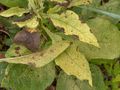
Under the lens of a microscope, the spores of Coleosporium viguierae, a rust fungus, were discovered on the leaves of frostweed (Verbesina virginica) growing along a pipeline right-of-way in Lick Creek Park, College Station, Texas. This observation was made on August 18, 2022. – generated by AI |
The image depicts spores under a microscope for observation and identification purposes. The sample is stained with Lugol solution, which causes fungi to turn dark brown or black due to the presence of chitin in their cell walls. The spores appear elongated with rounded ends and have striations on their surface. They are approximately 1/4 inch in length and are visible against a white background. The image does not provide any further information regarding the size, shape, color, or other characteristics of the specimen. The sample is likely identified as Coleosporium viguierae based on its unique appearance under Lugol staining, which is a common method used to identify fungi. However, without additional context or information about the location where the sample was collected and the time it was taken, it is difficult to say for certain what type of organism this image represents. Overall, the image provides valuable information for researchers studying plant diseases caused by rust fungi such as Coleosporium viguierae. It also highlights the importance of proper sampling techniques and microscopic analysis in identifying organisms accurately. – AI vision |
Las esporas de un hongo del mildiú polvoriento, Coleosporium viguierae (?) (bajo el microscopio en una solución de Lugol) se encuentran en las hojas del helecho (Verbesina virginica) en una vía férrea junto a un parque de Lick Creek un día antes. College Station, Texas, 18 de agosto de 2022. La imagen representa esporas bajo el microscopio con fines de observación e identificación. La muestra se tiñe con una solución de Lugol, que hace que los hongos se vuelvan marrón oscuro o negro debido a la presencia de quitina en sus paredes celulares. Las esporas parecen alargadas con extremos redondeados y tienen estriaciones en su superficie. Tienen una longitud de aproximadamente 1/4 de pulgada (0,64 cm) y son visibles sobre un fondo blanco. La imagen no proporciona más información acerca del tamaño, forma, color u otras características de la muestra. La muestra se identifica como Coleosporium viguierae en base a su aspecto único bajo el teñido con Lugol, que es un método común utilizado para identificar hongos. Sin embargo, sin contexto adicional o información acerca de la ubicación donde se tomó la muestra y la hora en la que fue tomada, es difícil saber con certeza qué tipo de organismo representa esta imagen. En general, la imagen proporciona información valiosa para los investigadores que estudian enfermedades vegetales causadas por hongos del mildiú polvoriento como Coleosporium viguierae. También resalta la importancia de las técnicas adecuadas de toma de muestras y el análisis microscópico para identificar organismos con precisión. – Spanish translation |
Keyword variants
microscopy
micrograph
high resolution online digital collection
Lick Creek Park photograph
Berlin on the Brazos
Rock Prairie Rd
Lone Star State
Greens Prairie Road
United States
picture gallery
photo album
nature trails
Nature Park
documentary photographs
daily pics
conservative town
Brazos County
wildlife
TX
travelogue
snapshots
sightseeing
photowalks
photoblog
graphic
fotografias
foto
Bryan
America
Aggieland