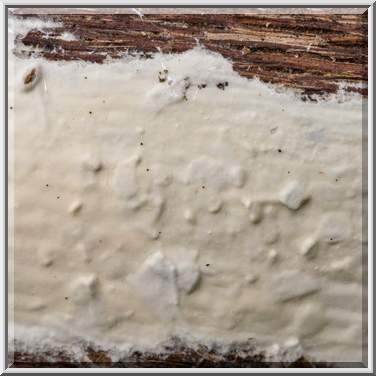
White paint-like corticioid fungus on a fallen barkless elm(?) tree in Lick Creek ParkLick Creek: Background Notes. College Station, Texas


Album 3388: College Station, Texas, April 19, 2023
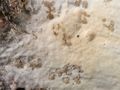
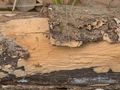
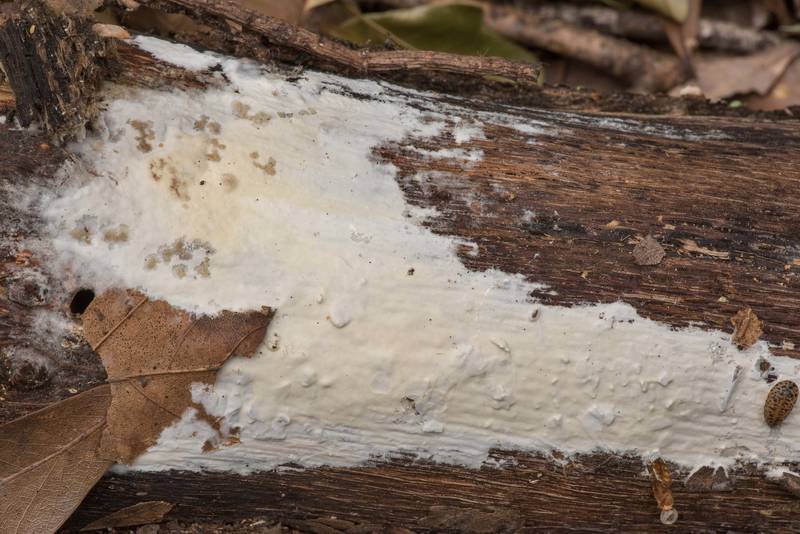
The image presents a close-up view of a fallen, barkless elm tree trunk or branch that has been colonized by a white, paint-like corticioid fungus. The fungus's growth pattern is characterized by its smooth, flat appearance, with a slightly irregular texture in places.
In the upper left corner of the photograph, there appears to be an insect tunnel leading into the decaying wood, suggesting that the tree was likely infested with insects before succumbing to decay caused by the corticioid fungus. The presence of this tunnel and the surrounding decayed wood implies that the tree had been weakened or compromised in some way prior to its death.
The photograph is taken from a somewhat overhead perspective, allowing for an unobstructed view of the fallen tree trunk. The overall composition of the image effectively conveys the idea that the corticioid fungus has taken hold of the decaying wood, highlighting its ability to thrive in environments where other organisms have already begun to break down the material.
* **Background:** The background of the photograph is comprised of a mixture of fallen leaves and twigs on the ground, which serves as a subtle reminder of the natural environment in which the fungus has taken root.
* The presence of these organic materials adds context to the image by suggesting that the tree was likely part of a larger ecosystem before its death.
* **Subject:** The primary subject of the photograph is the fallen, barkless elm tree trunk or branch, which has been colonized by the white, paint-like corticioid fungus.
* The fungus's smooth, flat appearance and slightly irregular texture in places create an interesting visual contrast against the rough, decaying wood.
* **Composition:** The composition of the image is straightforward, with the fallen tree trunk serving as the central focus.
* The camera angle is from above, providing a clear view of the fungus's growth pattern without any obstructions or distractions.
In summary, the photograph presents a detailed and informative view of a corticioid fungus colonizing a fallen, barkless elm tree trunk. The image effectively conveys the idea that the fungus has taken hold of the decaying wood, highlighting its ability to thrive in environments where other organisms have already begun to break down the material. – AI vision
🇪🇸 Descripción en español / Spanish Description
El corticioide blanco en forma de pintura sobre un olmo sin corteza (?) caído en Lick Creek Park. College Station, Texas, 19 de abril de 2023. La imagen presenta una vista detallada del tronco o ramas del olmo que ha sido colonizado por un corticioide blanco y en forma de pintura. El patrón de crecimiento del hongo se caracteriza por su apariencia lisa y plana, con una textura ligeramente irregular en algunos lugares. En la esquina superior izquierda de la fotografía, parece haber un túnel de insectos que lleva hacia dentro de la madera en descomposición, lo que sugiere que el árbol probablemente estaba infestado con insectos antes de sucumbir a la descomposición causada por el corticioide. La presencia de este túnel y la madera descompuesta circundante indica que el árbol se había debilitado o visto comprometido de alguna manera antes de morir. La fotografía se toma desde una perspectiva algo superior, lo que permite una vista despejada del tronco del árbol caído. La composición global de la imagen transmite efectivamente la idea de que el corticioide ha tomado posesión de la madera en descomposición, resaltando su capacidad para prosperar en entornos donde otros organismos ya han comenzado a descomponer el material. **Fondo:** El fondo de la fotografía está formado por una mezcla de hojas y ramitas caídas sobre el suelo, lo que sirve como recordatorio sutil del entorno natural en el que ha germinado el hongo. **Sujeto:** El sujeto principal de la fotografía es el tronco o rama del olmo sin corteza, que ha sido colonizado por el corticioide blanco y en forma de pintura. **Composición:** La composición de la imagen es sencilla, con el tronco del árbol caído como elemento central. **La cámara está encuadrada desde arriba, lo que permite una vista despejada del patrón de crecimiento del hongo sin obstáculos ni distracciones.** En resumen, la fotografía presenta una vista detallada y documental de un corticioide colonizando el tronco de un olmo caído. La imagen transmite efectivamente la idea de que el hongo ha tomado posesión de la madera en descomposición, destacando su capacidad para prosperar en entornos donde otros organismos ya han comenzado a descomponer el material. – Spanish translation