 |
| |||||||||||||||

| ||||||||||||||||


| Similar | 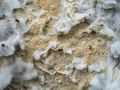  |
  |
  |
  |
  |
| |||||||||||||||||||||||||||
| |||||||||||||||||||||||||||
| 1996 1997 1998 1999 2000 2001 2002 2003 2004 2005 2006 2007 2008 2009 2010 2011 2012 2013 2014 2015 2016 2017 2018 2019 2020 2021 2022 2023 2024 2025 2026 | |||||||||||||||||||||||||||
| New version Slide Show Most Popular Full List Statistics Technical Details Home Page | |||||||||||||||||||||||||||
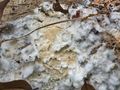
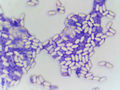
Cotton-like spores of an irregular, web-like corticioid fungus were collected from a fallen oak in Lick Creek Park, College Station, Texas on April 19, 2023. The delicate, fluffy texture resembles cotton and adds to the unique appearance of this fascinating fungus. – generated by AI |
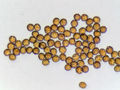
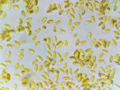
The image shows numerous spores that appear to be yellow and oval-shaped. They are scattered across the surface of a white background, with some spores overlapping each other. The spores vary slightly in size and shape, but most are roughly the same length as they are wide. It is difficult to determine the exact species of fungus from this image alone, as many different types of fungi produce similar-looking spores. However, based on the description provided in the caption, it is possible that these spores belong to a corticioid fungus, which is a type of fungus that grows on wood and has irregular or web-like growth patterns. The fact that the fungus was collected from a fallen oak tree suggests that it may be a common species found in forests. The presence of cotton-like or web-like growths on the surface of the spores also supports this idea, as some corticioid fungi are known to produce these types of structures. Overall, while more information would be needed to definitively identify the species of fungus represented by these spores, they appear to be consistent with a corticioid fungus that grows on wood. – AI vision |
Las esporas de hongos corticiales irregulares, similares a algodón o a red que se recolectaron en Lick Creek Park. College Station, Texas, el 19 de abril del 2023. La imagen muestra numerosas esporas que parecen ser amarillas y con forma de óvalo. Están dispersas por toda la superficie de un fondo blanco, algunas esporas se solapan entre sí. Las esporas varían ligeramente en tamaño y forma, pero la mayoría son más o menos del mismo largo que ancho. Es difícil determinar la especie exacta de hongo a partir de esta imagen por sí solo, ya que muchos tipos diferentes de hongos producen esporas con aspecto similar. Sin embargo, basándose en la descripción proporcionada en el pie de foto, es posible que estas esporas pertenezcan a un hongo corticial, que es un tipo de hongo que crece en la madera y tiene patrones de crecimiento irregulares o similares a redes. El hecho de que se recolectara el hongo de un árbol caído sugiere que puede ser una especie común encontrada en los bosques. La presencia de crecimientos similares al algodón o similares a redes en la superficie de las esporas también respalda esta idea, ya que algunos hongos corticiales producen estos tipos de estructuras. En general, aunque se necesitarían más información para identificar definitivamente la especie de hongo representada por estas esporas, parecen ser consistentes con un hongo corticial que crece en madera. – Spanish translation |
Keyword variants
microscopy
micrograph
high resolution online digital collection
Lick Creek Park images
Berlin on the Brazos
Rock Prairie Rd
Lone Star State
Greens Prairie Road
United States
picture gallery
photo album
nature trails
Nature Park
documentary photographs
daily pics
conservative town
Brazos County
wildlife
TX
travelogue
snapshots
sightseeing
photowalks
photoblog
graphic
fotografias
foto
Bryan
America
Aggieland