 |
| |||||||||||||||||

| ||||||||||||||||||


| Similar |   |
  |
  |
  |
  |
| |||||||||||||||||||||||||||||
| |||||||||||||||||||||||||||||
| 1996 1997 1998 1999 2000 2001 2002 2003 2004 2005 2006 2007 2008 2009 2010 2011 2012 2013 2014 2015 2016 2017 2018 2019 2020 2021 2022 2023 2024 2025 2026 | |||||||||||||||||||||||||||||
| New version Slide Show Most Popular Full List Statistics Technical Details Home Page | |||||||||||||||||||||||||||||
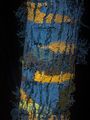
This image showcases an artistic depiction of lichens thriving on the trunk of a honey mesquite tree, captured under ultraviolet light. The photograph is presented as part of a series documenting the vibrant colors and patterns exhibited by these organisms when illuminated with UV light. The honey mesquite, characterized by its gray bark, provides a striking contrast to the lichens that have grown upon it. The lichens are predominantly yellow in color, although some may appear blue due to their luminescent properties under UV illumination. This unique phenomenon is attributed to the presence of fluorescent pigments within the lichen's thallus (the vegetative part of a lichen). These pigments absorb ultraviolet light and re-emit it as visible light at longer wavelengths, resulting in the characteristic blue or yellow hues. The photographer has skillfully captured the intricate patterns and textures of the lichens, which appear to be densely clustered on the tree trunk. The use of UV lighting highlights the delicate details of these organisms, revealing their intricate structures and vibrant colors. In addition to its aesthetic appeal, this image serves as a scientific tool for studying the biology and ecology of lichens. By examining the distribution, abundance, and diversity of lichens on different tree species, researchers can gain insights into the complex relationships between these organisms and their environment. Overall, this photograph is a fascinating example of the beauty and diversity of lichens, showcasing their ability to thrive in a variety of environments and highlighting the importance of continued scientific research into these unique organisms. – AI vision |
Los líquenes brillan azul y amarillo en el tronco de un arbusto de miel bajo luz ultravioleta en Post Oak Trail en Lick Creek Park. College Station, Texas, 5 de septiembre de 2024. Esta imagen muestra una representación artística de los líquenes que prosperan en el tronco de un árbol de miel, capturados bajo luz ultravioleta. La fotografía se presenta como parte de una serie que documenta los colores y patrones vibrantes exhibidos por estos organismos cuando son iluminados con luz UV. El arbusto de miel, caracterizado por su corteza grisácea, proporciona un contraste sorprendente a los líquenes que han crecido sobre él. Los líquenes tienen predominantemente color amarillo, aunque algunos pueden aparecer azules debido a sus propiedades luminiscentes bajo iluminación UV. Este fenómeno único se atribuye a la presencia de pigmentos fluorescentes dentro del tallo (la parte vegetativa de un líquen). Estos pigmentos absorben la luz ultravioleta y re-emiten luz visible en longitudes de onda más largas, lo que da lugar a los característicos tonos azules o amarillos. El fotógrafo ha capturado hábilmente las intrincadas pautas y texturas de los líquenes, que aparecen densamente agrupados en el tronco del árbol. El uso de iluminación UV destaca los detalles delicados de estos organismos, revelando sus complejas estructuras y colores vibrantes. Además de su atractivo estético, esta imagen sirve como una herramienta científica para estudiar la biología y ecología de los líquenes. Al examinar la distribución, abundancia y diversidad de líquenes en diferentes especies de árboles, los investigadores pueden obtener información sobre las complejas relaciones entre estos organismos y su entorno. En general, esta fotografía es un ejemplo fascinante de la belleza y diversidad de los líquenes, mostrando su capacidad para prosperar en una variedad de entornos y destacando la importancia de la investigación científica continuada sobre estos organismos únicos. – Spanish translation |
Keyword variants
Lick Creek Park photo capture
high resolution online digital collection
Post Oak Trail photos
Berlin on the Brazos
Rock Prairie Rd
Lone Star State
Greens Prairie Road
United States
picture gallery
photo album
nature trails
Nature Park
documentary photographs
daily pics
conservative town
Brazos County
wildlife
TX
travelogue
snapshots
sightseeing
photowalks
photoblog
graphic
fotografias
foto
Bryan
America
Aggieland