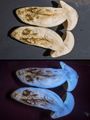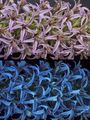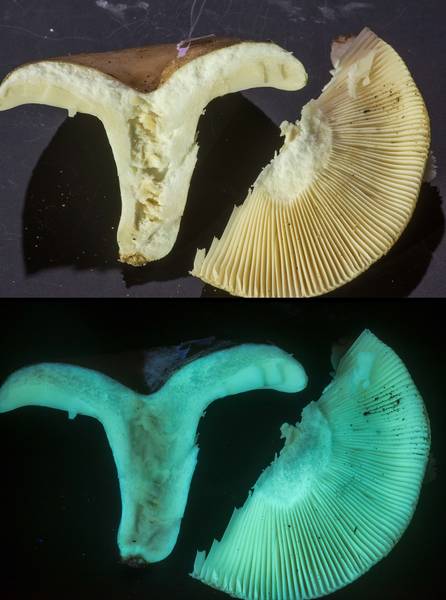

Section of a brittlegill (Russula) mushroom both in natural light and under 365 nm ultraviolet (UV-A) blacklight from Richards Loop Trail in Sam Houston National Forest near Montgomery. Texas


Album 3615: Sam Houston Forest, Texas, September 6, 2024
The image presents a striking comparison between two photographs of a brittlegill mushroom, showcasing its appearance under natural light and ultraviolet (UV-A) blacklight illumination.
**Natural Light Photograph**
* The top photograph features a section of the mushroom's gills, which are white in color.
* The cap of the mushroom is brown, with some small holes visible on its surface.
* The overall shape of the mushroom is irregular, with a curved edge and a prominent umbo (the central knob-like structure).
* The background of the photograph appears to be a dark-colored surface or ground.
**UV-A Blacklight Photograph**
* In contrast, the bottom photograph reveals the same section of the mushroom under UV-A blacklight illumination.
* The gills exhibit a vibrant greenish-blue fluorescence, while the cap remains brown and non-fluorescent.
* The umbo is still visible but appears less prominent compared to its appearance in natural light.
* The background of this photograph appears darker than that of the natural light image, suggesting the use of a specialized lighting setup.
**Comparison and Significance**
The comparison between these two photographs highlights the unique properties of certain mushrooms when exposed to UV-A blacklight. Brittlegill mushrooms are known to fluoresce under UV-A illumination, which can aid in their identification. The greenish-blue fluorescence observed in this image is likely due to the presence of fluorescent pigments called "fluorescing bodies" or "luciferyl alcohol" within the mushroom's tissue.
Overall, this image provides a fascinating glimpse into the world of mycology and the specialized tools used by researchers to study fungi. By combining natural light with UV-A blacklight illumination, scientists can gain valuable insights into the structure, behavior, and ecology of these organisms. – AI vision
🇪🇸 Descripción en español / Spanish Description
Sección de un hongo "brittlegill" (Russula) tanto en luz natural como bajo luz negra ultravioleta (UV-A) de 365 nm en el Richards Loop Trail del Bosque Nacional Sam Houston cerca de Montgomery, Texas, el 6 de septiembre de 2024. La imagen presenta una comparación sorprendente entre dos fotografías de un hongo "brittlegill", que muestra su apariencia bajo luz natural e iluminación ultravioleta (UV-A) negra. **Fotografía con luz natural**
* La fotografía superior presenta una sección de las láminas del hongo, que son de color blanco. * La tapa del hongo es marrón, con algunos pequeños orificios visibles en su superficie. * La forma general del hongo es irregular, con un borde curvo y un ombligo prominente (la estructura central tipo botón). * El fondo de la fotografía parece ser una superficie o suelo de color oscuro. **Fotografía con luz UV-A**
* En contraste, la fotografía inferior revela la misma sección del hongo bajo iluminación ultravioleta (UV-A). * Las láminas exhiben una fluorescencia verde azulada brillante, mientras que la tapa sigue siendo marrón y no fluorescente. * El ombligo es visible pero parece menos prominente en comparación con su apariencia bajo luz natural. * El fondo de esta fotografía aparece más oscuro que el de la imagen de luz natural, lo que sugiere el uso de una configuración de iluminación especializada. **Comparación y Significado**
La comparación entre estas dos fotografías destaca las propiedades únicas de ciertos hongos cuando se exponen a luz UV-A negra. Se sabe que los hongos "brittlegill" fluorescen bajo iluminación UV-A, lo que puede ayudar en su identificación. La fluorescencia verdosa azulada observada en esta imagen se debe probablemente a la presencia de pigmentos fluorescentes llamados "cuerpos fluorescentes" o "luciferil alcohol" dentro del tejido del hongo. En general, esta imagen proporciona una visión fascinante del mundo de la micología y las herramientas especializadas utilizadas por los investigadores para estudiar los hongos. Al combinar luz natural con iluminación UV-A negra, los científicos pueden obtener información valiosa sobre la estructura, el comportamiento y la ecología de estos organismos. – Spanish translation