 |
| |||||||||||||||

| ||||||||||||||||


| Similar | 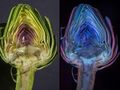  |
  |
  |
  |
  |
| |||||||||||||||||||||||||||
| |||||||||||||||||||||||||||
| 1996 1997 1998 1999 2000 2001 2002 2003 2004 2005 2006 2007 2008 2009 2010 2011 2012 2013 2014 2015 2016 2017 2018 2019 2020 2021 2022 2023 2024 2025 2026 | |||||||||||||||||||||||||||
| New version Slide Show Most Popular Full List Statistics Technical Details Home Page | |||||||||||||||||||||||||||
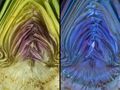
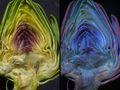
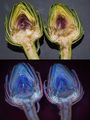
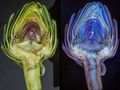
The image presents a comparative visual analysis of an artichoke under two distinct lighting conditions: regular daylight and ultraviolet (UV-A) blacklight illumination. The top half of the image features a photograph of an uncut artichoke exposed to natural daylight, while the bottom half showcases the same artichoke subjected to UV-A blacklight. **Artichoke Characteristics** * **Coloration**: Under regular daylight, the artichoke exhibits a muted green hue with subtle brown undertones along its ridges. **UV-A Blacklight Illumination** * **Color Intensification**: Upon exposure to UV-A blacklight, the artichoke's coloration becomes more vibrant and intense. The green hue deepens, while the brown undertones along its ridges become more pronounced. **Photographic Techniques** The image appears to have been captured using a high-quality camera with a macro lens, allowing for detailed examination of the artichoke's surface features. The use of a black background in both photographs enhances contrast and facilitates visual comparison between the two lighting conditions. In conclusion, this image effectively illustrates the distinct effects of regular daylight versus UV-A blacklight illumination on an artichoke's coloration and fluorescence properties. The comparative analysis provides valuable insights into the optical characteristics of this vegetable species under different environmental conditions. – AI vision |
El achicorio expuesto a la luz del día normal, así como cuando se ilumina con una luz negra ultravioleta (UV-A) de 365 nm con sección transversal del supermercado Kroger. College Station, Texas, 10 de septiembre de 2024. La imagen presenta un análisis visual comparativo de un achicorio en dos condiciones de iluminación distintas: luz del día normal e iluminación con luz negra ultravioleta (UV-A). La mitad superior de la imagen muestra una fotografía de un achicorio sin cortar expuesto a la luz natural, mientras que la mitad inferior presenta el mismo achicorio sometido a luz negra UV-A. **Características del achicorio** * **Coloración**: Bajo la luz normal del día, el achicorio exhibe un matizado tono verde con sutiles tonalidades marrones a lo largo de sus aristas. * **Patrón de crecimiento**: Las hojas del achicorio muestran un patrón estratificado de crecimiento, caracterizado por anillos concéntricos que aumentan gradualmente de tamaño desde el centro hasta la periferia. **Iluminación con luz negra UV-A** * **Intensificación del color**: Al exponerlo a la luz negra UV-A, la coloración del achicorio se vuelve más vibrante e intensa. El tono verde se profundiza mientras que las tonalidades marrones a lo largo de sus aristas se vuelven más pronunciadas. * **Efecto incandescente**: De manera notable, el área alrededor de la base de cada hoja exhibe un efecto incandescente, indicando la presencia de pigmentos fluorescentes que absorben la luz UV-A y emiten radiación visible. **Técnicas fotográficas** La imagen parece haberse capturado usando una cámara de alta calidad con un objetivo macro, lo que permite el examen detallado de las características superficiales del achicorio. El uso de un fondo negro en ambas fotografías mejora el contraste y facilita la comparación visual entre las dos condiciones de iluminación. En conclusión, esta imagen ilustra efectivamente los distintos efectos de la luz del día normal frente a la iluminación con luz negra UV-A en una coloración de achicorio y sus propiedades fluorescentes. El análisis comparativo proporciona información valiosa sobre las características ópticas de esta especie vegetal bajo diferentes condiciones ambientales. – Spanish translation |
Keyword variants
high resolution online digital collection
Berlin on the Brazos
Lone Star State
United States
picture gallery
photo album
documentary photographs
daily pics
conservative town
Brazos County
TX
travelogue
snapshots
sightseeing
photowalks
photoblog
graphic
fotografias
foto
Bryan
America
Aggieland