 |
| |||||||||||||||

| ||||||||||||||||


| Similar | 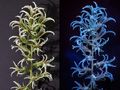  |
  |
  |
  |
  |
| |||||||||||||||||||||||||||
| |||||||||||||||||||||||||||
| 1996 1997 1998 1999 2000 2001 2002 2003 2004 2005 2006 2007 2008 2009 2010 2011 2012 2013 2014 2015 2016 2017 2018 2019 2020 2021 2022 2023 2024 2025 2026 | |||||||||||||||||||||||||||
| New version Slide Show Most Popular Full List Statistics Technical Details Home Page | |||||||||||||||||||||||||||
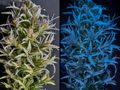
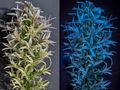
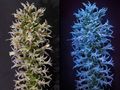
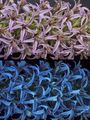
This image presents a striking comparison of flowers exposed to regular daylight and UV-A light from a blacklight. The photograph on the left displays the flower under natural lighting conditions, while the one on the right showcases its appearance when illuminated by a 365 nm ultraviolet (UV-A) blacklight. The flower in question is identified as pinkscale or elegant gayfeather (Liatris hesperelegans), formerly known as L. elegans. The image features two photographs of the same plant, with the left photo taken during daylight hours and the right photo captured under UV-A lighting conditions. In the daylight photograph, the flower exhibits a subtle green hue on its leaves, while in the blacklight-illuminated photograph, it displays a vibrant blue color. This dramatic change in appearance is likely due to the presence of fluorescent pigments within the plant's cells that absorb ultraviolet light and emit longer-wavelength radiation, resulting in the observed blue fluorescence. The image provides a fascinating glimpse into the unique properties of certain plants, which can exhibit remarkable changes in appearance when exposed to specific wavelengths of light. The use of UV-A lighting allows us to appreciate these hidden characteristics, offering insights into the intricate mechanisms that govern plant biology and ecology. – AI vision |
Las flores de la gayfeather elegante (pinkscale, Liatris hesperelegans, anteriormente L. elegans) cuando se exponen a la luz diurna regular y también cuando se iluminan con una luz negra ultravioleta (UV-A) de 365 nm del Parque Lick Creek. College Station, Texas, 17 de septiembre de 2024. Esta imagen presenta una sorprendente comparación de las flores expuestas a la luz diurna regular y a la luz UV-A de una luz negra. La fotografía a la izquierda muestra la flor en condiciones de iluminación natural, mientras que la de la derecha muestra su apariencia cuando se ilumina con una luz ultravioleta (UV-A) de 365 nm. La flor en cuestión se identifica como pinkscale o gayfeather elegante (Liatris hesperelegans), anteriormente conocida como L. elegans. La imagen presenta dos fotografías de la misma planta, con la foto a la izquierda tomada durante el día y la foto a la derecha capturada bajo condiciones de iluminación UV-A. En la fotografía diurna, la flor exhibe un matiz verde sutil en sus hojas, mientras que en la fotografía iluminada con luz UV-A muestra un color azul vibrante. Este cambio dramático en la apariencia se debe probablemente a la presencia de pigmentos fluorescentes dentro de las células de la planta que absorben la luz ultravioleta y emiten radiación de longitud de onda más larga, lo que resulta en la observada fluorescencia azul. La imagen proporciona una fascinante visión de las propiedades únicas de ciertas plantas, que pueden mostrar cambios notables en su apariencia cuando se exponen a longitudes de onda específicas de luz. El uso de la iluminación UV-A nos permite apreciar estas características ocultas, ofreciendo información sobre los mecanismos complejos que rigen la biología y ecología de las plantas. – Spanish translation |
Keyword variants
high resolution online digital collection
Lick Creek Park photo
Berlin on the Brazos
Rock Prairie Rd
Lone Star State
Greens Prairie Road
United States
picture gallery
photo album
nature trails
Nature Park
flower head
documentary photographs
daily pics
conservative town
Brazos County
wildlife
TX
travelogue
snapshots
sightseeing
photowalks
photoblog
graphic
fotografias
foto
floret
floral
Bryan
blossom
bloom
America
Aggieland