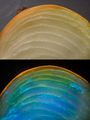
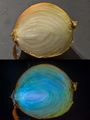
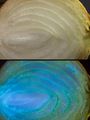
The provided image presents a side-by-side comparison of two photographs showcasing layers within an onion bulb. The top photograph was taken in natural light and displays the onion's layers as they appear under normal viewing conditions, while the bottom photograph was captured using a 365 nm ultraviolet (UV-A) blacklight, which reveals enhanced features not visible to the human eye. Upon closer examination of the images, it becomes apparent that the UV-A blacklight has illuminated the onion's cell walls and cellular membranes. This phenomenon is attributed to the unique properties of onions, as they contain high concentrations of flavonoids and other bioactive compounds that fluoresce under ultraviolet light. The resulting effect creates a striking visual contrast between the layers in natural light and those illuminated by the UV-A blacklight. The use of UV-A blacklight in this context serves multiple purposes: 1. **Enhanced visualization**: The UV-A blacklight allows for a more detailed examination of the onion's cellular structure, providing valuable insights into its composition and properties.
2. **Non-destructive testing**: This technique offers a non-invasive method for analyzing the onion without causing damage to its tissues.
3. **Scientific research**: The use of UV-A blacklight in this context contributes to ongoing scientific investigations focused on understanding the chemical and biological characteristics of onions. In conclusion, the image demonstrates the application of UV-A blacklight technology to enhance our understanding and visualization of the intricate layers within an onion bulb, offering a unique perspective on the complex cellular structures present in this common food item. – AI vision |