 |
| |||||||||||||||

| ||||||||||||||||


| Similar | 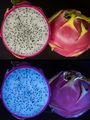  |
  |
  |
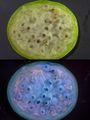  |
  |
| |||||||||||||||||||||||||||
| |||||||||||||||||||||||||||
| 1996 1997 1998 1999 2000 2001 2002 2003 2004 2005 2006 2007 2008 2009 2010 2011 2012 2013 2014 2015 2016 2017 2018 2019 2020 2021 2022 2023 2024 2025 2026 | |||||||||||||||||||||||||||
| New version Slide Show Most Popular Full List Statistics Technical Details Home Page | |||||||||||||||||||||||||||
The image presents two photographs of a dragon fruit slice, one taken under regular daylight and the other illuminated by a UV-A blacklight. The top photograph shows the dragon fruit slice in its natural coloration, with a pink skin and white flesh speckled with small black seeds. In contrast, the bottom photograph reveals that when exposed to the UV-A blacklight, the same slice displays an intense blue hue. **Key Features:** * **Dragon Fruit Slice:** The image features a single slice of dragon fruit, likely obtained from a grocery store or market. **Image Analysis:** The image effectively demonstrates the phenomenon of fluorescence in certain fruits, including dragon fruit. The use of a UV-A blacklight reveals the presence of fluorescent pigments that are not visible to the naked eye under regular lighting conditions. This discovery highlights the importance of considering multiple light sources when examining biological samples, as it can lead to new insights into their composition and properties. In summary, the image presents a striking comparison between the natural coloration of a dragon fruit slice and its appearance when illuminated by a UV-A blacklight. The dramatic change in color reveals the presence of fluorescent pigments that are not visible under regular lighting conditions, providing valuable information about the fruit's composition and properties. – AI vision |
Una rebanada de pitahaya cuando se expone a la luz diurna normal y cuando se ilumina con una luz negra ultravioleta (UV-A) de 365 nm en el supermercado HEB. College Station, Texas, 13 de octubre de 2024. La imagen presenta dos fotografías de una rebanada de pitahaya, una tomada bajo la luz diurna normal y otra iluminada con una luz negra UV-A. La parte superior de la fotografía muestra la rebanada de pitahaya en su coloración natural, con una piel rosa y carne blanca moteada con pequeñas semillas negras. Por el contrario, la parte inferior de la fotografía revela que cuando se expone a la luz negra UV-A, la misma rebanada muestra un tono azul intenso. **Características clave:** |
Keyword variants
high resolution online digital collection
Berlin on the Brazos
Lone Star State
United States
picture gallery
photo album
documentary photographs
daily pics
conservative town
Brazos County
TX
travelogue
snapshots
sightseeing
photowalks
photoblog
graphic
fotografias
foto
Bryan
America
Aggieland