 |
| |||||||||||||||

| ||||||||||||||||


| Similar |   |
  |
  |
  |
  |
| |||||||||||||||||||||||||||
| |||||||||||||||||||||||||||
| 1996 1997 1998 1999 2000 2001 2002 2003 2004 2005 2006 2007 2008 2009 2010 2011 2012 2013 2014 2015 2016 2017 2018 2019 2020 2021 2022 2023 2024 2025 2026 | |||||||||||||||||||||||||||
| New version Slide Show Most Popular Full List Statistics Technical Details Home Page | |||||||||||||||||||||||||||
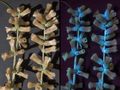
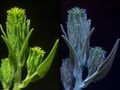
The image presents a striking comparison of the fluffy seeds of ball moss (Tillandsia recurvata) under two different lighting conditions: regular daylight and ultraviolet (UV-A) blacklight illumination. The top half of the image showcases the seeds exposed to regular daylight, while the bottom half reveals their response when illuminated by a 365 nm UV-A blacklight from Wolf Pen Creek Park in College Station, Texas. **Daylight Exposure:** * The seeds appear yellowish-brown in color. **UV-A Blacklight Illumination:** * When exposed to UV-A blacklight illumination, the seeds exhibit a dramatic change in color and texture. **Comparison and Implications:** * The comparison between the two lighting conditions highlights the unique properties of ball moss seeds in responding to different wavelengths of light. In summary, the image effectively demonstrates how the seeds of ball moss change color and texture under UV-A blacklight illumination compared to regular daylight exposure. This visual representation underscores the complex relationships between plants, light, and their environments, offering a glimpse into the intricate mechanisms governing plant reproduction and survival strategies. – AI vision |
Las semillas peludas del musgo esférico (Tillandsia recurvata) cuando se exponen a la luz diurna regular y también cuando se iluminan con una lámpara negra de ultravioleta (UV-A) de 365 nm en el Parque Wolf Pen Creek. College Station, Texas, 28 de octubre de 2024. La imagen presenta una comparación sorprendente de las semillas peludas del musgo esférico (Tillandsia recurvata) bajo dos condiciones diferentes de iluminación: luz diurna regular e iluminación ultravioleta (UV-A). La mitad superior de la imagen muestra las semillas expuestas a luz diurna, mientras que la mitad inferior revela su respuesta cuando se ilumina con una lámpara negra de UV-A de 365 nm en el Parque Wolf Pen Creek en College Station, Texas. **Exposición a la luz diurna:** * Las semillas parecen tener un color pardusco amarillento. * Tienen una textura peluda, que recuerda a pequeños mechones de pelo o fibras. * Cada semilla tiene una forma distintiva, con algunos que parecen más alargados que otros. * El aspecto general sugiere que las semillas están diseñadas para la dispersión, lo que les permite ser transportadas por el viento u otros medios. **Iluminación de UV-A:** * Cuando se exponen a la iluminación UV-A, las semillas presentan un cambio dramático en el color y textura. * Se vuelven azules, lo que indica un aumento en la fluorescencia bajo luz ultravioleta. * La apariencia peluda sigue presente, pero con una textura más pronunciada que sugiere mayor visibilidad o atracción para posibles polinizadores o dispersores. * Esta respuesta podría ser una adaptación para atraer específicamente organismos para la dispersión o germinación de semillas. **Comparación e implicaciones:** * La comparación entre las dos condiciones de iluminación destaca las propiedades únicas de las semillas del musgo esférico al responder a diferentes longitudes de onda de luz. * Este fenómeno puede tener ventajas evolutivas, como un aumento en la visibilidad para los polinizadores o mejoras en las capacidades de dispersión mediante el viento o vectores animales. * Comprender estas adaptaciones puede proporcionar información sobre el papel ecológico del musgo esférico y sus interacciones con su entorno. En resumen, la imagen muestra efectivamente cómo cambian el color y la textura de las semillas del musgo esférico bajo iluminación UV-A en comparación con la exposición a luz diurna regular. Esta representación visual subraya las relaciones complejas entre las plantas, la luz y su entorno, ofreciendo una visión de los mecanismos intrincados que rigen la reproducción vegetal y las estrategias de supervivencia. – Spanish translation |
Keyword variants
high resolution online digital collection
Pen Creek Park pic
Berlin on the Brazos
Lone Star State
United States
picture gallery
photo album
documentary photographs
daily pics
conservative town
Brazos County
TX
travelogue
snapshots
sightseeing
photowalks
photoblog
graphic
fotografias
foto
Bryan
America
Aggieland