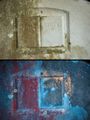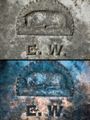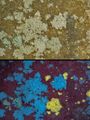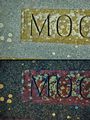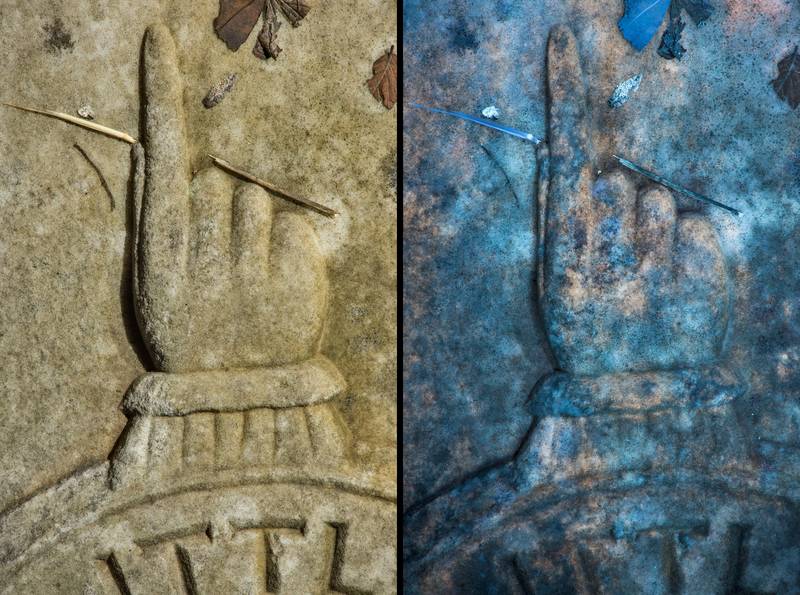

Granite tombstone with a carved sign of an idex finger pointed upward when exposed to regular daylight as well as when illuminated by a 365 nm ultraviolet (UV-A) blacklight in Odd Fellow Cemetery. Anderson, Texas


Album 3640: Anderson, Texas, November 9, 2024
The image shows a granite tombstone with a carved sign of an index finger pointed upward, captured under two different lighting conditions: regular daylight and illumination by a 365 nm ultraviolet (UV-A) blacklight. The purpose of the image is to demonstrate how UV light can enhance or reveal details in stone carvings.
* **Granite Tombstone:**
+ Made of granite
+ Features a carved sign of an index finger pointing upward
+ Carving appears more prominent when illuminated by UV-A light
* **Illumination Methods:**
+ Regular daylight
+ 365 nm ultraviolet (UV-A) blacklight
+ UV-A light reveals additional details in the carving
* **Background and Context:**
+ Image taken at Odd Fellow Cemetery, Anderson, Texas
+ November 9, 2024
The image demonstrates how UV light can be used to enhance or reveal details in stone carvings, which may not be visible under regular lighting conditions. This technique could be useful for conservators and historians studying ancient monuments or artifacts. – AI vision
🇪🇸 Descripción en español / Spanish Description
Lápida de granito con un signo esculpido de un dedo índice apuntando hacia arriba cuando se expone a la luz del día normal, así como cuando se ilumina con una luz negra ultravioleta (UV-A) de 365 nm en el Cementerio Odd Fellow. Anderson, Texas, 9 de noviembre de 2024. La imagen muestra una lápida de granito con un signo esculpido de un dedo índice apuntando hacia arriba, capturada bajo dos condiciones diferentes de iluminación: luz del día normal e iluminación por una luz negra ultravioleta (UV-A) de 365 nm. El objetivo de la imagen es demostrar cómo la luz UV puede mejorar o revelar detalles en tallas de piedra. * **Lápida de Granito:** + Hecha de granito + Presenta un signo esculpido de un dedo índice apuntando hacia arriba + La talladura aparece más prominente cuando se ilumina con luz UV-A * **Métodos de Iluminación:** + Luz del día normal + Luz negra ultravioleta (UV-A) de 365 nm + La luz UV revela detalles adicionales en la talladura * **Antecedentes y Contexto:** + Imagen tomada en el Cementerio Odd Fellow, Anderson, Texas + 9 de noviembre de 2024. La imagen demuestra cómo se puede utilizar la luz UV para mejorar o revelar detalles en tallas de piedra, que pueden no ser visibles bajo condiciones normales de iluminación. Esta técnica podría ser útil para conservadores e historiadores que estudian monumentos o artefactos antiguos. – Spanish translation