 |
| |||||||||||||||

| ||||||||||||||||


| Similar | 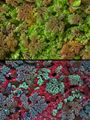  |
  |
  |
  |
  |
| |||||||||||||||||||||||||||
| |||||||||||||||||||||||||||
| 1996 1997 1998 1999 2000 2001 2002 2003 2004 2005 2006 2007 2008 2009 2010 2011 2012 2013 2014 2015 2016 2017 2018 2019 2020 2021 2022 2023 2024 2025 2026 | |||||||||||||||||||||||||||
| New version Slide Show Most Popular Full List Statistics Technical Details Home Page | |||||||||||||||||||||||||||
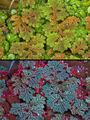
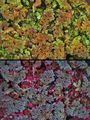
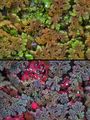
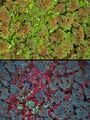
**Image Description** The image presents two photographs of water ferns and duckweed, showcasing their appearance under natural light and ultraviolet (UV-A) blacklight illumination. ### Photograph 1: Natural Light * The photograph displays a cluster of water ferns and duckweeds in their natural state. ### Photograph 2: UV-A Blacklight Illumination In contrast to the first photograph, this image reveals a dramatic transformation when viewed under UV-A blacklight illumination. The plants emit a bright red glow, with some areas appearing more intensely colored than others. This effect is likely due to the presence of fluorescent pigments within the plant cells. ### Background and Context The photographs are taken from a pond in Bee Creek Park, College Station, Texas, on November 11, 2024. The background of both images appears dark, suggesting that they were captured at night or in an area with minimal light pollution. This context suggests that the photographer may have been attempting to capture bioluminescent organisms or fluorescent pigments within the plants. ### Conclusion In conclusion, this image showcases the unique appearance of water ferns and duckweeds under natural light and UV-A blacklight illumination. The dramatic transformation observed in the second photograph highlights the importance of considering multiple lighting conditions when studying or observing plant life. – AI vision |
La helechosa (Azolla) y la lenteja de agua tanto a la luz natural como bajo iluminación ultravioleta (UV-A) en una poza del parque Bee Creek, College Station, Texas, el 11 de noviembre de 2024. **Descripción de la imagen** La imagen presenta dos fotografías de helechosa y lenteja de agua, mostrando su aspecto bajo iluminación natural y ultravioleta (UV-A) en negro. ### Fotografía 1: Luz Natural * La fotografía muestra un grupo de helechosa y lenteja de agua en su estado natural. * Las plantas exhiben colores verdes vibrantes con matices naranjas y amarillos. * Parecen estar creciendo densamente juntas, posiblemente flotando sobre la superficie de un cuerpo de agua. ### Fotografía 2: Iluminación Ultravioleta-A En contraste con la primera fotografía, esta imagen revela una transformación drástica cuando se ve bajo iluminación ultravioleta-A. Las plantas emiten un brillo rojo intenso, con algunas áreas que parecen más intensamente coloreadas que otras. Este efecto se debe probablemente a la presencia de pigmentos fluorescentes dentro de las células vegetales. ### Antecedentes y contexto Las fotografías se tomaron en una poza del parque Bee Creek, College Station, Texas, el 11 de noviembre de 2024. El fondo de ambas imágenes parece oscuro, lo que sugiere que fueron capturadas por la noche o en un área con poca contaminación lumínica. Este contexto sugiere que el fotógrafo podría estar intentando capturar organismos bioluminescentes o pigmentos fluorescentes dentro de las plantas. ### Conclusión En conclusión, esta imagen muestra el aspecto único de la helechosa y lenteja de agua bajo iluminación natural y ultravioleta (UV-A) en negro. El efecto drástico observado en la segunda fotografía resalta la importancia de considerar múltiples condiciones de iluminación al estudiar u observar la vida vegetal. – Spanish translation |
Keyword variants
high resolution online digital collection
Berlin on the Brazos
Bee Creek Park scenery
Lone Star State
United States
picture gallery
photo album
documentary photographs
daily pics
conservative town
Brazos County
TX
travelogue
snapshots
sightseeing
photowalks
photoblog
graphic
fotografias
foto
Bryan
America
Aggieland