 |
| |||||||||||||||

| ||||||||||||||||


| Similar | 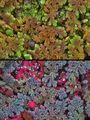  |
  |
  |
  |
  |
| |||||||||||||||||||||||||||
| |||||||||||||||||||||||||||
| 1996 1997 1998 1999 2000 2001 2002 2003 2004 2005 2006 2007 2008 2009 2010 2011 2012 2013 2014 2015 2016 2017 2018 2019 2020 2021 2022 2023 2024 2025 2026 | |||||||||||||||||||||||||||
| New version Slide Show Most Popular Full List Statistics Technical Details Home Page | |||||||||||||||||||||||||||
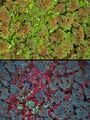
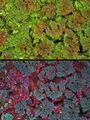
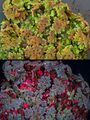
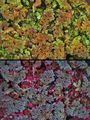
The image shows water fern and duckweed plants, which are commonly found growing on or near bodies of water. The top half of the image depicts the plants as they appear under regular daylight, while the bottom half displays their appearance when illuminated by a 365 nm ultraviolet (UV-A) blacklight. **Visual Differences Under Different Light Sources** * **Daylight:** The plants in the top half of the image exhibit vibrant green colors and have a relatively uniform texture. **Environmental Significance** The image suggests that these water fern and duckweed plants may have unique adaptations for survival in aquatic environments. The ability of certain compounds within their cells to absorb UV-A light could potentially aid in protection against harmful radiation or attract pollinators. **Conclusion** In summary, the image highlights the striking visual differences between water fern and duckweed when exposed to regular daylight versus a 365 nm ultraviolet (UV-A) blacklight. This phenomenon may have important implications for our understanding of plant biology and ecology, particularly in relation to environmental stressors such as UV radiation. **Answer:** The image shows how water ferns and duckweeds appear under different lighting conditions, with the plants appearing more vibrant and intense red or pink when exposed to a 365 nm ultraviolet (UV-A) blacklight. – AI vision |
Muestra cómo aparecen las helechinas del agua y las lentejas de agua bajo diferentes condiciones de iluminación, mostrándose las plantas más vibrantes e intesamente rojas o rosadas cuando se exponen a una fuente de luz negra ultravioleta (UV-A) de 365 nm. Esto puede ser debido al hecho de que ciertos compuestos dentro de las células absorben la luz en esta longitud de onda específica, haciendo que emitan fluorescencia. Este fenómeno podría tener importantes implicaciones para nuestra comprensión de la biología y ecología vegetal, especialmente en relación con factores estresantes ambientales como la radiación UV. – Spanish translation |
Keyword variants
high resolution online digital collection
Berlin on the Brazos
Bee Creek Park photocapture
Lone Star State
United States
picture gallery
photo album
documentary photographs
daily pics
conservative town
Brazos County
TX
travelogue
snapshots
sightseeing
photowalks
photoblog
graphic
fotografias
foto
Bryan
America
Aggieland