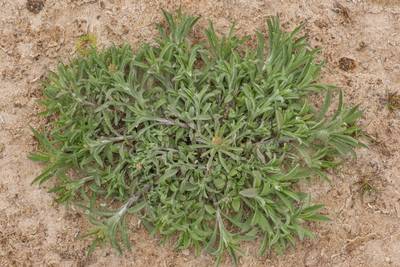
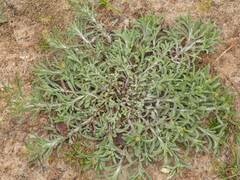
 A sprawling, multi-stemmed mat of annual trampweed (Facelis retusa) on sand of a lake shore near Birch Creek Unit of Somerville Lake State Park. Texas, February 28, 2026 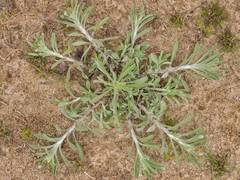 Annual trampweed (Facelis retusa) on sand of a lake shore near Birch Creek Unit of Somerville Lake State Park. Texas, February 28, 2026  Annual trampweed (Facelis retusa) in Lick Creek Park. College Station, Texas, February 13, 2020  A perfectly symmetrical winter basal rosette of a yellowcress (Rorippa species, likely Southern marsh yellowcress, Rorippa teres) blooming on the exposed sandy shore of Lake Somerville. This native wetland pioneer is a member of the mustard family (Brassicaceae). During the cooler months, it forms this flat, circular spray of deeply cut (pinnatifid) leaves to anchor firmly in the shifting sand while maximizing sun exposure and avoiding cold winds. At the very center, the plant has just begun to bolt, producing the tiny, four-petaled yellow flowers characteristic of its family. Texas, February 28, 2026  Trailing plant of annual trampweed (Facelis retusa) taken from the university golf course on Texas Avenue. College Station, Texas, March 26, 2019  Annual trampweed (Facelis retusa) in Washington Cemetery. Washington, Texas, March 27, 2019  Green mat of terrestrial water-starwort (Callitriche terrestris) growing on the exposed sandy shore of Lake Somerville. Closer to the lake[CloseCurlyQuote]s edge, individuals of this same species growing in puddles or shallow water will look remarkably different. When submerged or growing in saturated mud, the plant physically alters its cellular growth, producing leaves that are much larger, thinner, and distinctly elongated to maximize their ability to capture diffused light and dissolved gases underwater. Texas, February 28, 2026  Annual trampweed (Facelis retusa) under oaks on the university golf course on Texas Avenue. College Station, Texas, March 26, 2019  A symmetrical, bright green mat of terrestrial water-starwort (Callitriche terrestris) growing on the exposed sandy shore of Lake Somerville. This tiny, native semi-aquatic plant behaves as an opportunistic pioneer on recently exposed mud and sand. When a seed germinates on bare, unobstructed ground, it sends out highly branched, creeping stems that radiate outward at an equal rate, rooting at the nodes as they travel. This uniform, radial growth is what creates the nearly perfect circular "cushion" seen here. Texas, February 28, 2026  Annual trampweed (Facelis retusa) on Forest Service Road 231 near North Wilderness Trail of Little Lake Creek Wilderness in Sam Houston National Forest north from Montgomery. Texas, March 5, 2022 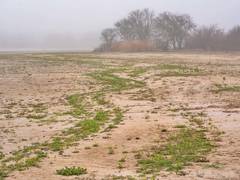 This photograph of the exposed, sandy shore of Lake Somerville illustrates a classic ecological phenomenon known as drawdown zone zonation or "strandline" vegetation. The bright green plants are growing in distinct, wavy bands that perfectly trace the historical waterlines of the lake as it slowly receded. Texas, February 28, 2026  Winter rosette of narrow leaves of a plant of mustard family on Lake Somerville Trailway in area of Newman Bottom near Nails Creek Unit of Somerville Lake State Park. Texas, February 2, 2021  Seed heads of a plant with narrow leaves of aster family in Lick Creek Park. College Station, Texas, April 17, 2023  Basal rosette of seaside brookweed (Samolus valerandi; often treated in North America as ssp. parviflorus), growing on damp, exposed sand near the Birch Creek Unit of Lake Somerville State Park. This semi-aquatic primrose-family plant forms a tight [OpenCurlyDoubleQuote]water-cabbage[CloseCurlyDoubleQuote] rosette when water levels drop; later it typically sends up a stem with small white flowers as conditions warm. Texas, February 28, 2026  A robust winter basal rosette of Texas vervain (Verbena halei) growing on the sandy upper shore of Lake Somerville, Texas, February 28, 2026  Narrow green leaves of a plant of mustard family on Lake Somerville Trailway in area of Newman Bottom near Nails Creek Unit of Somerville Lake State Park. Texas, February 2, 2021 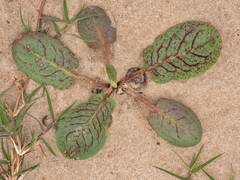 Winter basal rosette of fiddle dock (Rumex pulcher), accompanied by a creeping stolon of Bermudagrass (Cynodon dactylon), growing on the exposed sandy shore of Lake Somerville, Texas, February 28, 2026 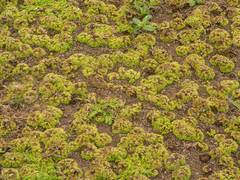 Bright lime-green cushions of Texas balloonwort (Sphaerocarpos texanus) on exposed sandy shore near Birch Creek Unit of Somerville Lake State Park. Texas, February 28, 2026  Winter rosette of leaves of woolly-white (Hymenopappus artemisiaefolius) on a trailway near Birch Creek Unit of Somerville Lake State Park. Texas, February 28, 2026  Rosette of leaves of some plant on exposed sandy shore near Birch Creek Unit of Somerville Lake State Park. Texas, February 28, 2026  A close look at the distinctive, bristly texture of a Pincushion Moss (Leucobryum species) found near Lake Trail at Fort Boggy State Park. While often casually identified as Leucobryum glaucum, this is almost certainly its southern sister species, Leucobryum albidum (White Pincushion Moss), which is much more common in East Texas. The moss gets its pale, frosted-green color from a unique leaf structure: the outer layers consist of large, clear, hollow cells that hide the green chlorophyll beneath. When it rains, these empty cells fill with water and turn the cushion bright green; when dry, they fill with air, giving the plant a silvery-white appearance. Fort Boggy State Park. Leon County, Texas, February 21, 2026 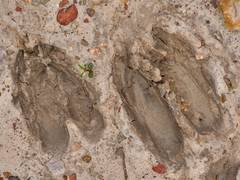 Tracks belonging to a Feral Hog (Wild Boar, Sus scrofa) on Lick Creek Greenway Trail. The tips of a hog s hooves are blunt and distinctly rounded. College Station, Texas, February 25, 2025  Close-up of bright green moss on a sandy side of a road with seeping water at Lake Somerville Trailway near Nails Creek Unit of Somerville Lake State Park. Texas, February 26, 2023  Winter rosette of a plant of carrot family lawn burrweed (Soliva sessilis) with small feathery leaves reminiscent of parsley on a shore of Lake Conroe near Stubblefield section of Lone Star hiking trail north from Trailhead No. 6 in Sam Houston National Forest. Texas, February 16, 2020  This composite image documents four stems of Hedeoma hispida (Rough False Pennyroyal) demonstrating the plant s appearance under two different lighting conditions against a dark background. The top panel shows the specimens under standard white light. The stems feature opposite, linear leaves and are covered in fine, bristly hairs, giving the plant its "rough" descriptor. Clusters of tiny, tubular, purplish-blue flowers emerge from the leaf axils along the upper portions of the stems, nestled within spiky, bristly calyces. The overall coloration is a vibrant, natural green with delicate violet floral accents. The bottom panel reveals the same four specimens illuminated by a 365 nm ultraviolet (UV-A) blacklight. Under UV excitation, the plant exhibits striking fluorescence. The previously purplish-blue flowers fluoresce a brilliant, vivid pinkish-red, while the green stems, leaves, and bristly hairs emit a cool, icy blue-white glow. This stark contrast highlights the complex photochemical properties of the plant tissues, transforming the subtle daytime appearance into a dramatic, high-contrast display. College Station, Texas, April 30, 2026 Blooming Rough False Pennyroyal (Hedeoma hispida) both in natural light and under 365 nm ultraviolet (UV-A) blacklight collected on a lawn at crossing of Holleman Drive and Dartmouth Street. College Station, Texas, April 30, 2026  Focusing closer, the photograph reveals the intricate, densely packed structure of the cursed buttercup (Ranunculus sceleratus) as it colonizes the dried mud. The plants exhibit a vibrant, fleshy appearance, characterized by deeply lobed, shiny green leaves that vaguely resemble flat-leaf parsley or young celery--giving the plant its alternate name, the celery-leaved buttercup. In this dense thicket, the stout, hollow stems branch frequently, creating a tangled, multi-layered canopy. Tiny, five-petaled pale yellow flowers dot the upper stems, standing out brightly against the dark backdrop of the soil and the deeper green foliage below. Flag Pond near Nails Creek Unit of Somerville Lake State Park. Texas, March 14, 2026  Dissected malformed yellow flower of aster family on north shore of Lake Somerville near Birch Creek Unit of Somerville Lake State Park. Texas, April 15, 2018  Malformed yellow flower of aster family because of parasites on north shore of Lake Somerville near Birch Creek Unit of Somerville Lake State Park. Texas, April 15, 2018  Delicate, fuzzy emergence of new oak foliage in early spring, backlit to highlight its soft pink and green hues. Below the newly unfolding, distinctly lobed leaves dangle the tree s string-like catkins--the male flower clusters that release pollen just as the canopy breaks dormancy. Lake Somerville Trailway near Nails Creek Unit of Somerville Lake State Park. Texas, March 29, 2026  Flower heads of woolly-white (Hymenopappus artemisiaefolius) at Lake Somerville Trailway near Birch Creek Unit of Somerville Lake State Park. Texas, April 19, 2019  Several rust-colored, spiky-bodied ants can be seen navigating the deeply furrowed bark of an oak tree, acting as a miniature logging crew. Some of the ants are carrying entire green, beaded oak catkins--the tree s string-like flower clusters--while one prominently hoists a freshly cut, bright green section of an oak leaf in its jaws. The ants carry these heavy loads hoisted high over their heads, a posture that resembles someone carrying a sunshade. These are Texas leafcutter ants (Atta texana), a highly destructive but fascinating native species also known as the "town ant" or "parasol ant" due to their unique carrying technique. They climb high into the canopies of oaks and other trees to use their powerful, scissor-like mandibles to slice away fresh foliage, preferring new, tender, high-water-content growth like young leaves and spring catkins. Working in massive, organized trails, a large colony can entirely strip the leaves from a small- to medium-sized tree in a single night, and they frequently travel hundreds of feet from their underground nests to find a suitable harvest. Lake Somerville Trailway near Nails Creek Unit of Somerville Lake State Park. Texas, March 14, 2026  Close-up of winter rosette of a plant of aster family in Washington-on-the-Brazos State Historic Site. Washington, Texas, February 11, 2023 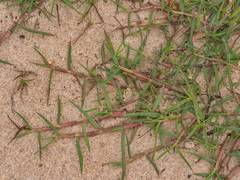 Bermudagrass, easily identifiable by its wiry, horizontal runners (stolons) that root directly into the sand at their joints, on a lake shore near Birch Creek Unit of Somerville Lake State Park. Texas, February 28, 2026  Green mat of terrestrial water-starwort (Callitriche terrestris) on exposed sandy shore near Birch Creek Unit of Somerville Lake State Park. Texas, February 28, 2026  Spike of annual meadow grass (Poa annua) on Green Circles (center-pivot irrigation) in Irkhaya (Irkaya) Farms. Qatar, February 26, 2016  Rosettes of leaves of plants of aster family at Lake Somerville Trailway near Nails Creek Unit of Somerville Lake State Park. Texas, February 26, 2023  Creeping plant of frog-fruit (Phyla incisa, Lippia, fogfruit) on exposed sandy shore near Birch Creek Unit of Somerville Lake State Park. Texas, February 28, 2026  Bright green moss on a sandy side of a road with seeping water at Lake Somerville Trailway near Nails Creek Unit of Somerville Lake State Park. Texas, February 26, 2023  Ascomycete mushrooms Chorioactis geaster with dried tips at Lake Somerville Trailway near Birch Creek Unit of Somerville Lake State Park. Texas, January 1, 2023  Details of bright green moss on a sandy side of a road with seeping water at Lake Somerville Trailway near Nails Creek Unit of Somerville Lake State Park. Texas, February 26, 2023  Winter rosette of woolly-white (Hymenopappus artemisiaefolius) at Lake Somerville Trailway near Birch Creek Unit of Somerville Lake State Park. Texas, February 6, 2024  Winter rosette of woolly-white (Hymenopappus artemisiaefolius) at Lake Somerville Trailway near Birch Creek Unit of Somerville Lake State Park. Texas, February 24, 2021  Leaves of woolly-white (Hymenopappus artemisiaefolius) on Lake Somerville Trailway near Birch Creek Unit of Somerville Lake State Park. Texas, March 21, 2026  Zonation of exposed, sandy shore of Lake Somerville near Birch Creek Unit of Somerville Lake State Park. Texas, February 28, 2026  Basal leaves of woolly-white (Hymenopappus artemisiaefolius) in dew on Lake Somerville Trailway near Birch Creek Unit of Somerville Lake State Park. Texas, March 21, 2026  Winter rosette of a plant of mustard family on Lake Somerville Trailway in area of Newman Bottom near Nails Creek Unit of Somerville Lake State Park. Texas, February 2, 2021  A miniature procession of rust-colored ants traverses the deeply grooved, dry bark of an oak tree. In the center foreground, one ant acts as the focal point, hoisting a freshly cut, bright green slice of an oak leaf high above its head. Because the leaf fragment curves directly over the ant s body like a small green canopy, it perfectly illustrates why this species is often nicknamed the "parasol ant". Surrounding this central figure, three other ants march in the same direction, each carrying large, beaded green oak catkins gripped tightly in their mandibles. These are Texas leafcutter ants (Atta texana), a native species famous for its highly organized and destructive foraging behavior. Working in massive, coordinated trails that can span hundreds of feet, worker ants climb into the canopies of oaks and other trees to systematically slice away fresh, tender vegetation. The workers possess powerful jaws capable of cutting through leaves and flowers with remarkable speed, allowing a large colony to completely strip the foliage from a small tree in a single night. Lake Somerville Trailway near Nails Creek Unit of Somerville Lake State Park. Texas, March 14, 2026  An isolated cluster of cursed buttercup (Ranunculus sceleratus) emerges from the deep, jagged fissures of the heavily caked mud. Unlike the healthy, spreading vegetation seen elsewhere, this specimen exhibits bizarre, highly abnormal growth, with its thick main stems aggressively twisting and winding upward in a chaotic tangle. The plant s leaves appear curled and irregularly cupped, while its reproductive stalks terminate in bare, green, thimble-like floral heads entirely devoid of the plant s characteristic yellow petals. The dramatic twisting, sudden elongation, and stunted foliage seen here are textbook symptoms of exposure to a synthetic auxin herbicide, such as 2,4-D, triclopyr, or dicamba. These systemic chemicals are frequently used in park maintenance or nearby agricultural areas to control broadleaf weeds. When absorbed, the herbicide mimics the plant s natural growth hormones and triggers uncontrolled, rapid cell division and elongation. This chemical overload forces the stems to bend and coil unnaturally--a severe stress response known as epinasty--while causing the leaves to become strapped and deformed. Near Nails Creek Unit of Somerville Lake State Park. Texas, March 14, 2026  White pelicans on a sandy shore near Birch Creek Unit of Somerville Lake State Park. Texas, April 19, 2026  Winter rosette of a plant of aster family on FS203 near Richards Loop Trail in Sam Houston National Forest. Texas, February 21, 2024  Some slender plant of aster(?) family on a periphery of Green Circles (center-pivot irrigation) in Irkhaya (Irkaya) Farms. Qatar, April 22, 2016  Some slender plant of aster(?) family taken from a periphery of Green Circles (center-pivot irrigation) in Irkhaya (Irkaya) Farms. Qatar, April 22, 2016  Winter rosette of leaves of woolly-white (Hymenopappus artemisiaefolius) on a trailway near Birch Creek Unit of Somerville Lake State Park. Texas, March 2, 2024  In the caked mud of Flag Pond, a bright green, bushy seedling of cursed buttercup (Ranunculus sceleratus) emerges strongly from the deep fissures. Beside it lies a single, perfectly round, olive-green leaf of an American lotus (Nelumbo lutea) seedling, dotted with a few tiny water droplets that highlight its water-repellent surface. Scattered around these two fresh sprouts are the thick, dried, gray-brown stalks of mature lotus plants from a previous growing season, resting lifelessly across the severely fractured, dry earth. Near Nails Creek Unit of Somerville Lake State Park. Texas, March 14, 2026  Close-up of winter rosette of leaves of woolly-white (Hymenopappus artemisiaefolius) in Washington-on-the-Brazos State Historic Site. Washington, Texas, February 20, 2022  Flowers of some slender plant of aster(?) family on a periphery of Green Circles (center-pivot irrigation) in Irkhaya (Irkaya) Farms. Qatar, April 22, 2016  Branch of some slender plant of aster(?) family on a periphery of Green Circles (center-pivot irrigation) in Irkhaya (Irkaya) Farms. Qatar, April 22, 2016  Fleabane daisy like plant of aster family on Green Circles (center-pivot irrigation) in Irkhaya Farms. South-western Qatar, March 29, 2014  Some slender plant of aster(?) family on dark background on a periphery of Green Circles (center-pivot irrigation) in Irkhaya (Irkaya) Farms. Qatar, April 22, 2016  Winter rosette of a plant of aster family in Washington-on-the-Brazos State Historic Site. Washington, Texas, February 11, 2023  Woolly-white (Hymenopappus) with petaloid white phyllaries (bracts) on north shore of Lake Somerville near Birch Creek Unit of Somerville Lake State Park. Texas, April 15, 2018  Winter rosette of some plant of aster family in Lake Bryan Park. Bryan, Texas, January 30, 2024  Wide angle view of some slender plant of aster(?) family on a periphery of Green Circles (center-pivot irrigation) in Irkhaya (Irkaya) Farms. Qatar, April 22, 2016  Annual meadow grass (Poa annua)(?) on Green Circles (center-pivot irrigation) in Irkhaya (Irkaya) Farms. Qatar, March 14, 2015  Animal skull on exposed sandy shore near Birch Creek Unit of Somerville Lake State Park. Texas, February 28, 2026  Weathered stump of an oak on exposed sandy shore near Birch Creek Unit of Somerville Lake State Park. Texas, February 28, 2026  Rosette of leaves of woolly-white (Hymenopappus artemisiaefolius) at Lake Somerville Trailway near Nails Creek Unit of Somerville Lake State Park. Texas, February 26, 2023 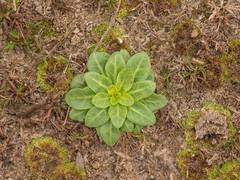 Seaside brookweed (Samolus valerandi) on a sandy shore near Birch Creek Unit of Somerville Lake State Park. Texas, February 28, 2026  Winter basal rosette of Carolina geranium (Geranium carolinianum) on a lake shore near Birch Creek Unit of Somerville Lake State Park. Texas, February 28, 2026  Winter rosette of woolly-white (Hymenopappus) at Lake Somerville Trailway near Birch Creek Unit of Somerville Lake State Park. Texas, March 12, 2022  Tiny liverwort Fuscocephaloziopsis (Cephalozia) sp. on a mossy pine log with numerous granular gemmae on its leaves and branch tips on Four Notch Loop Trail of Sam Houston National Forest near Huntsville. Texas, February 22, 2020  Winter rosette of woolly-white (Hymenopappus artemisiaefolius) on Lake Somerville Trailway near Nails Creek Unit of Somerville Lake State Park. Texas, December 21, 2023 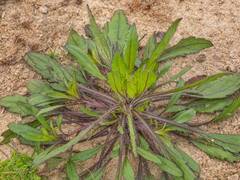 Some leaves on sand of a lake shore near Birch Creek Unit of Somerville Lake State Park. Texas, February 28, 2026  Narrow silvery leaves of bushy bindweed (Convolvulus prostratus) with an insect gall taken from a sandy area between Green Circles (center-pivot irrigation) in Irkhaya (Irkaya) Farms. Qatar, December 18, 2015 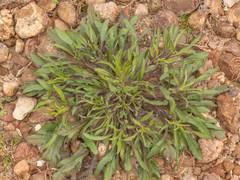 Some plant on exposed shore near Birch Creek Unit of Somerville Lake State Park. Texas, February 28, 2026 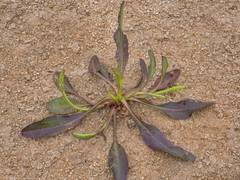 Leaves of dock(?) on sand of a lake shore near Birch Creek Unit of Somerville Lake State Park. Texas, February 28, 2026 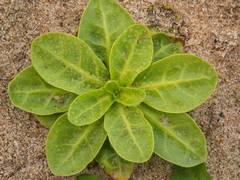 Basal rosette of seaside brookweed (Samolus valerandi) on exposed sandy shore near Birch Creek Unit of Somerville Lake State Park. Texas, February 28, 2026  Salt-marsh fleabane(?) and terrestrial water-starwort on exposed sandy shore near Birch Creek Unit of Somerville Lake State Park. Texas, February 28, 2026  Some wintering plant with narrow leaves on bare soil of receding shore of Lake Conroe on Stubblefield section of Lone Star hiking trail north from Trailhead No. 6 in Sam Houston National Forest. Texas, February 16, 2020  Succulent purple winter rosette of leaves of annual bastard cabbage (Rapistrum rugosum) or may be India mustard (Brassica juncea) in Washington-on-the-Brazos State Historic Site. Washington, Texas, January 7, 2024  White horse in a campsite after third annual 8th Texas Rangers and Artillery Reenactment (Battle for El Camino Real) at Lake Madison. Madisonville, Texas, February 7, 2009 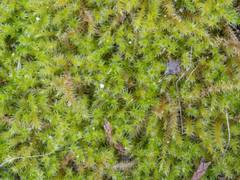 Campyliadelphus chrysophyllus (Campylium chrysophyllum, or "Golden Feather-Moss"). The giveaway is the way the tiny leaves are sitting on the stem. They are strongly squarrose, meaning they bend outward and backward from the stem at sharp angles. This gives the branch tips a distinctively bristly or "starry" appearance when you look right down them, which is the defining field mark of the Campylium/Campyliadelphus genus. Fort Boggy State Park. Leon County, Texas, February 21, 2026 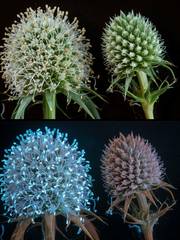 Spiny heads of button snakeroot (Eryngium yuccifolium) under both white light and a 365 nm ultraviolet (UV-A) LED flashlight from Lake Somerville Trailway near Birch Creek Unit of Somerville Lake State Park. Texas, June 28, 2026 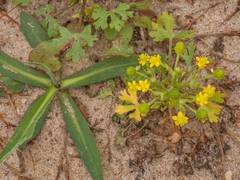 Bloomin plant of cursed buttercup (Ranunculus sceleratus) on a lake shore near Birch Creek Unit of Somerville Lake State Park. Texas, February 28, 2026  Early blooming winter annual weed hairy bittercress (Cardamine hirsuta) in a shallow depression on side of FS203 near Richards Loop Trail in Sam Houston National Forest. Texas, February 21, 2024  Leaves of Carolina bristlemallow (Modiola caroliniana) on sand of a lake shore near Birch Creek Unit of Somerville Lake State Park. Texas, February 28, 2026  Close-up of small white gilled mushrooms on bamboo stems and leaves on Kiwanis Nature Trail. College Station, Texas, September 9, 2020  Woolly-white (Hymenopappus artemisiaefolius) on Lake Somerville Trailway near Nails Creek Unit of Somerville Lake State Park. Texas, March 29, 2026  Blooming woolly-white (Hymenopappus artemisiaefolius) on Lake Somerville Trailway near Birch Creek Unit of Somerville Lake State Park. Texas, March 21, 2026  Flowers of woolly-white (Hymenopappus artemisiaefolius) on Lake Somerville Trailway near Birch Creek Unit of Somerville Lake State Park. Texas, March 21, 2026  Flowers of woolly-white (Hymenopappus artemisiaefolius) on Lake Somerville Trailway near Nails Creek Unit of Somerville Lake State Park. Texas, March 29, 2026  Flower heads of Reichardia intermedia(?) on Green Circles (center-pivot irrigation) in Irkhaya (Irkaya) Farms. Qatar, February 20, 2015  Winter rosette of leaves of white prickly poppy (Argemone albiflora) on sand mound of harvester ants on Lake Somerville Trailway in area of Newman Bottom near Nails Creek Unit of Somerville Lake State Park. Texas, February 2, 2021  Leaves of woolly-white (Hymenopappus) on a trailway near Birch Creek Unit of Somerville Lake State Park. Texas, February 15, 2023  Perforated "Swiss cheese" brown leaf of a sycamore (Platanus occidentalis) among dry willow oak leaves on a sandy path in Lick Creek Park. The leaf is a Sycamore skeleton. The holes were started by Anthracnose (fungus) and Lace Bugs (insects) attacking the living leaf, and then finished off by winter decomposition that ate away the dead tissue but left the tough veins behind. College Station, Texas, January 7, 2026  Small flower heads of tiny-fruited spike-sedge (Eleocharis microcarpa(?)) at Lake Somerville Trailway near Birch Creek Unit of Somerville Lake State Park. Texas, March 14, 2020  Young plant of sow thistle (Sonchus oleraceus) on exposed shore near Birch Creek Unit of Somerville Lake State Park. Texas, February 28, 2026  Male plant of the liverwort Asterella tenella (Delicate Starwort). The strange, bright green, elevated, wart-like cushions sitting right on top of the leaves (thalli) are the male reproductive structures, called antheridial pads or male receptacles. Fort Boggy State Park. Leon County, Texas, February 21, 2026  Entodon seductrix (often called Seductive Entodon Moss or Cord Glaze Moss). The leaves are tightly pressed against the stems (imbricate) rather than sticking out. This makes the branches look like smooth, pale green to yellowish cords or tiny rat tails, which is the defining field mark of the Entodon genus. Scattered throughout the mat are the reproductive structures (sporophytes). They consist of thin, wiry, dark brick-red or mahogany stalks (setae) topped with small cylindrical capsules. The presence of these mature red sporophytes is very common for Entodon seductrix in the winter and early spring. Fort Boggy State Park. Leon County, Texas, February 21, 2026 |