
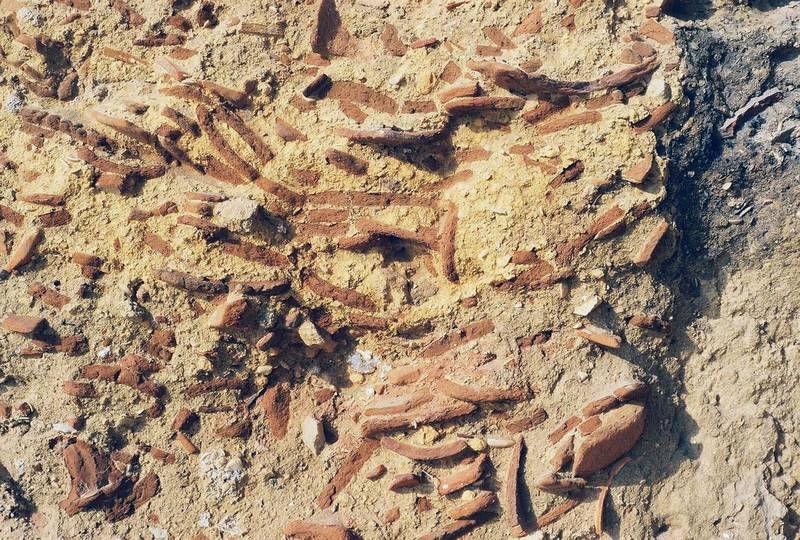

Ancient pottery on the sea bank at Ashkelon beach. The Middle East


Album 142: Ein Bokek, University in Beer-Sheva, Ashkelon, trip to Jerusalem, May 20 - June 17, 2000
The image presents a close-up view of ancient pottery fragments scattered along the shore of Ashkelon beach in the Middle East. The photograph is dated June 2, 2000.
**Physical Description**
The pottery pieces are predominantly brown and red, with some appearing to be intact while others are broken into shards. The fragments vary in size, ranging from small chips to larger sections that appear to be nearly complete vessels. Most of the pieces are arranged on top of a layer of sand or dirt, which suggests they have been exposed by erosion rather than deliberately placed there.
**Context**
The image provides visual evidence of the archaeological significance of Ashkelon beach, where numerous artifacts from various time periods have been discovered. The presence of ancient pottery fragments indicates that the site has been used for human activity over thousands of years, making it an important area for researchers studying the history and culture of the region.
**Conclusion**
Overall, the image captures a fascinating glimpse into the past, highlighting the importance of preserving our cultural heritage through archaeological research and excavation. – AI vision


