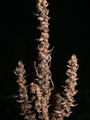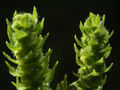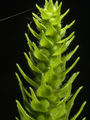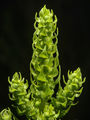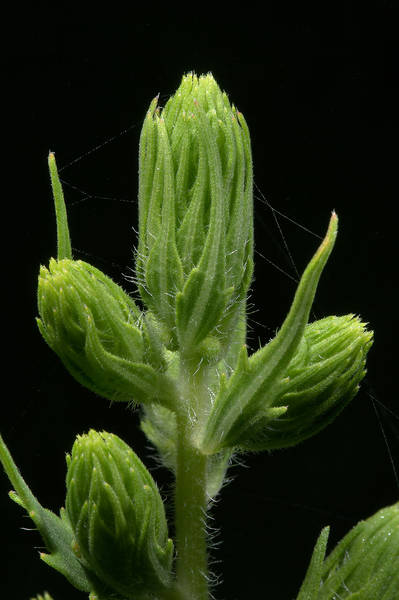

Sumpweed (Iva annua) on Deer Run Trail in Lick Creek ParkLick Creek: Background Notes. College Station, Texas


Album 1107: Washington-on-the-Brazos - College Station, Texas, September 26, 2012
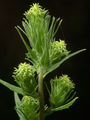
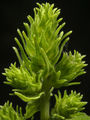
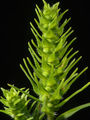
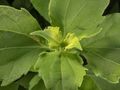
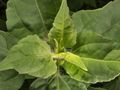
The image presents a close-up view of an unopened sumpweed flower bud on a stem with two other buds and its leafy stem. The flower bud is elongated and slightly tapered at its tip, with several layers of tightly packed leaves that appear to be folded inward.
The image was captured in Lick Creek Park, College Station, Texas, on September 24th, 2012. The sumpweed (Iva annua) plant thrives in wetland habitats throughout much of North America and is a member of the Asteraceae family, which includes sunflowers and daisies.
Sumpweed flowers are generally white or pinkish-white and usually grow to between three and six inches long, but they can be larger. The sumpweed plant has been used as an herbal remedy for various ailments since ancient times and is still utilized today in traditional medicine practices. It is also a popular ingredient in culinary dishes, particularly soups, stews, salads, and pickles.
In terms of environmental impact, the sumpweed plant plays an important role in wetland ecosystems by providing food and shelter for numerous species of wildlife. Its roots help to stabilize soil and prevent erosion, while its leaves and stems serve as a source of nutrients for microorganisms. Overall, the image showcases the beauty and significance of this fascinating plant species. – AI vision
🇪🇸 Descripción en español / Spanish Description
El musgo (Iva annua) en el Deer Run Trail en Lick Creek Park. College Station, Texas, septiembre de 2012. La imagen presenta una vista detallada de un capullo floral cerrado del musgo sobre un tallo con otros dos capullos y su tallo foliado. El capullo floral es alargado y se estrecha ligeramente en su punta, con varias capas de hojas empaquetadas apretadamente que parecen estar dobladas hacia dentro. La imagen fue capturada en Lick Creek Park, College Station, Texas, el 24 de septiembre de 2012. El musgo (Iva annua) planta crece en hábitats húmedos por toda América del Norte y es miembro de la familia Asteraceae, que incluye a los girasoles y las margaritas. Los capullos florales del musgo generalmente son blancos o rosados claros y alcanzan entre tres y seis pulgadas de largo, pero pueden ser mayores. La planta de musgo ha sido utilizada como remedio herbal para diversas enfermedades desde la antigüedad y aún se utiliza hoy en día en prácticas medicinales tradicionales. También es un ingrediente popular en platos culinarios, especialmente sopas, guisados, ensaladas y pepinillos. En términos de impacto ambiental, la planta del musgo desempeña un papel importante en los ecosistemas acuáticos al proporcionar comida y refugio a numerosas especies de vida silvestre. Sus raíces ayudan a estabilizar el suelo y prevenir la erosión, mientras que sus hojas y tallos sirven como fuente de nutrientes para microorganismos. En general, la imagen muestra la belleza y significado de esta fascinante especie vegetal. – Spanish translation