
Brown corticioid fungus on an oak log in Lick Creek ParkLick Creek: Background Notes. College Station, Texas


Album 2745: College Station - Sam Houston Forest, Texas, July 29 - 31, 2020
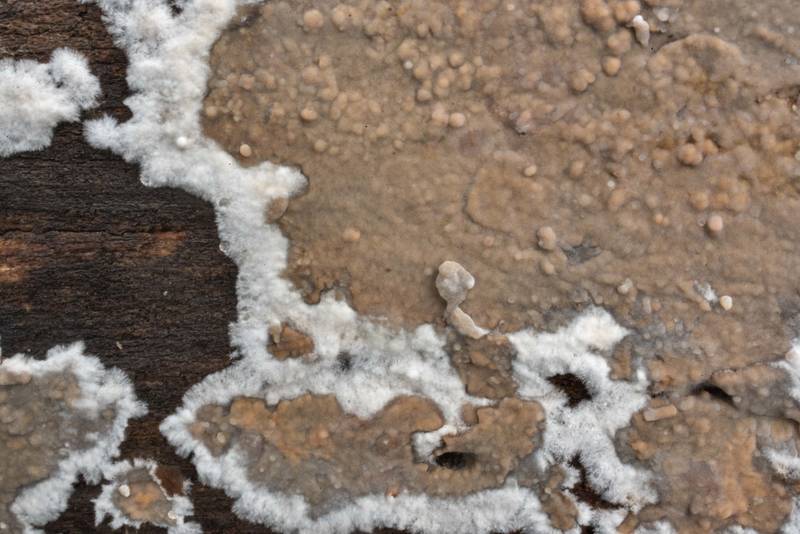
The image captures a brown corticioid fungus growing on an oak log in Lick Creek Park, College Station, Texas. The fungus is characterized by its brown color and irregular shape, with white fuzzy growths scattered throughout.
The background of the image features the bark of the oak tree, which appears to be weathered and worn down from exposure to the elements. The overall atmosphere of the image suggests a natural setting, possibly in a forest or woodland area.
Upon closer inspection, it becomes apparent that the fungus is not only visible on the surface of the log but also has begun to grow into the wood itself. This can be seen as white fuzzy growths have started to emerge from the cracks and crevices of the bark.
The image provides a detailed view of the fungus's growth patterns and how it interacts with its surroundings. The use of natural light allows for an accurate representation of the colors and textures present in the scene, making it easier to observe and analyze the features of the corticioid fungus.
Overall, the image offers a fascinating glimpse into the world of fungi and their ability to thrive in various environments. It highlights the importance of preserving and protecting these organisms, as they play a vital role in maintaining ecological balance and promoting biodiversity. – AI vision
🇪🇸 Descripción en español / Spanish Description
El hongo corticium en una leña de roble en Lick Creek Park. College Station, Texas, 29 de julio de 2020. La imagen captura un hongo corticium marrón creciendo en una leña de roble en Lick Creek Park, College Station, Texas. El hongo se caracteriza por su color marrón y forma irregular, con crecimientos peludos blancos dispersados por toda la superficie. En el fondo de la imagen se observa la corteza del árbol de roble, que parece desgastada y deteriorada por la exposición a los elementos. La atmósfera general de la imagen sugiere un entorno natural, posiblemente en una zona forestal o boscosa. Al observarla más detenidamente, se puede apreciar que el hongo no solo es visible en la superficie de la leña sino que también ha comenzado a penetrar en la madera misma. Esto puede verse en los crecimientos peludos blancos que comienzan a emerger desde las grietas y hendiduras de la corteza. La imagen proporciona una vista detallada de los patrones de crecimiento del hongo y cómo interactúa con su entorno. El uso de luz natural permite una representación precisa de los colores y texturas presentes en la escena, lo que facilita la observación y análisis de las características del hongo corticium. En general, la imagen ofrece un fascinante vistazo al mundo de los hongos y su capacidad para prosperar en entornos variados. Destaca la importancia de preservar y proteger estos organismos, ya que desempeñan un papel vital en el mantenimiento del equilibrio ecológico y la promoción de la biodiversidad. – Spanish translation