 |
| |||||||||||||||||

| ||||||||||||||||||


| Similar |   |
  |
  |
  |
  |
| |||||||||||||||||||||||||||||
| |||||||||||||||||||||||||||||
| 1996 1997 1998 1999 2000 2001 2002 2003 2004 2005 2006 2007 2008 2009 2010 2011 2012 2013 2014 2015 2016 2017 2018 2019 2020 2021 2022 2023 2024 2025 2026 | |||||||||||||||||||||||||||||
| New version Slide Show Most Popular Full List Statistics Technical Details Home Page | |||||||||||||||||||||||||||||
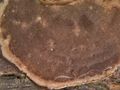
The intricate pore surface of a bracket polypore mushroom found in Lick Creek Park, College Station, Texas, is captured in this photograph taken on June 9, 2021. The delicate texture and pattern of the pores are visible, showcasing the unique beauty of this fascinating fungi. – generated by AI |
The image depicts a detailed view of the pore surface of a bracket polypore mushroom. The pores are numerous and densely packed, arranged in concentric circles that radiate from the center of the mushroom to its periphery. They exhibit a range of colors, including white, light brown, dark brown, and red-brown, which may be due to various factors such as maturity or environmental influences. The pores themselves appear small and irregularly shaped, with some resembling tiny holes while others seem more like shallow depressions in the surface. The overall texture is rough and uneven, suggesting that this is a mature mushroom whose pores have opened up over time. In terms of size, it's difficult to estimate without additional context but based on visual cues alone, it appears quite large - possibly even several feet across if not larger. Given its substantial dimensions relative to other fungi found in similar habitats during peak season, it likely plays an important ecological role within these ecosystems by serving as both a food source for various animals and acting as part of the nutrient cycle by breaking down organic matter. Overall, this image provides valuable insights into the structure and function of bracket polypore mushrooms, highlighting their unique characteristics that enable them to thrive in diverse environments. – AI vision |
La superficie de la poro de algunos hongos tipo polvo en el Lick Creek Park. College Station, Texas, 9 de junio de 2021. La imagen muestra una vista detallada de la superficie de los poros de un hongo tipo polvo. Los poros son numerosos y densamente empaquetados, dispuestos en círculos concéntricos que irradian desde el centro del hongo hacia su periferia. Presentan una variedad de colores, incluidos blanco, marrón claro, marrón oscuro y marrón rojizo, que pueden ser debidos a diversos factores como madurez o influencias ambientales. Los poros en sí mismos parecen pequeños y de forma irregular, con algunos que se asemejan a agujeros minúsculos mientras que otros parecen más depresiones superficiales poco profundas. La textura general es áspera e irregular, lo que sugiere que este hongo es maduro y sus poros se han abierto con el tiempo. En términos de tamaño, es difícil estimar sin contexto adicional, pero basándonos en señales visuales solamente, parece ser bastante grande - posiblemente incluso varios pies de diámetro si no más grande aún. Dado su sustancial dimensión relativa a otros hongos encontrados en hábitats similares durante la temporada alta, es probable que desempeñe un importante papel ecológico dentro de estos ecosistemas sirviendo tanto como fuente de alimentación para varios animales y actuando como parte del ciclo de nutrientes al romper materia orgánica. En general, esta imagen proporciona valiosos conocimientos sobre la estructura y función de los hongos tipo polvo, resaltando sus características únicas que permiten su crecimiento en diversos entornos. – Spanish translation |
Keyword variants
high resolution online digital collection
Lick Creek Park picture
Berlin on the Brazos
Rock Prairie Rd
Lone Star State
Greens Prairie Road
United States
picture gallery
photo album
nature trails
Nature Park
documentary photographs
daily pics
conservative town
Brazos County
wildlife
TX
travelogue
snapshots
sightseeing
photowalks
photoblog
graphic
fungus
fungi
fotografias
foto
Bryan
America
Aggieland