 |
| |||||||||||||||

| ||||||||||||||||


| Similar | 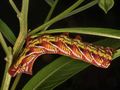  |
  |
  |
  |
  |
| |||||||||||||||||||||||||||
| |||||||||||||||||||||||||||
| 1996 1997 1998 1999 2000 2001 2002 2003 2004 2005 2006 2007 2008 2009 2010 2011 2012 2013 2014 2015 2016 2017 2018 2019 2020 2021 2022 2023 2024 2025 2026 | |||||||||||||||||||||||||||
| New version Slide Show Most Popular Full List Statistics Technical Details Home Page | |||||||||||||||||||||||||||
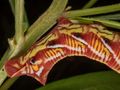
The Banded Sphinx Moth's (Eumorpha fasciatus) larva, also known as the Hornworm, can be found feeding on water-primrose (Ludwigia) in Lick Creek Park, College Station, Texas. This photograph was taken on August 26, 2021. The caterpillar's distinctive bands and voracious appetite make it a fascinating subject for study. – generated by AI |
The image showcases a hornworm caterpillar of the Lesser Vine Sphinx Moth, also known as the Banded Sphinx Moth (Eumorpha fasciatus), clinging to a water-primrose plant (Ludwigia) in Lick Creek Park, College Station, Texas. **Caterpillar Description** * The caterpillar is prominently featured in the center of the image. **Plant Description** * The water-primrose plant (Ludwigia) is the host plant for this caterpillar species and serves as a food source for it during its larval stage. **Background** * The background of the image appears to be the natural environment of Lick Creek Park, featuring lush vegetation and possibly some water features, which is consistent with the habitat of Ludwigia plants. **Overall Impression** * The image effectively captures the unique characteristics of the Lesser Vine Sphinx Moth's hornworm caterpillar and its adaptation to living on water-primrose plants. |
Caterpillar de la polilla menor del enramedador (polilla rayada, Eumorpha fasciatus) en primavera de agua (Onagraceae) en Lick Creek Park. College Station, Texas, 26 de agosto de 2021. La imagen muestra una oruga de la polilla menor del enramedador, también conocida como polilla rayada (Eumorpha fasciatus), agarrada a una planta de primavera de agua (Ludwigia) en Lick Creek Park, College Station, Texas. **Descripción de la oruga** * La oruga se destaca en el centro de la imagen. * Tiene una distintiva coloración roja y amarilla con rayas blancas que recorren su cuerpo. * Son visibles en su espalda una serie de ojitos pequeños redondos, lo que puede servir como un mecanismo de defensa para disuadir a los depredadores. **Descripción de la planta** * La planta de primavera de agua (Ludwigia) es la planta hospedadora para esta especie de oruga y sirve como fuente de alimento durante su etapa larvaria. * Los tallos de la planta son verdes con tonalidades rojizas, proporcionando un contraste atractivo con la colorida oruga. **Antecedentes** * El fondo de la imagen parece ser el entorno natural de Lick Creek Park, con vegetación exuberante y posibles rasgos acuáticos, lo que es consistente con el hábitat de las plantas Ludwigia. * Esto sugiere que la fotografía se tomó en un parque o reserva natural, proporcionando un contexto natural para la oruga y su planta hospedadora. **Impresión general** * La imagen captura eficazmente las características únicas de la oruga de la polilla menor del enramedador y su adaptación a vivir en plantas de primavera de agua. * Los colores vibrantes de la oruga sobresalen contra los tallos rojizos de Ludwigia, creando un contraste visual atractivo. * El entorno natural de Lick Creek Park agrega profundidad y contexto a la imagen, destacando la importancia de preservar estos ecosistemas para el bienestar de insectos como la polilla menor del enramedador. – Spanish translation |
Keyword variants
high resolution online digital collection
Lick Creek Park picture
Berlin on the Brazos
Rock Prairie Rd
Lone Star State
Greens Prairie Road
United States
picture gallery
photo album
nature trails
Nature Park
documentary photographs
daily pics
conservative town
Brazos County
wildlife
TX
travelogue
snapshots
sightseeing
photowalks
photoblog
graphic
fotografias
foto
catterpilar
Bryan
America
Aggieland