 |
| |||||||||||||||||

| ||||||||||||||||||


| Similar | 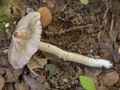  |
  |
  |
  |
  |
| |||||||||||||||||||||||||||||
| |||||||||||||||||||||||||||||
| 1996 1997 1998 1999 2000 2001 2002 2003 2004 2005 2006 2007 2008 2009 2010 2011 2012 2013 2014 2015 2016 2017 2018 2019 2020 2021 2022 2023 2024 2025 2026 | |||||||||||||||||||||||||||||
| New version Slide Show Most Popular Full List Statistics Technical Details Home Page | |||||||||||||||||||||||||||||
The image depicts the cap and stem of a solitary fibrecap (Inocybe) mushroom growing on the ground in Lick Creek Park, College Station, Texas. The cap is the top part of the mushroom, typically rounded or conical in shape, and ranges from 1 to 4 inches wide. **Key Features:** * **Cap:** Light brown coloration with white hairs covering it **Growth Environment:** * The mushroom is growing on the ground in a wooded area, indicating its preference for shaded conditions and damp environments. **Species Identification:** The image shows a solitary fibrecap (Inocybe) mushroom, which is a type of fungi that belongs to the family Inocybaceae. These mushrooms are typically found growing alone or in small groups on rotting wood or decaying plant matter. **Interesting Fact:** * The name "fibrecap" comes from the hairy appearance of the cap, which resembles fibers. |
La tapa de un hongo solitario Inocybe en el parque Lick Creek. College Station, Texas, 19 de abril del 2024. La imagen muestra la tapa y el tallo de un hongo solitario Inocybe que crece sobre el suelo en el parque Lick Creek, College Station, Texas. La tapa es la parte superior del hongo, normalmente redonda o cónica en forma, y mide entre 2,5 y 10 cm de ancho. **Características clave:** * **Tapa:** Coloración marrón claro con pelos blancos que lo cubren * **Tallo:** Coloración blanca; sin anillo o volva visible en el tallo **Ambiente de crecimiento:** * El hongo está creciendo sobre el suelo en un área boscosa, lo que indica su preferencia por condiciones sombreadas y ambientes húmedos. **Identificación de la especie:** La imagen muestra un hongo solitario Inocybe, que es un tipo de hongo que pertenece a la familia Inocybaceae. Estos hongos se encuentran normalmente creciendo solos o en pequeños grupos sobre madera podrida o material vegetal en descomposición. **Hecho interesante:** * El nombre "tapa de fibra" proviene del aspecto peludo de la tapa, que recuerda a las fibras. * Los hongos solitarios de fibra pueden ser comestibles, pero solo deben consumirse por cazadores de setas experimentados que estén familiarizados con su apariencia y hábitat. – Spanish translation |
Keyword variants
Lick Creek Park photo capture
high resolution online digital collection
Berlin on the Brazos
Rock Prairie Rd
Lone Star State
Greens Prairie Road
United States
picture gallery
photo album
nature trails
Nature Park
documentary photographs
daily pics
conservative town
Brazos County
wildlife
TX
travelogue
snapshots
sightseeing
photowalks
photoblog
graphic
fungus
fungi
fotografias
foto
Bryan
America
Aggieland