 |
| |||||||||||||||

| ||||||||||||||||


| Similar | 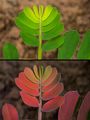  |
  |
  |
  |
  |
| |||||||||||||||||||||||||||
| |||||||||||||||||||||||||||
| 1996 1997 1998 1999 2000 2001 2002 2003 2004 2005 2006 2007 2008 2009 2010 2011 2012 2013 2014 2015 2016 2017 2018 2019 2020 2021 2022 2023 2024 2025 2026 | |||||||||||||||||||||||||||
| New version Slide Show Most Popular Full List Statistics Technical Details Home Page | |||||||||||||||||||||||||||
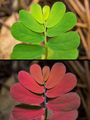
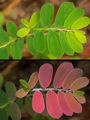
The image presents a comparative analysis of the leaf-flower plant Phyllanthus niruri under two distinct lighting conditions: regular daylight and illumination by a 365 nm ultraviolet (UV-A) blacklight. The photograph is divided into two sections, with the top section depicting the leaves in natural daylight and the bottom section showcasing their appearance when exposed to UV-A light. **Top Section: Regular Daylight** In this portion of the image, the leaves appear green and healthy, exhibiting a normal coloration characteristic of plants grown under regular daylight conditions. The photograph captures several leaves on a single stem, with each leaf featuring three distinct lobes that curve slightly inward toward the stem. The overall appearance of the leaves suggests they are in good health and receiving sufficient light for photosynthesis. **Bottom Section: UV-A Blacklight Illumination** In contrast to the top section, the bottom portion of the image reveals a striking transformation when the leaves are illuminated by the 365 nm ultraviolet (UV-A) blacklight. The leaves exhibit a dramatic change in coloration, turning pinkish-red and displaying an intense fluorescence. This phenomenon is likely due to the absorption of UV-A radiation by certain pigments present in the plant's cells, leading to the emission of light at longer wavelengths. **Key Observations** * **Color Change:** The most notable difference between the two sections is the change in leaf coloration when exposed to UV-A light. While the leaves remain green under regular daylight, they turn pinkish-red and exhibit intense fluorescence under UV-A illumination. In conclusion, the image effectively illustrates the impact of UV-A light on the coloration and fluorescence of Phyllanthus niruri leaves. While regular daylight results in green-colored leaves, exposure to 365 nm ultraviolet (UV-A) blacklight causes a dramatic change, turning the leaves pinkish-red and inducing intense fluorescence. This phenomenon highlights the unique properties of certain plant species and their responses to different wavelengths of light. – AI vision |
Las hojas de la planta con flores Phyllanthus niruri cuando se exponen a la luz del día regular y también cuando se iluminan con una luz negra ultravioleta (UV-A) de 365 nm cerca de Pole Creek en el North Wilderness Trail de Little Lake Creek Wilderness en Sam Houston National Forest al norte de Montgomery, Texas, el 31 de agosto de 2024. La imagen presenta un análisis comparativo de la planta con flores Phyllanthus niruri bajo dos condiciones de iluminación distintas: luz del día regular e iluminación con una luz negra ultravioleta (UV-A) de 365 nm. La imagen se divide en dos secciones, con la sección superior representando las hojas a la luz natural y la sección inferior mostrando su aspecto cuando se exponen a la luz UV-A. **Sección Superior: Luz del Día Regular** En esta parte de la imagen, las hojas aparecen verdes y sanas, exhibiendo una coloración normal característica de las plantas cultivadas bajo condiciones de luz diurna regular. La fotografía capta varias hojas en un solo tallo, con cada hoja presentando tres lóbulos que se curvan ligeramente hacia el tallo. El aspecto general de las hojas sugiere que están sanas y reciben suficiente luz para la fotosíntesis. **Sección Inferior: Iluminación con Luz Negra UV-A** En contraste con la sección superior, la parte inferior de la imagen revela una transformación sorprendente cuando las hojas se iluminan con la luz negra ultravioleta (UV-A) de 365 nm. Las hojas presentan un cambio notable en la coloración, volviéndose rosadas y mostrando una fluorescencia intensa. Este fenómeno se debe probablemente a la absorción de radiación UV-A por ciertos pigmentos presentes en las células de la planta, lo que produce la emisión de luz a longitudes de onda más largas. **Observaciones clave** * **Cambio de Color:** La diferencia más notable entre las dos secciones es el cambio en la coloración de las hojas cuando se exponen a la luz UV-A. Mientras que las hojas permanecen verdes bajo la luz del día regular, adquieren un tono rosado intenso y exhiben una fluorescencia notable bajo iluminación con luz negra ultravioleta (UV-A) de 365 nm. * **Estructura de las hojas:** Ambas secciones de la imagen muestran que las hojas tienen tres lóbulos cada una, los cuales se curvan hacia el tallo. Esta estructura es consistente en ambas condiciones de iluminación. * **Fondo:** El fondo de la fotografía parece ser un entorno natural, posiblemente un bosque o área boscosa, con varias plantas y vegetación visible detrás del sujeto de la planta. En conclusión, la imagen ilustra eficazmente el impacto de la luz UV-A en el cambio de color y fluorescencia de las hojas de Phyllanthus niruri. Mientras que la luz del día regular da como resultado hojas verdes, la exposición a la luz negra ultravioleta (UV-A) de 365 nm produce un cambio notable, dando lugar a hojas rosadas intensamente fluorescentes. Este fenómeno destaca las propiedades únicas de ciertas especies de plantas y sus respuestas a diferentes longitudes de onda de luz. – Spanish translation |
Keyword variants
Lake Creek Wilderness online image
high resolution online digital collection
North Wilderness Trail photograph
Houston National Forest photos
Lone Star State
Little Lake photograph
United States
picture gallery
photo album
documentary photographs
daily pics
TX
travelogue
snapshots
sightseeing
photowalks
photoblog
littel
graphic
fotografias
foto
America