 |
| |||||||||||||||

| ||||||||||||||||


| Similar |   |
  |
  |
  |
  |
| |||||||||||||||||||||||||||
| |||||||||||||||||||||||||||
| 1996 1997 1998 1999 2000 2001 2002 2003 2004 2005 2006 2007 2008 2009 2010 2011 2012 2013 2014 2015 2016 2017 2018 2019 2020 2021 2022 2023 2024 2025 2026 | |||||||||||||||||||||||||||
| New version Slide Show Most Popular Full List Statistics Technical Details Home Page | |||||||||||||||||||||||||||
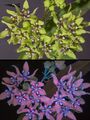
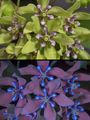
The image presents a striking comparison between the appearance of green milkweed flowers under regular daylight and when illuminated by a 365 nm ultraviolet (UV-A) blacklight. The top photograph captures the inflorescence of Asclepias viridis, commonly known as green milkweed, in its natural state, bathed in the warm glow of daylight. In contrast, the bottom photograph reveals the same inflorescence when exposed to the intense ultraviolet light of a 365 nm blacklight. **Color Transformation:** * The flowers appear vibrant and lush under daylight conditions. **Photographic Techniques:** * The photographs were captured using a combination of conventional camera equipment and specialized lighting. **Significance:** * This image highlights the importance of considering the effects of different light sources on the appearance of natural objects. |
Inflorescencia de asclepiada verde (Asclepias viridis) cuando se expone a la luz diurna regular y cuando se ilumina con una luz negra ultravioleta (UV-A) de 365 nm recogida en el North Wilderness Trail del Little Lake Creek Wilderness en el Bosque Nacional Sam Houston, al norte de Montgomery. Texas, 31 de agosto de 2024. La imagen presenta una comparación sorprendente entre la apariencia de las flores de asclepiada verde bajo luz diurna regular y cuando se ilumina con una luz negra ultravioleta (UV-A) de 365 nm. La fotografía superior capta la inflorescencia de Asclepias viridis, comúnmente conocida como asclepiada verde, en su estado natural, bañada por el calidez de la luz diurna. En contraste, la fotografía inferior revela la misma inflorescencia cuando se expone a la luz intensa ultravioleta de una luz negra de 365 nm. **Transformación del color:** * Las flores parecen vibrantes y jugosas bajo condiciones de luz diurna. * Cuando se someten a luz UV-A, las flores experimentan una transformación notable, cambiando de su tono verde natural a un color rosado-morado radiante. Esta transformación se debe probablemente a la presencia de pigmentos absorbentes de ultravioleta que se vuelven visibles cuando se iluminan con la longitud de onda específica de luz. **Técnicas fotográficas:** * Las fotografías fueron capturadas usando una combinación de equipo convencional de cámara y iluminación especializada. * Se utilizó una luz negra UV-A de 365 nm para iluminar las flores en la fotografía inferior, lo que permitió visualizar los pigmentos absorbentes de ultravioleta que no son visibles bajo condiciones de luz diurna regular. **Significado:** * Esta imagen resalta la importancia de considerar los efectos de diferentes fuentes de luz en el aspecto de objetos naturales. * La transformación de las flores de asclepiada verde desde su estado natural hasta un color rosado-morado vibrante subraya las interacciones complejas entre la luz, los pigmentos y la percepción visual. – Spanish translation |
Keyword variants
North Wilderness Trail picture gallery
high resolution online digital collection
Lake Creek Wilderness photo
Houston National Forest photographs
Lone Star State
Little Lake photo
United States
photo album
documentary photographs
daily pics
antelope horns
TX
travelogue
snapshots
sightseeing
photowalks
photoblog
littel
graphic
fotografias
foto
asklepias
America