 |
| |||||||||||||||

| ||||||||||||||||


| Similar | 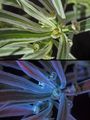  |
  |
  |
  |
  |
| |||||||||||||||||||||||||||
| |||||||||||||||||||||||||||
| 1996 1997 1998 1999 2000 2001 2002 2003 2004 2005 2006 2007 2008 2009 2010 2011 2012 2013 2014 2015 2016 2017 2018 2019 2020 2021 2022 2023 2024 2025 2026 | |||||||||||||||||||||||||||
| New version Slide Show Most Popular Full List Statistics Technical Details Home Page | |||||||||||||||||||||||||||
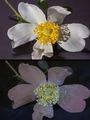
The photograph showcases a flowering spurge plant (Euphorbia corollata), captured under two different light conditions: regular daylight and ultraviolet (UV-A) illumination using a blacklight emitting at 365 nm wavelength. Under standard daylight, the flowers appear white or pale pink, with five petals each. The greenish-yellow center of each flower is visible in the background against the darker leaves of the plant, which are not visible due to the darkened image. In contrast, when illuminated by a blacklight at 365 nm wavelength, the same flowering spurge appears dramatically different. Each petal glows bright pink or red with a greenish-yellow center. The glowing flower is set against a dark background, making the leaves and stems of the plant invisible. This phenomenon occurs because many plants, including this species of euphorbia, contain fluorescent pigments known as anthocyanins, which absorb UV light and emit longer wavelengths that are visible to the human eye. This results in a glowing effect when illuminated with UV-A blacklights. The image captures this striking contrast between the appearance of the flowering spurge under regular daylight and under UV-A illumination, highlighting the unique properties of its fluorescent pigments. – AI vision |
La espiga floreciente (Euphorbia corollata) cuando se expone a la luz diurna habitual y también cuando se ilumina con una lámpara negra ultravioleta de 365 nm recolectada en el North Wilderness Trail del Little Lake Creek Wilderness en Sam Houston National Forest al norte de Montgomery. Texas, agosto 31, 2024. La fotografía muestra una planta de espiga floreciente (Euphorbia corollata), capturada bajo dos condiciones diferentes: luz diurna habitual e iluminación ultravioleta (UV-A) usando una lámpara negra que emite a 365 nm. Bajo la luz del día estándar, las flores aparecen blancas o rosa pálidas, con cinco pétalos cada una. El centro amarillo verdoso de cada flor es visible en el fondo contra las hojas más oscuras de la planta, que no son visibles debido a la imagen oscurecida. En contraste, cuando se ilumina con una lámpara negra a 365 nm, la misma espiga floreciente parece drásticamente diferente. Cada pétalo brilla en rosa o rojo brillante con un centro amarillo verdoso. La flor resplandeciente se muestra contra un fondo oscuro, haciendo que las hojas y tallos de la planta sean invisibles. Este fenómeno ocurre porque muchas plantas, incluida esta especie de euforbia, contienen pigmentos fluorescentes conocidos como antocianinas, que absorben luz UV y emiten longitudes de onda más largas visibles para el ojo humano. Esto da lugar a un efecto resplandeciente cuando se ilumina con luces negras UV-A. La imagen captura este contraste sorprendente entre la apariencia de la espiga floreciente bajo luz diurna habitual y bajo iluminación UV-A, destacando las propiedades únicas de sus pigmentos fluorescentes. – Spanish translation |
Keyword variants
North Wilderness Trail online image
high resolution online digital collection
Lake Creek Wilderness picture
Houston National Forest images
Lone Star State
Little Lake photograph
United States
picture gallery
photo album
documentary photographs
daily pics
TX
travelogue
snapshots
sightseeing
photowalks
photoblog
littel
graphic
fotografias
foto
America