 |
| |||||||||||||||

| ||||||||||||||||


| Similar |   |
  |
  |
  |
  |
| |||||||||||||||||||||||||||
| |||||||||||||||||||||||||||
| 1996 1997 1998 1999 2000 2001 2002 2003 2004 2005 2006 2007 2008 2009 2010 2011 2012 2013 2014 2015 2016 2017 2018 2019 2020 2021 2022 2023 2024 2025 2026 | |||||||||||||||||||||||||||
| New version Slide Show Most Popular Full List Statistics Technical Details Home Page | |||||||||||||||||||||||||||
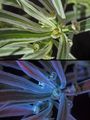
The image presents two photographs showcasing the effects of ultraviolet (UV-A) light on lichens growing on a thin oak branch. The top photograph depicts the same section of bark under regular daylight conditions, while the bottom photograph captures the same area illuminated by a 365 nm UV-A blacklight. **Top Photograph:** **Bottom Photograph:** **Comparison:** Overall, this image effectively illustrates the unique properties of lichens and their ability to fluoresce under specific wavelengths of light, providing valuable insights into their biology and ecology. – AI vision |
Pertusaria y otros líquenes criptogámicos en un sauce delgado cuando se exponen a la luz diurna regular, así como cuando son iluminados con una luz negra ultravioleta de 365 nm recogida en el North Wilderness Trail de Little Lake Creek Wilderness en Sam Houston National Forest al norte de Montgomery. Texas, 31 de agosto de 2024. La imagen presenta dos fotografías que muestran los efectos de la luz ultravioleta (UV-A) en líquenes que crecen en un sauce delgado. La fotografía superior muestra la misma sección de corteza bajo condiciones de luz diurna normal, mientras que la fotografía inferior captura la misma área iluminada con una luz negra ultravioleta de 365 nm. **Fotografía superior:** La imagen superior muestra una corteza marrón grisáceo con numerosos líquenes pequeños y grisáceos que cubren su superficie. Estos líquenes parecen ser de naturaleza crustosa, lo que significa que crecen planos contra su sustrato y no producen talos o tallos erectos. El área cubierta por líquenes es relativamente lisa en comparación con la corteza circundante. **Fotografía inferior:** En contraste, la imagen inferior revela una transformación sorprendente cuando se ilumina con luz UV-A. Muchos de los líquenes fluorescen brillantemente en tonos azules, amarillos y naranjas, creando un efecto extraterrestre contra el fondo oscuro. La intensa fluorescencia sugiere que estos líquenes contienen pigmentos o sustancias fluorescentes que absorben radiación UV y emiten luz a longitudes de onda más largas. **Comparación:** Comparar las dos imágenes destaca la diferencia dramática entre la iluminación diurna regular y la exposición a la luz UV-A. Mientras que algunos líquenes parecen inalterados, otros muestran una fuerte fluorescencia cuando se ilumina con UV-A. Este fenómeno subraya la importancia de considerar múltiples condiciones de iluminación al estudiar u observar líquenes en sus hábitats naturales. En general, esta imagen ilustra eficazmente las propiedades únicas de los líquenes y su capacidad para fluorescer bajo longitudes de onda específicas de luz, proporcionando insights valiosos sobre su biología y ecología. – Spanish translation |
Keyword variants
high resolution online digital collection
North Wilderness Trail photographs
Little Lake picture gallery
Lake Creek Wilderness photo
Houston National Forest pictures
Lone Star State
United States
photo album
documentary photographs
daily pics
TX
travelogue
snapshots
sightseeing
photowalks
photoblog
littel
graphic
fotografias
foto
America