 |
| |||||||||||||||

| ||||||||||||||||


| Similar |   |
  |
  |
  |
  |
| |||||||||||||||||||||||||||
| |||||||||||||||||||||||||||
| 1996 1997 1998 1999 2000 2001 2002 2003 2004 2005 2006 2007 2008 2009 2010 2011 2012 2013 2014 2015 2016 2017 2018 2019 2020 2021 2022 2023 2024 2025 2026 | |||||||||||||||||||||||||||
| New version Slide Show Most Popular Full List Statistics Technical Details Home Page | |||||||||||||||||||||||||||
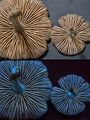
The image presents a striking visual comparison of two distinct environments where tiny white mushrooms are exposed to different light sources. The top photograph showcases the fungi's appearance under regular daylight, while the bottom photograph captures their luminescent properties when illuminated by a 365 nm ultraviolet (UV-A) blacklight. **Top Photograph: Daylight Exposure** In the top image, the tiny white Marasmius-like mushrooms are situated on a branch. Their gills, which are typically hidden beneath the cap, are visible but not particularly prominent due to the ambient light conditions. The surrounding environment appears dark and shadowy, with minimal illumination reaching the area where the mushrooms reside. **Bottom Photograph: UV-A Blacklight Illumination** In contrast, the bottom image reveals a dramatic transformation when the same branch is illuminated by a 365 nm UV-A blacklight. The gills of the mushrooms emit a vibrant blue glow, creating a striking visual effect against the dark background. This phenomenon highlights the unique bioluminescent properties of these fungi, which are not visible to the naked eye under regular daylight conditions. **Visual Comparison** The juxtaposition of the two photographs underscores the significance of light in revealing the hidden characteristics of these tiny white mushrooms. The UV-A blacklight illumination brings out their bioluminescence, allowing for a deeper understanding and appreciation of their unique biology. This visual comparison serves as a testament to the importance of considering multiple perspectives when studying or observing natural phenomena. – AI vision |
Las guillas de los pequeños hongos blancos similares a Marasmius cuando se exponen a la luz diurna habitual y también cuando se iluminan con una lámpara negra ultravioleta (UV-A) de 365 nm desde Sand Branch Loop Trail en el Bosque Nacional Sam Houston cerca de Montgomery, Texas, el 2 de septiembre de 2024. La imagen presenta una sorprendente comparación visual de dos entornos distintos donde los hongos blancos pequeños se exponen a diferentes fuentes de luz. En la fotografía superior, se muestra cómo son estos hongos bajo la luz diurna habitual, mientras que en la fotografía inferior capturan sus propiedades luminiscentes cuando se iluminan con una lámpara negra ultravioleta (UV-A) de 365 nm. Fotografía superior: Exposición a la Luz Diurna Fotografía inferior: Iluminación con Lámpara Negra UV-A Comparación Visual |
Keyword variants
high resolution online digital collection
Branch Loop Trail picture gallery
Houston National Forest picture
Lone Star State
United States
photo album
documentary photographs
daily pics
TX
travelogue
snapshots
sightseeing
photowalks
photoblog
graphic
fungus
fungi
fotografias
foto
America