 |
| |||||||||||||||

| ||||||||||||||||


| Similar | 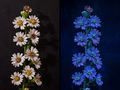  |
  |
  |
  |
  |
| |||||||||||||||||||||||||||
| |||||||||||||||||||||||||||
| 1996 1997 1998 1999 2000 2001 2002 2003 2004 2005 2006 2007 2008 2009 2010 2011 2012 2013 2014 2015 2016 2017 2018 2019 2020 2021 2022 2023 2024 2025 2026 | |||||||||||||||||||||||||||
| New version Slide Show Most Popular Full List Statistics Technical Details Home Page | |||||||||||||||||||||||||||
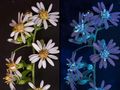
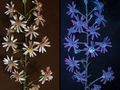
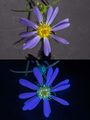
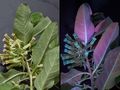
The image presents a striking comparison of an aster flower's appearance under regular daylight and when illuminated by a 365 nm ultraviolet (UV-A) blacklight. The left side of the image features the flower exposed to natural light, showcasing its white petals with yellow centers. In contrast, the right side of the image displays the same flower exposed to UV-A blacklight from Richards Loop Trail in Sam Houston National Forest, Texas. Upon exposure to the UV-A blacklight, the aster's appearance undergoes a dramatic transformation. The white petals now glow brightly blue, while the yellow centers remain unchanged. This phenomenon is likely due to the presence of fluorescent pigments within the flower that absorb UV radiation and emit light at longer wavelengths, resulting in the observed color change. The image effectively highlights the unique properties of certain plant species, which can exhibit remarkable visual effects when exposed to specific types of light. This observation has important implications for our understanding of plant biology and ecology, particularly in relation to pollination and communication mechanisms between plants and their environment. Overall, the image provides a fascinating glimpse into the intricate world of plant biology, demonstrating how subtle changes in environmental conditions can significantly impact the appearance and behavior of living organisms. – AI vision |
El Aster floreciente (Symphyotrichum) cuando se expone a la luz del día regular y también cuando se ilumina con una luz negra ultravioleta (UV-A) de 365 nm en el Richards Loop Trail en la Sam Houston National Forest. Texas, el 20 de octubre de 2024. La imagen presenta una sorprendente comparación del aspecto de una flor de aster bajo luz del día regular y cuando se ilumina con una luz negra ultravioleta (UV-A) de 365 nm. El lado izquierdo de la imagen muestra la flor expuesta a luz natural, destacando sus pétalos blancos con centros amarillos. Por el contrario, el lado derecho de la imagen presenta la misma flor expuesta a la luz negra UV-A del Richards Loop Trail en Sam Houston National Forest, Texas. Tras la exposición a la luz UV-A, el aspecto de la flor sufre una transformación radical. Los pétalos blancos brillan ahora en azul, mientras que los centros amarillos permanecen inalterados. Es probable que este fenómeno se deba a la presencia de pigmentos fluorescentes dentro de la flor que absorben radiación UV y emiten luz a longitudes de onda más largas, resultando en el cambio de color observado. La imagen destaca eficazmente las propiedades únicas de ciertas especies vegetales, que pueden mostrar efectos visuales notables cuando se exponen a tipos específicos de luz. Esta observación tiene implicaciones importantes para nuestra comprensión de la biología y ecología vegetal, en particular en relación con la polinización y los mecanismos de comunicación entre las plantas y su entorno. En general, la imagen proporciona un fascinante vistazo al intrincado mundo de la biología vegetal, demostrando cómo cambios sutiles en las condiciones ambientales pueden impactar significativamente el aspecto y comportamiento de los seres vivos. – Spanish translation |
Keyword variants
high resolution online digital collection
Richards Loop Trail snapshot
Houston National Forest pic
Lone Star State
United States
picture gallery
photo album
flower head
documentary photographs
daily pics
TX
travelogue
snapshots
sightseeing
photowalks
photoblog
graphic
fotografias
foto
floret
floral
blossom
bloom
America